A substantial handheld Smash with excellent fighting and a few unavoidable compromises
Super Smash Bros. for Nintendo 3DS is impressive because it makes the actual fighting enjoyable on a handheld, not simply because it manages to fit a large roster onto one. I like the movement, the range of characters and the ease of beginning another match without needing a television. The game has a clear portable identity through its stages and Smash Run, while the central combat remains substantial enough to reward learning rather than only casual curiosity. Eight and a half is my score. The small screen and handheld controls create limitations, especially when a match becomes busy, and not every extra is equally engaging. Those reservations do not stop the package from being very good. I enjoy having a version that makes its own choices rather than behaving like a reluctant copy of a home-console release. Its most important achievement is preserving the pleasure of moving, attacking and recovering while giving that pleasure a setting that works well for short handheld play.
The fighting system remains the reason to stay. Damage increases knockback rather than simply reducing a conventional health bar, so positioning and survival continue to matter throughout the stock. I enjoy how that changes the purpose of an attack. A move can create space, force an awkward recovery or set up another opportunity instead of only adding to a total. Jumping and landing are part of the combat, not a separate platforming activity between exchanges. That gives the matches a useful range without making the basic controls inaccessible. A newcomer can understand the objective quickly, while a familiar character still has more to reveal through timing and spacing. I like that the 3DS game does not abandon those qualities for the sake of portability. The screen may be smaller, but the important decisions remain recognizable, giving an ordinary match enough substance that another attempt can feel worthwhile even without a new unlock or a different mode.
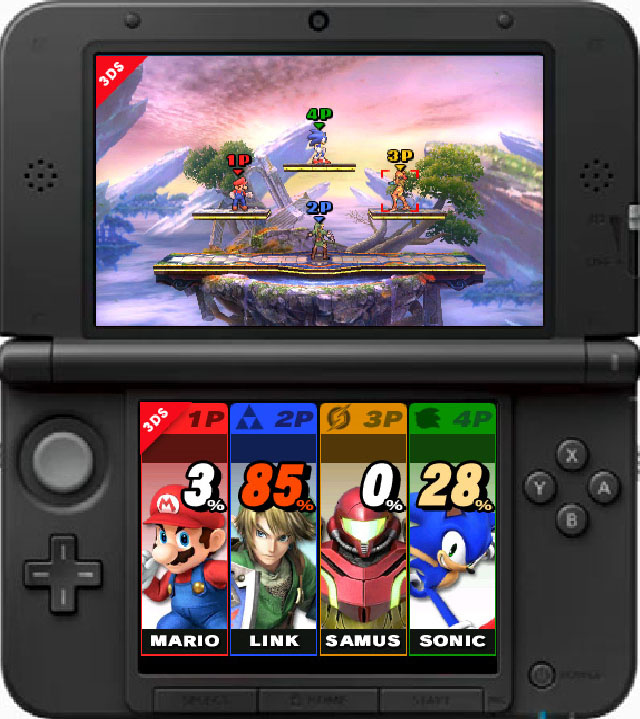
The roster gives that system a strong selection of personalities. Characters have different speeds, ranges and recovery options, so changing the selection can change how the stage should be used. I enjoy the connection between a familiar ability and its practical role in a fight. Sonic's movement, a heavier fighter's commitment to an attack or a ranged character's control of space can all make the same arena feel different. The crossover appeal is obvious, but the cast works because those differences are enjoyable to explore. I do not need every character to be equally comfortable for my preferences. I need enough of them to offer a useful reason to try another approach, and the selection provides that. The handheld edition also makes the roster feel generous without treating quantity as a substitute for identity. Recognizing a character is an invitation; learning how that character handles the next exchange is what makes the invitation worth accepting.
The portable presentation helps the action remain legible, though it cannot remove every small-screen compromise. The character outlines are a sensible choice because the fighters need to stand apart from their backgrounds, and I like the strong visual identity that results. The stage selection also gives the 3DS release its own flavor, drawing on handheld worlds and familiar locations that suit a different package. The reservation is what happens when the camera needs to include a large area or several things compete for attention. A game about tracking movement and timing an attack benefits from a clear view, and a small display can make a busy situation less comfortable to read. I enjoy the fighting enough that this does not define the whole experience. It is still a real limit, especially compared with the clarity available on a larger screen. Portability is valuable because it changes where and how easily the game can be played, but it is not a reason to pretend every visual demand becomes equally comfortable.
Smash Run is the most interesting piece of the handheld identity for me. Exploring a large area, fighting enemies and collecting stat boosts creates a different rhythm before the final challenge. I like having a mode that uses the characters' movement and attacks outside the structure of an ordinary arena match. It gives the game a playful way to connect its many worlds, and finding a useful boost or another target makes the exploration feel active rather than purely decorative. The result is not as consistently satisfying as the central fighting, because the preparation and the final event do not always feel equally important or equally under control. Still, I appreciate the attempt. It gives the 3DS version a reason to be remembered for something beyond its screen size, and it makes a worthwhile change of pace when another standard match is not the activity I want immediately. Its unevenness qualifies the praise without canceling the appeal of the idea.
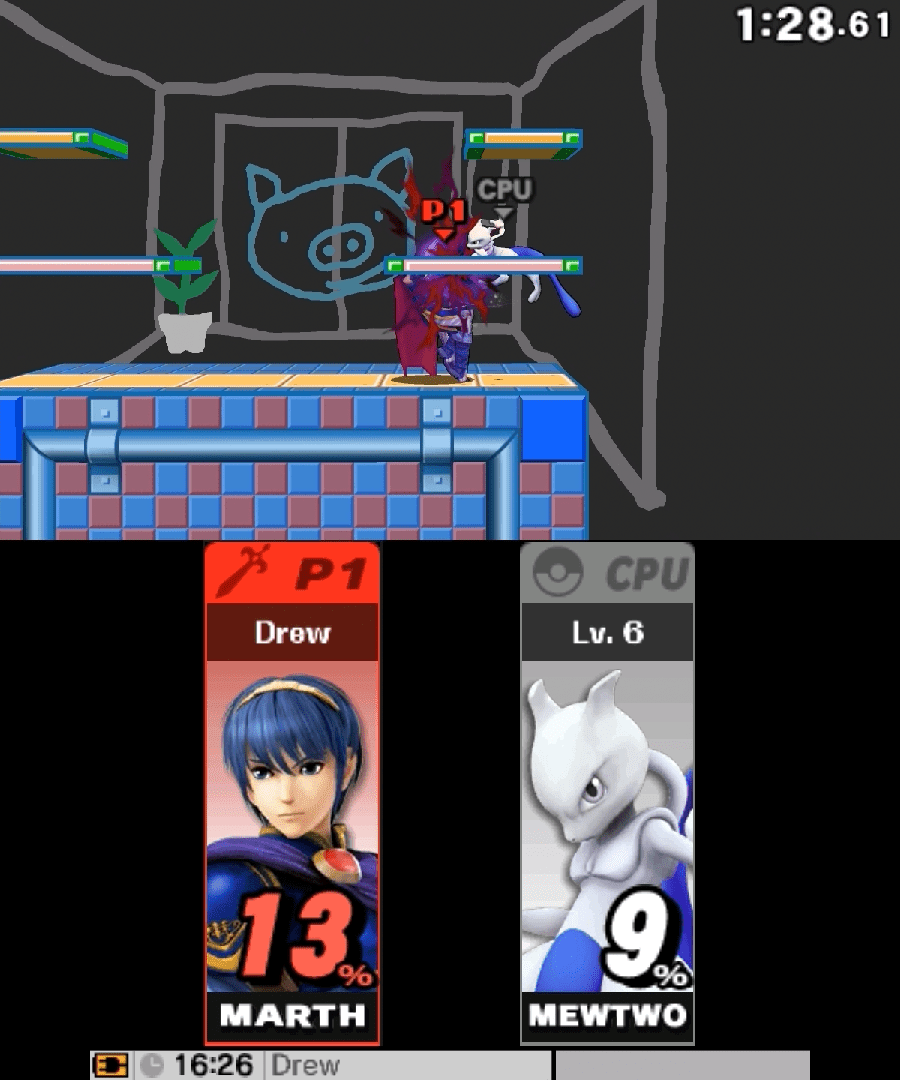
The other solo activities provide plenty of smaller targets. Classic, All-Star and the stadium-style challenges create ways to use the roster under different conditions, while the trophies and rewards make the crossover feel like a collection worth looking through. I enjoy an objective that turns a familiar action into a focused little problem, especially when it encourages a different character or a more deliberate use of a move. Not every diversion has the same appeal, and I do not find the full reward list equally exciting. The value comes from having useful alternatives rather than from an obligation to complete every last target. The controls deserve a similar qualification. The handheld is capable of supporting the game, but a fast, precise fighter is still asking a lot from a compact layout. I can enjoy what it accomplishes while recognizing that the most demanding play is not where every part of the portable setup feels equally ideal.
I finish with a strong recommendation because the essential Smash experience survives the handheld transition so well. The combat has depth, the roster has personality and the stages and Smash Run give this edition an identity of its own. The presentation makes thoughtful efforts to keep the action readable, while the extra goals provide several reasons to return outside ordinary matches. Eight and a half out of ten reflects those strengths alongside the limits of the small screen and the uneven quality of the diversions. I do not see this as a novelty whose achievement ends once the first match begins. The match itself is good enough to justify the package. I simply find that the portable format asks for some compromises in comfort and clarity, and those compromises matter in a game built around quick decisions. They keep it below the very strongest recommendation without stopping it from being an excellent reason to have a fighter on the 3DS.
Final thoughts
Smash on 3DS preserves the enjoyable combat and varied roster while adding a distinct handheld identity through its stages and Smash Run. The screen and controls bring compromises, and the extras vary in quality, but the ordinary matches remain excellent. A very good portable fighter at 8.5/10.
Final score: 8.5/10.
Reviewed on Nintendo 3DS. No review copy was provided.
 Super Smash Bros. for Wii U Review
 Super Smash Bros. Ultimate Review
 Super Smash Bros. Brawl Review