
A lively handheld Sonic with a strong sense of how much space its ideas need
Sonic Advance is the kind of portable Sonic I want: clear, lively and confident about what makes its platforming enjoyable. It takes a familiar two-dimensional foundation and gives it a fresh handheld presentation without making the game feel like an awkward compromise. I like the character artwork, the readable action and the way the four playable characters create different reasons to look at a stage. The adventure does not need to become enormous to make those differences worthwhile. Its focused scale is part of the appeal. There are frustrations, especially around the special-stage requirements and the occasional section that is less forgiving than the surrounding pace suggests. Those do not dominate my opinion. Eight and a half feels right for a game that gets the basic interaction and presentation so consistently enjoyable. It is familiar enough to understand immediately, but the cast and the quality of the arrangement give it more personality than a simple portable retread.
The stages give speed and ordinary platforming room to coexist. I like being able to enjoy a faster stretch without feeling that every second needs to be spent holding forward, and the changes of height and placement give the movement a useful shape. Rings and springs remain easy to recognize, so learning what the level is asking for does not fight against the appearance of the scenery. The Game Boy Advance presentation has a clean, attractive identity that helps those practical details. Sonic looks expressive without overwhelming the play space, and the environments have enough color to feel inviting while keeping the important objects readable. That balance matters more to me than simply making a small-screen game look busy. When a jump or a route change works, I want the satisfaction to come from directing the character through the stage, not from being relieved that the graphics finally allowed me to see where I was supposed to go. Advance usually understands that distinction.

The four characters are a large part of what makes the package worthwhile. Sonic provides the familiar baseline, Tails can use flight to approach a section differently and Knuckles brings gliding and climbing into the route. I enjoy having those abilities available because they change the possibilities without requiring the whole game to abandon its basic platforming structure. A wall or a higher area can become more interesting when another character has a practical reason to investigate it. Amy is the most obvious change because her hammer and different attack setup make her feel less like another version of Sonic's movement. I like that the game allows a character to require a different habit rather than insisting that every choice perform the same actions. The tradeoff is that not every character feels equally comfortable in every situation. That does not bother me enough to weaken the selection. The differences give another run a purpose and make the cast useful beyond its appearance on the selection screen.
The zone structure keeps the adventure moving. A successful boss fight also provides a clear payoff to the two acts, so reaching another setting feels earned rather than merely announced by a menu. Two acts and a boss give each setting a clear progression, and the change to a new environment arrives before the current one has been stretched too far. I like that restraint in a handheld game. It makes a short stretch of play feel as though it has accomplished something without forcing every section to be a major commitment. Bosses provide a different focus from the routes through the acts, though I do not find every encounter equally interesting. My larger reservation is that a few hazards can feel abrupt compared with the otherwise comfortable flow. A fast game still needs to communicate danger clearly enough that a mistake feels useful to learn from. Advance is good at making movement enjoyable, but not every section reaches the same level of generosity or clarity. I enjoy the overall pace enough that the weaker moments remain interruptions rather than the defining character of the adventure.
The Chaos Emerald pursuit is where my enthusiasm becomes more qualified. Special springs hidden in certain acts lead to ring-collecting bonus stages, giving exploration a clear purpose and another route toward the game's extra finale. I like that the optional goal has a meaningful reward. Finding access to those stages and then meeting their demands can be more fussy than the main platforming, though, and I do not find that part of the game as consistently enjoyable. The basic adventure does not need the Emerald hunt to justify itself, which helps keep that frustration in perspective. The Tiny Chao Garden is a more relaxed addition, giving the package another activity without pretending to be another full campaign. Its connection with the GameCube Chao features is a nice part of the wider package, but what I value here is the simple change of pace. The game has extras that feel relevant to Sonic without burying the straightforward platforming beneath too many unrelated systems.
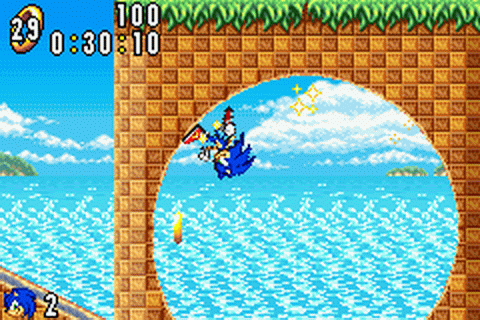
Advance earns my recommendation through the ordinary act of playing it. The characters feel distinct enough to matter, the presentation is attractive and readable, and the stages give the handheld format a good balance of immediacy and replay value. I do not need a portable game to be smaller in ambition if it can be focused in execution, and that focus is what I enjoy most here. The Emerald requirements are less appealing, and some hazards interrupt the flow more sharply than I would like. Those weaknesses keep the game below the very top of my personal Sonic favorites without stopping it from being a very good one. Eight and a half out of ten reflects how much I enjoy the complete package. It has an identity of its own, uses the cast well and gives familiar two-dimensional ideas enough care to feel worth returning to. I would happily take this level of clear, well-paced handheld platforming over a more elaborate entry that forgets how enjoyable the basic movement needs to be.
Final thoughts
Advance gets the handheld essentials right: readable stages, enjoyable movement, a lively presentation and four characters whose abilities matter. The Emerald hunt can be fussy, and a few hazards disturb the flow, but the main adventure is consistently appealing. It is a very good portable Sonic at 8.5/10.
Final score: 8.5/10.
Reviewed on Game Boy Advance. No review copy was provided.
 Sonic Dash 2 Sonic Boom Review
 Sonic Advance 3 Review
 Sonic Advance 2 Review