Zap Blastum puts a useful question at the center of its shooting: where should the player be standing? Its cover system and assisted targeting shift attention toward movement, timing, and exposure. That gives the game a clear identity within a crowded field of top-down action games. The bright presentation makes it look approachable, but the design is interested in more than simply filling the screen with shots.
The basic actions establish that approach quickly. Select an enemy, hold fire, and use a wall to protect Zap while he leans around its edge to shoot. Moving to another position creates a period of vulnerability, so a useful obstacle becomes part of a plan. It is more than scenery that happens to interrupt a projectile. The next safe firing angle is a practical objective within the fight.
Locking onto a target changes the emphasis further. Instead of asking the player to divide equal attention between precise free aiming and movement, the game gives positioning more of the responsibility. I think that is a sensible choice for this particular design. It makes a tactical decision easier to recognize: continue attacking from the current position, or move before that position becomes a liability.
The tradeoff is that players who enjoy the physical expression of manual aiming may find the shooting less engaging on that level. Assisted targeting makes the action more accessible, but it also means the quality of a fight depends heavily on the decisions surrounding each exchange. The system is most interesting when the environment and enemy pressure give a good reason to change position.
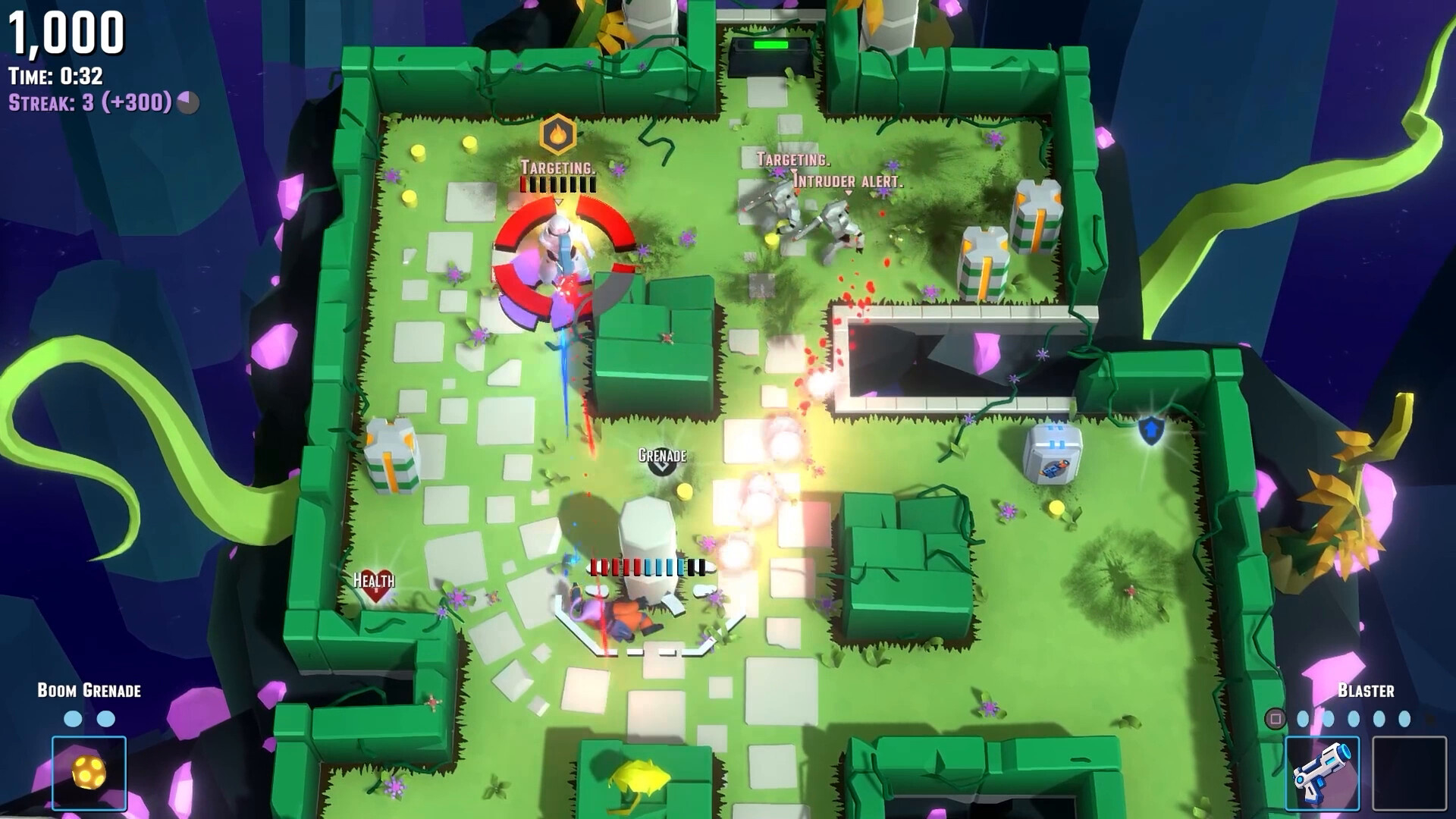
Different forms of cover help support that requirement. Low, tall, and destructible obstacles offer different considerations, while enemies using cover and attempting to flank prevent the intended design from being purely passive. Having a defensive position should be an advantage, rather than a permanent solution. That distinction gives the cover mechanic a more meaningful role than simply reducing incoming damage.
Upgrades add another layer to the approach. Damage, defensive resources, status effects, and chain reactions offer ways to develop a build around more than one statistic. Their value is in how they support decisions during combat. A useful upgrade can make a particular approach more viable, rather than only shortening the time needed to remove an enemy's health.
The game's lighter tone is a welcome match for this arcade structure. Colorful locations, robot enemies, and animated scenes give it a friendly identity without requiring the action to be consequence-free. Vehicles and local two-player co-op broaden the package, although the central appeal remains the relationship between shooting and cover. Those additions make sense as variations on that foundation.
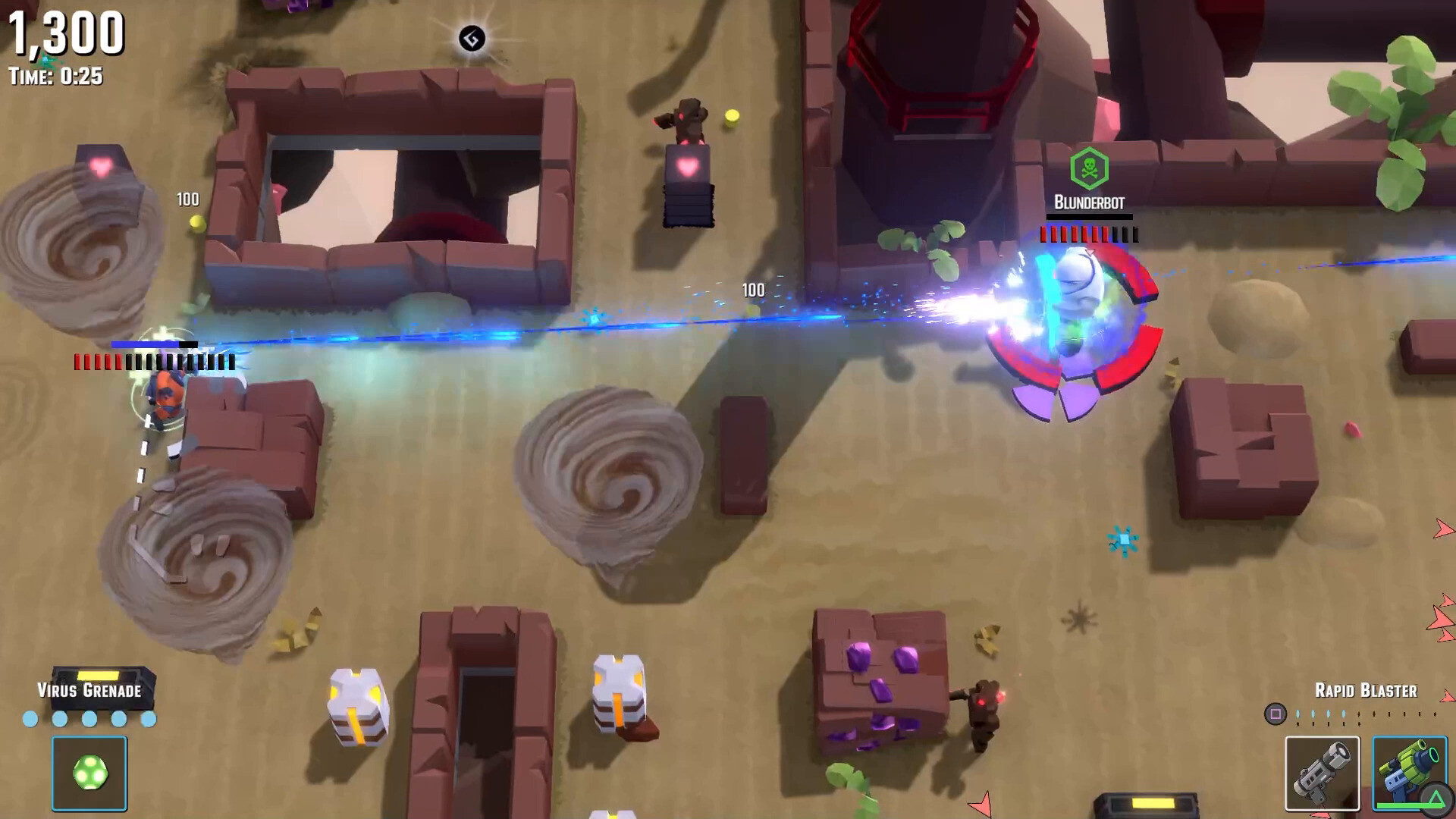
Zap Blastum is a focused proposition rather than a major reinvention of the action shooter. Its targeting choice will not suit everyone, and its strengths depend on appreciating positioning more than pure aiming precision. That makes it a more particular recommendation, but also a clearer one. There is no need to mistake its accessible appearance for a promise that tactics can be ignored.
I would recommend Zap Blastum to players interested in a colorful, cover-led arcade shooter, especially those who like upgrades that support different approaches. Its best idea is straightforward and useful: a good position can matter as much as a good shot. The result has a distinct enough focus to make it worth considering.
Final score: 7.5/10.
Reviewed on PC (Windows/Steam) using a supplied review key.
Game information: https://store.steampowered.com/app/696850/
 Onimusha: Way of the Sword - Review
 Disney Speedstorm Review
 The Big Suck Review