Disney Speedstorm has the foundations of a very enjoyable arcade racer. Drifting, boosts, combat abilities, and recognizable settings give it an immediate appeal. The difficulty in recommending it comes from the structure surrounding those races. Character progression and monetization demand attention that the racing itself should not need to compete with.
On the track, the combination of movement and aggression makes sense. Drifting prepares the next burst of speed, and learning a circuit gives better opportunities to use that speed effectively. Character abilities add another consideration to overtaking and defending a position. There is a good idea behind making a roster of familiar characters mechanically distinct instead of treating every driver as an interchangeable model.
That individuality is one of the strongest reasons to explore the game. A character's skills can influence the way a race develops, while different track layouts provide situations in which to use them. The racing has enough energy to support the spectacle. Its appeal does not depend entirely on recognizing the film attached to a particular setting.
The Disney and Pixar presentation is nevertheless a considerable advantage. Themed environments give the circuits a distinct visual identity, and the musical arrangements help connect the races to the characters and worlds. I appreciate that there is an identifiable racing interpretation of these properties. A setting needs to work as a circuit as well as a collection of familiar references.
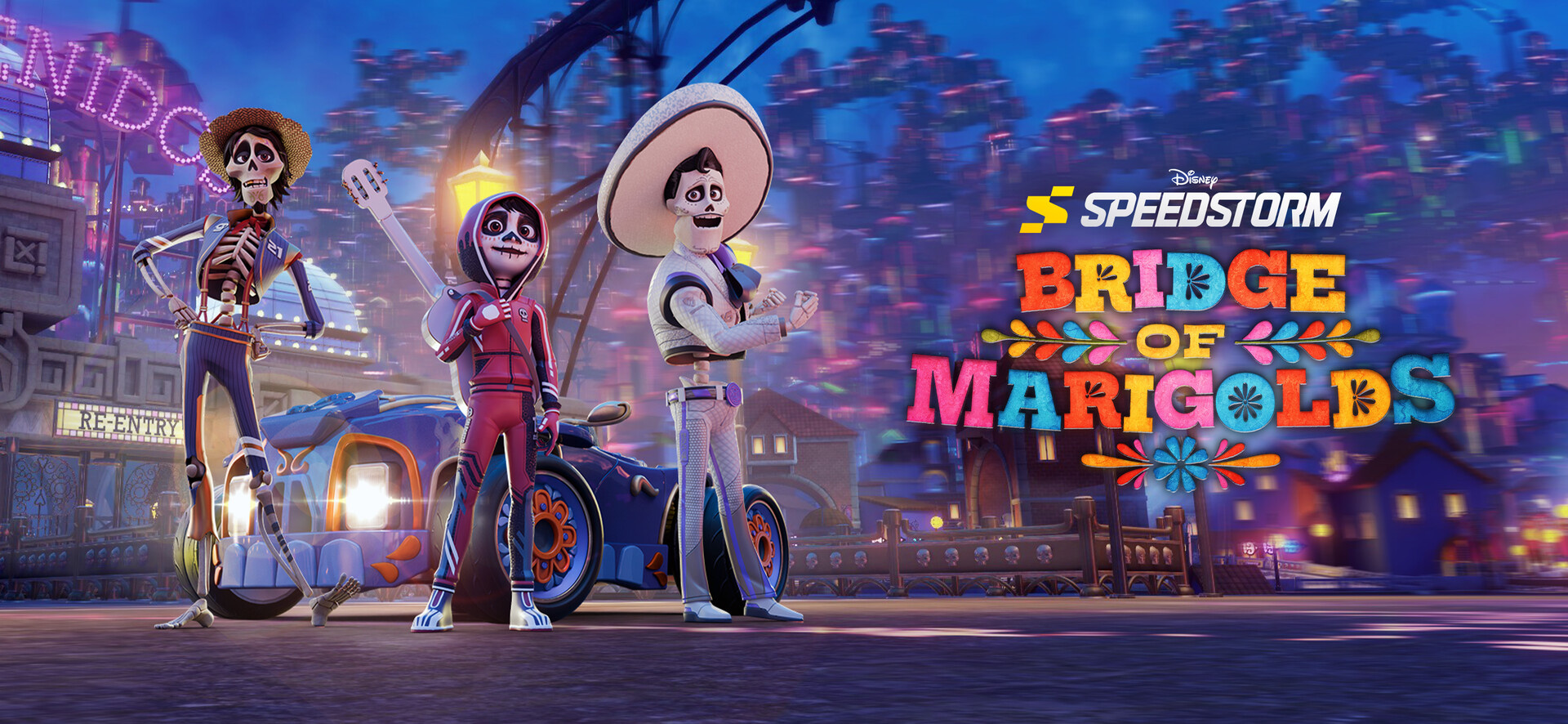
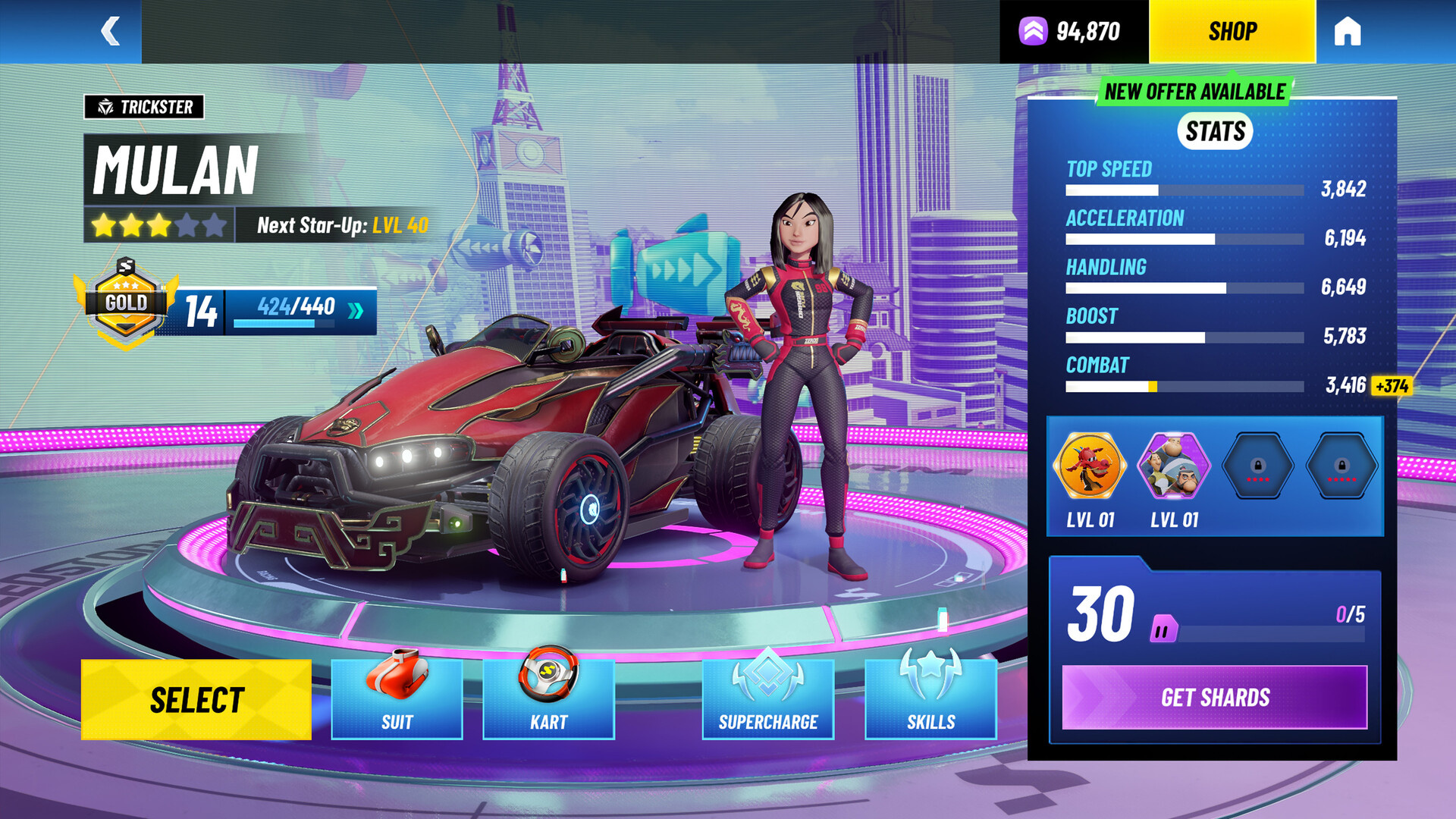
The problem is how access to the roster and its progression are organized. Collecting character shards and upgrade resources adds an ongoing layer of requirements to what should be an easy game to return to. The motivation can shift from improving at a track to obtaining the resources needed for the racer someone actually wants to use. That is a significant distinction in a game whose characters are such a large part of its attraction.
I do not think a free-to-play model automatically makes a game worse. It can provide a useful way to try the racing and decide whether it deserves more attention. However, the quality of that model depends on how comfortably it supports ordinary play. Spending, recurring progression demands, and limited availability should not become more prominent than the reasons to enjoy the next race.
Speedstorm's character upgrades make the distinction especially important. Once progression affects a racer's capabilities, developing the roster becomes more than collecting cosmetic alternatives. That complicates the appeal of competition. Even without reducing every outcome to a purchase, it introduces concerns about progression and access into an activity that benefits from a clear relationship between practice and results.
There is still fun available without approaching the game as a long-term commitment. Its solo and multiplayer options give different ways to engage with the racing, and the familiar cast will make the starting point attractive to many players. But that initial attraction is not enough for an unrestricted recommendation. Enjoyable races and an appealing license do not make the surrounding systems disappear.
The frustration is that the strongest parts already provide a good reason to play. The movement, abilities, circuits, and music can create an entertaining arcade experience. I would much rather see those qualities receive the full attention of the design than have the decision to continue become entangled with managing a character economy.
Disney Speedstorm is worth approaching cautiously if the racing and license appeal to you, but I cannot recommend it as confidently as its best moments suggest. The underlying racer deserves better than the progression and monetization structure around it. For me, those limitations substantially reduce the value of an otherwise promising game.
Final score: 5/10.
Reviewed on PC (Windows/Steam) using a key supplied for this coverage. Disney Speedstorm is a free-to-play game.
Game information: https://store.steampowered.com/app/1537830/
 Onimusha: Way of the Sword - Review
 Zap Blastum Review
 The Big Suck Review