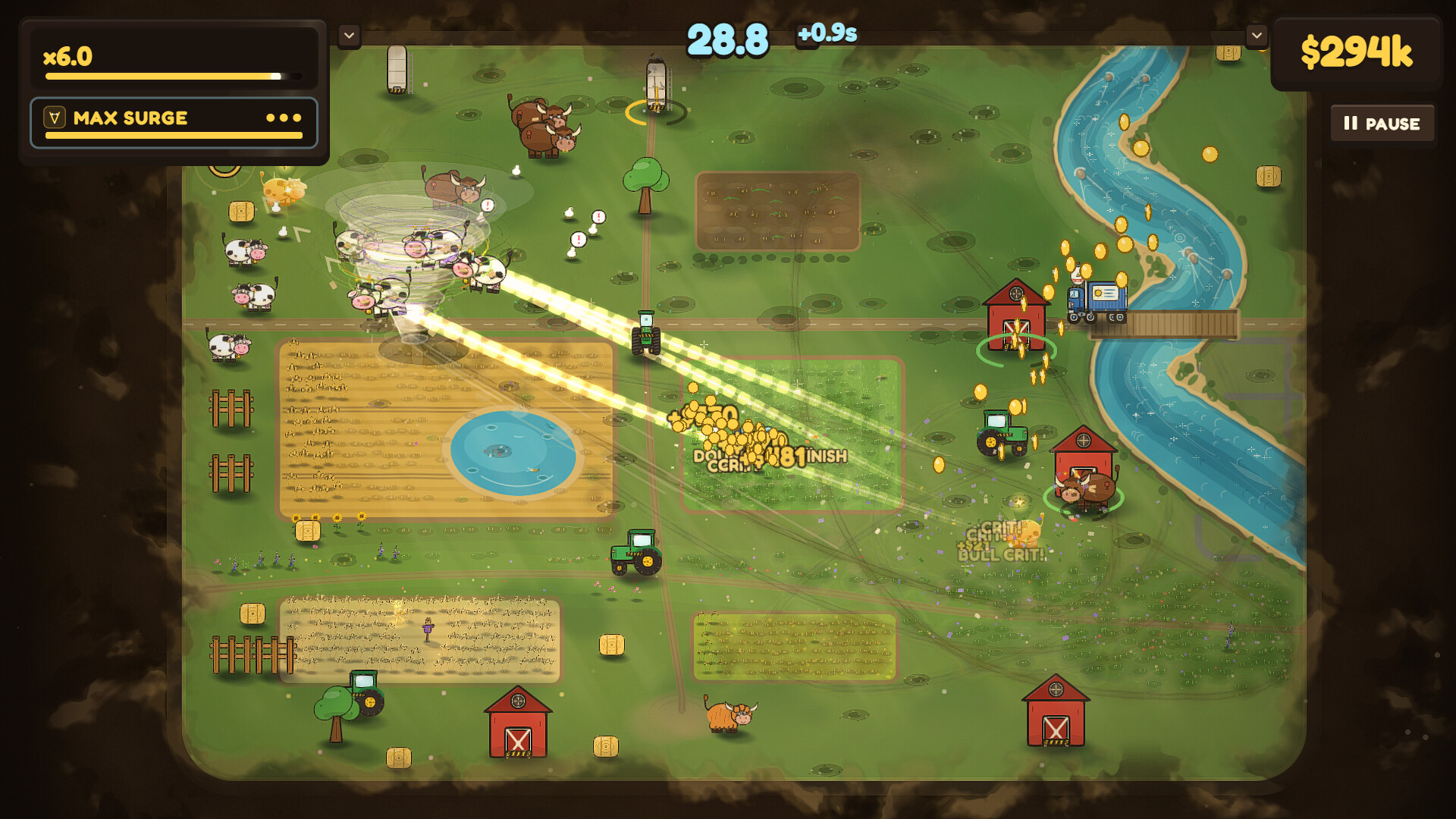
The Big Suck makes an incremental game's central promise easy to understand: become capable of causing a much bigger problem. Starting with a modest tornado and gradually expanding its destructive reach gives progress a clear visual result. The numbers matter because their consequences are visible in what the storm can affect, not only in a menu describing a percentage increase.
Steering the tornado gives the loop a useful degree of activity. Destruction produces money, a run ends, and the earnings fund another attempt with improved capabilities. This structure is familiar, but the subject makes it readable. Something that was previously too large to tackle can become the next target. Progress changes the relationship between the storm and its surroundings.
I think that clarity is the game's strongest quality. Incremental progression becomes tedious when an improvement feels disconnected from what is happening. Increasing a tornado's reach or duration has an immediate purpose. It changes the scale of what the player can attempt, which gives another upgrade a more convincing appeal than simply making an already large number larger.
Different storm forms help develop the idea. Fire, water, freezing effects, and other destructive variations provide different ways for the disaster to spread. The attraction is the interaction between effects and targets, rather than a claim that every option completely reinvents the controls. Changing how destruction propagates gives the upgrade process something more interesting to work toward.
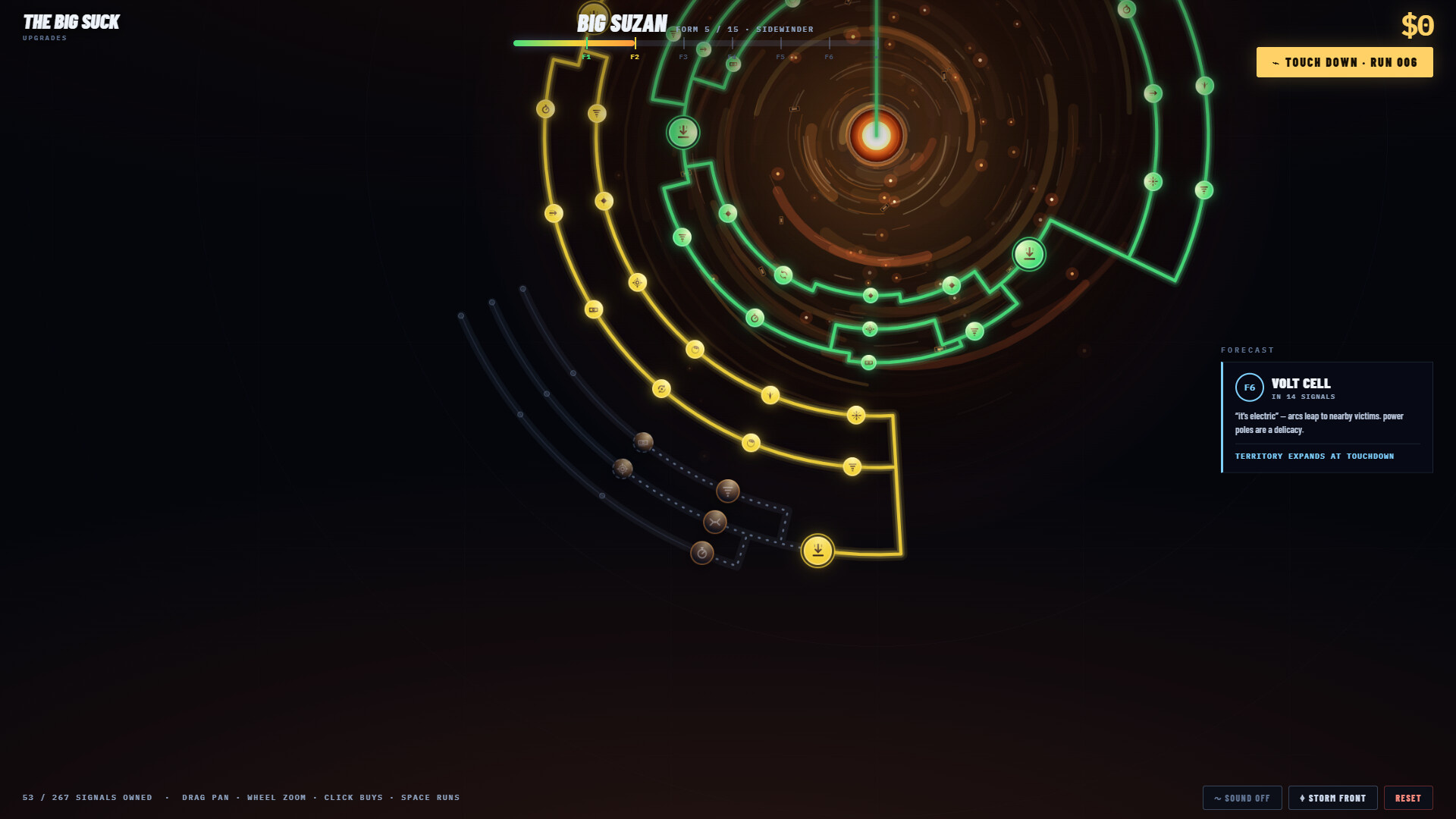
The upgrade tree also creates a longer view of progress. Individual purchases serve a larger build, and the prospect of another useful interaction can make a short run feel productive even without a dramatic breakthrough. There is a good match here between the small decisions made between runs and the increasingly exaggerated events happening within them.
The separate tornado farm changes the pace by introducing cows and permanent bonuses. It is an amusing extension of the game's personality, and it offers an alternative activity when the main loop becomes familiar. However, it also divides attention. Whether that extra layer is welcome will depend on how much someone enjoys managing parallel forms of incremental progress.
That is also the main limit of the game as a whole. More destructive power does not remove repetition. Much of the satisfaction comes from repeating a known action with a more capable storm. The expanding scale and upgrade options give that repetition a purpose, but they cannot make the format appeal to someone who fundamentally dislikes the cycle of earning, spending, and doing it again.
The playful presentation helps. The premise supports the exaggerated progression, and the audiovisual feedback makes the increasing destruction easy to appreciate. The game does not need a complicated story to justify what it is doing. It needs the next improvement to feel worthwhile, and its clearest strengths are organized around that requirement.
The Big Suck is an entertaining incremental game with a good understanding of how to make progress tangible. Its secondary systems add variety without changing the basic nature of the loop. I would recommend it to players who enjoy short, active runs feeding into a larger upgrade structure. The appeal is specific, but the game develops that appeal with considerable energy.
Final score: 8/10.
Reviewed on PC (Windows/Steam) using a supplied review key.
Game information: https://store.steampowered.com/app/4901860/
 Onimusha: Way of the Sword - Review
 Mayday: The Survival Island Review
 The Legend of Zelda: Ocarina of Time Review