
Animated scenes and familiar faces cannot make this creative toy enjoyable for me
Wacky Worlds Creativity Studio has a clear idea of what it wants to be: a small creative toy for assembling animated scenes, with recognizable characters helping to make the blank space inviting. I like the intention. There is room for a Genesis program that asks me to arrange something playful instead of completing a conventional adventure. My reaction to the actual activity is strongly negative, though. I find too little pleasure in placing the available pieces to make the resulting scene feel worth the work. The problem is not a missing campaign, a final boss or a score. Those would be the wrong things to expect from a program built around creating a diorama. The problem is that the creation itself feels too limited in appeal. Familiar faces can encourage an initial look, but I need the interaction with the scene to provide the reason to keep going. Here, that reason never becomes convincing for me.
The six worlds provide different settings for the activity. Choosing one establishes a backdrop, and the available stamps can then be placed to build the scene around it. I appreciate how that makes a starting point available immediately. A creative program does not always have to begin with an entirely empty page, and a themed environment can make it easier to imagine a small event or arrangement. What disappoints me is the relationship between that ready-made setting and my own contribution. I find the process more like selecting pieces from a collection than shaping something with much room for expression. That is not automatically a bad kind of activity. Arranging existing material can be creative and enjoyable. In this particular program, however, I do not find the choices satisfying enough to become absorbed in the result. The worlds make the package easy to understand, while doing much less to make working inside them entertaining.
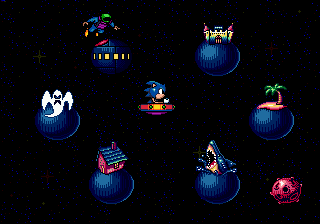
The animated stamps are the center of that interaction. They bring movement and recognizable cartoon personality into a scene without requiring the player to draw and animate every detail from scratch. I can see the appeal of making something happen quickly. A character can be chosen, placed and given a role in the little arrangement being built. For me, the immediate result is less appealing than that description suggests. I want the act of selecting and positioning the stamp to feel like part of an interesting creative process, and I find too little enjoyment in it. Recognizing a character is easier than becoming interested in the scene around that character. The available artwork does a lot to establish the program's personality, but it cannot make the arrangement feel personally engaging on its own. I come away more aware of the supplied pieces than pleased with what I can make them do together.
There is more going on than static decoration. Stamps can interact with one another, their animation can be turned on or off, and the order of those animations can be adjusted to shape the timing of a scene. I appreciate that those functions exist, because they give the program a clearer purpose than simply filling a background with familiar pictures. The possibility of making two pieces affect each other is a more interesting starting point than treating every stamp as a separate ornament. My disappointment is that the interaction remains too small in appeal for me to want to explore it very far. I can understand the intention behind coordinating an animated event, yet I do not find the process of building that event especially satisfying. The program gives the pieces movement and relationships. What it does not give me is enough enjoyment in arranging those relationships to turn the basic idea into a worthwhile creative activity for my tastes.
Choosing background music helps give the scene an atmosphere. A visual arrangement can feel different depending on the sound accompanying it, so I like that the package recognizes music as part of the little world being created. It is a sensible addition to a program focused on animated scenes. At the same time, choosing an accompaniment does not change my reaction to the central activity. I find the process of placing and timing the stamps too uninteresting for the music to make the whole scene compelling. The extra layer can support a result I already care about; it cannot create that interest by itself. I do not expect a full music-production environment from this software, so my criticism is not about comparing it with tools from an entirely different category. I simply want the available sound and animation to make the creative work feel playful, and the combination remains much less appealing than the premise for me.
The familiar characters are an obvious part of the invitation. Sonic-related imagery makes the program recognizable to someone interested in Sega's games, even though the activity is a creative studio rather than a Sonic adventure. I like that a familiar cast can be used outside its ordinary format. My low score is not a complaint that the characters should stop the diorama and start running through platforming stages. It is a reaction to how little enjoyment the actual studio provides. A creative toy has a different purpose from an action game, but it still needs the process of using it to feel worthwhile. For me, the balance here puts too much of the initial appeal in recognizing what has been supplied and too little in the pleasure of arranging it. The branding makes the package easy to notice. It does not make the small scene-building routine entertaining enough to justify a recommendation.
That leaves Wacky Worlds as a program whose idea I can understand without enjoying its execution. The settings, animated stamps, interactions and music all contribute to a recognizable creative activity. I find the choices and the work of connecting them deeply uninteresting, and that matters more than the attractiveness of the initial concept. The familiar artwork gives the software some curiosity value, but the curiosity does not turn into wanting to create another scene. I would rather a smaller collection of pieces offered a more satisfying relationship with the arrangement than the balance provided here. My two reflects how little enjoyment I get from the actual creative process. Wacky Worlds can make an animated diorama, but I do not find making that diorama fun, and the difference between those two statements is the entire problem for me.
Final thoughts
I like the premise of a Genesis toy for building animated scenes, but Wacky Worlds makes the actual creation deeply uninteresting to me. The backdrops, interacting stamps and music have understandable purposes, yet arranging them provides very little enjoyment. Familiar characters make it recognizable without making it rewarding. As a creative activity rather than a conventional action game, it still leaves me disappointed. My score is 2/10.
Final score: 2/10.
Reviewed on Sega Genesis. No review copy was provided.
 Onimusha: Way of the Sword Review
 Disney Speedstorm Review
 Zap Blastum Review