A colorful management game whose routine becomes more work than fun for me
Two Point Hospital makes a good first impression with its ridiculous illnesses and bright, readable hospitals. I like the idea of turning an intimidating place into a playful management puzzle, and there are enough connected decisions to make building a functioning hospital interesting at first. My enthusiasm fades as the routine settles in. Expanding rooms, adjusting queues and keeping staff useful gives the game plenty to manage, but I do not find the repeated process consistently entertaining. Five out of ten feels right for that mixed reaction. I can appreciate the systems and enjoy some of the practical problem solving without wanting a much longer commitment to the same loop. The humor helps the presentation, but it cannot continually make another familiar organizational task feel fresh. This is a capable management game whose appeal depends heavily on enjoying the process of refinement, and I find that process less rewarding than the cheerful setting initially suggests.
Laying out the hospital is the part I enjoy most. A room is not simply a decoration placed wherever it looks attractive; its location affects how people move and how comfortably the rest of the building can function around it. I like seeing a practical decision become visible through the flow of patients and staff. A sensible arrangement can make a busy space feel organized, while a weaker one gives a clear reason to reconsider the plan. That creates a useful relationship between building and observation. The problem for me is how often the following work feels like another variation of an adjustment already made. Once the basic pleasure of establishing a layout has passed, expanding it can become more maintenance than discovery. I do not think the game lacks decisions. I think the decisions stop changing in a way that keeps me equally interested, especially when another improvement is mostly about making a familiar arrangement slightly more efficient.
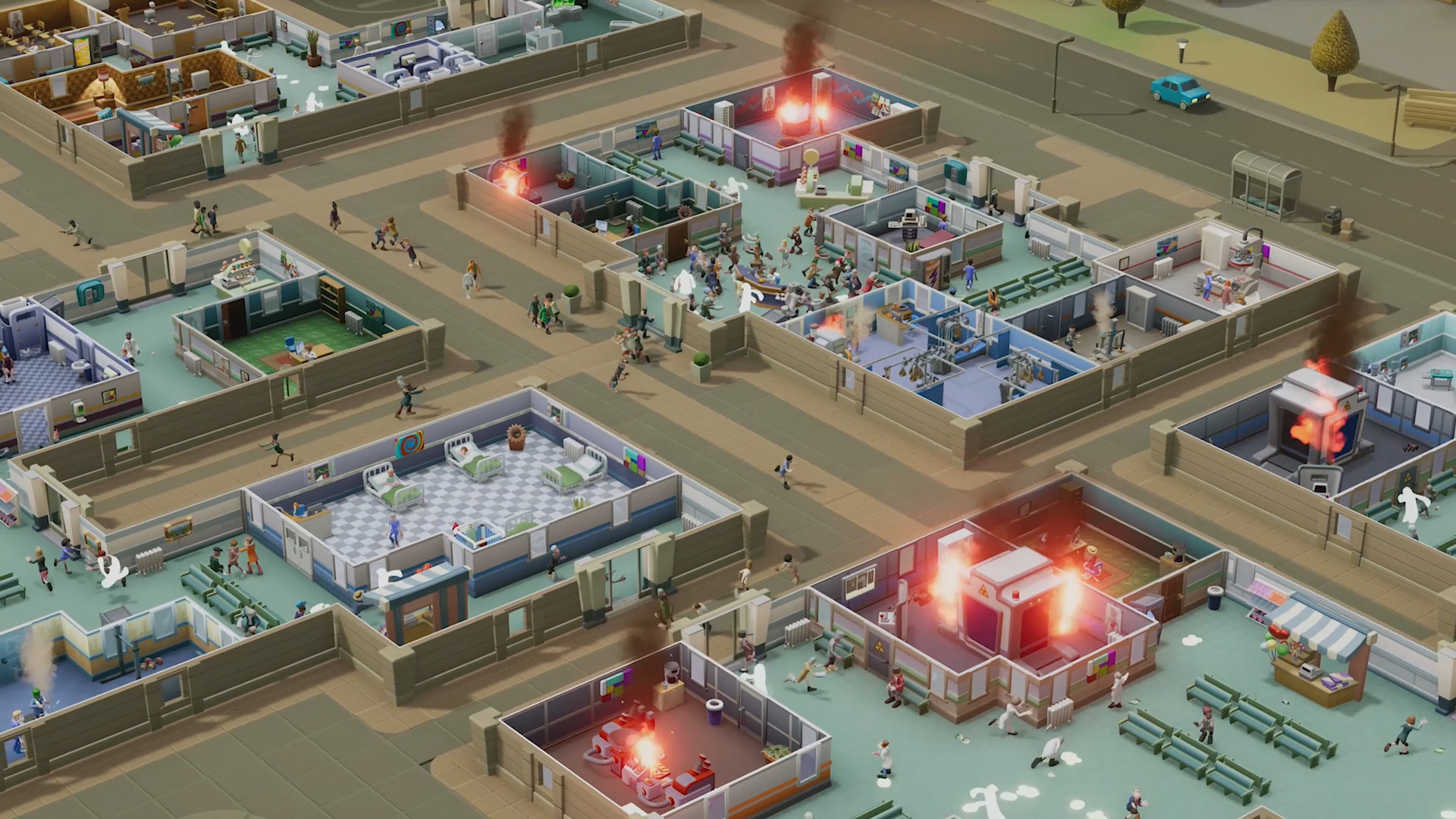
Diagnosis and treatment give that layout a purpose. Patients do not exist only to make the corridors look busy; their movement through the hospital creates pressure on the rooms, the queues and the staff assigned to handle them. I appreciate being able to identify a bottleneck and think about why it has formed. Building another room is not always the only consideration when training, placement and the rest of the route can affect the same problem. That makes the management more substantial than merely waiting for enough money to buy the next object. It is also where the repetition becomes most noticeable to me. A queue can be an interesting signal the first time it asks for a new response. It becomes less appealing when the hospital keeps producing versions of the same signal. The game rewards attention, but I do not always find the attention it requires pleasant enough to sustain the whole experience.
The staff system adds another important set of considerations. Hiring a person means thinking about their role, skills and needs rather than treating the roster as a number that should simply increase. Training can improve what the hospital is able to do with its existing people, giving expansion another route beyond buying more space. I like that connection because it makes the organization feel dependent on the people inside it. My reservation is the amount of small corrective work that can accumulate around them. A management game should require management, but I want the repeated decisions to produce a satisfying change in how the place operates. Sometimes that payoff is clear. At other times, the work feels like keeping several ordinary concerns from becoming inconvenient at once. I can understand the systems without enjoying every moment of maintaining them. The game has a coherent set of demands, but their coherence does not make all of them equally engaging.
Money and expansion are useful pressures because a hospital cannot solve every issue by building everything immediately. I like having to decide which improvement matters most and what can wait. A limited budget can make a practical choice more interesting than an unrestricted one, especially when the benefit affects several other parts of the building. The difficulty is how little the wider loop changes my emotional investment after the initial setup. Another room and another increase in capacity can be objectively useful without feeling exciting to work toward. I want the next stage of development to suggest a different problem, not simply a larger version of the same routine. Two Point Hospital has variety in its hospitals and fictional illnesses, but the familiar management pattern remains the part I notice most. The progression gives the work direction while not always giving it enough freshness to keep that direction compelling for me.
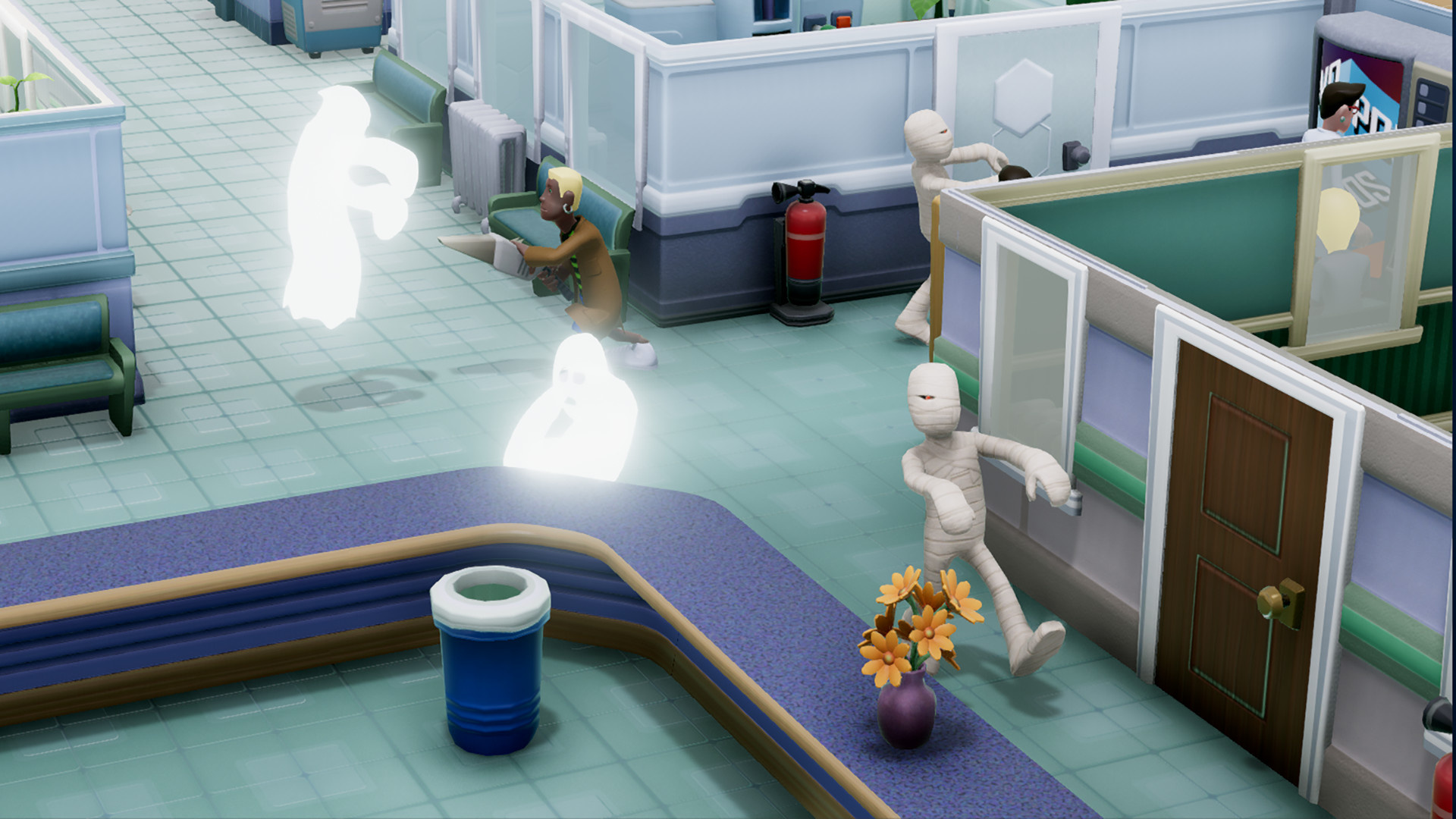
The absurd medical theme is a genuine positive. It makes the hospital more inviting to inspect, and the exaggerated treatment rooms turn an ordinary management action into something with a recognizable joke attached. I like the contrast between the serious task of keeping a facility functional and the silliness of what it treats. The art supports that contrast well, making busy spaces colorful without abandoning their practical purpose. The limitation is that a joke has a different lifespan from a management system. Once the visual surprise has been understood, the room still has to be enjoyable to place, staff and maintain. The presentation gives me a reason to look, but it cannot do all the work of making the next repeated decision attractive. I find the game pleasant to observe and more uneven to keep managing. That gap explains my mixed score much better than any claim that the underlying systems are shallow or absent.
I finish at five because I can see and sometimes enjoy what Two Point Hospital does well without wanting to recommend it enthusiastically. The layout decisions, staff development and flow of patients connect in sensible ways. The setting is funny, the rooms have personality and there are clear reasons to pay attention to how the organization functions. My problem is that the process becomes routine before the game runs out of things to ask me to do. I enjoy solving an interesting organizational problem more than maintaining another expanding version of the same hospital logic. That is a substantial limitation when maintenance is central to the experience. I do not find the game terrible, and I do not think its systems lack thought. I find it a mixed experience whose strongest qualities are easier for me to appreciate than to enjoy consistently. Five out of ten reflects that balance between a good premise and a management routine that does not keep me engaged enough.
Final thoughts
Layout, staffing and patient flow create a sensible management puzzle, while the absurd illnesses give it personality. I enjoy parts of the problem solving, but the repeated maintenance becomes more work than fun. The humor cannot keep the familiar routine equally engaging throughout. 5/10.
Final score: 5/10.
Reviewed on PC. No review copy was provided.
 Onimusha: Way of the Sword Review
 Disney Speedstorm Review
 Zap Blastum Review