Tails and stronger stage ideas give this second episode a much more satisfying identity
Sonic the Hedgehog 4 Episode II gives me a clear reason to enjoy it beyond the number in its title. Tails is an active part of the movement, the zones have more personality and the routes do a better job of making another attempt appealing. I like the way the two-character actions turn an ordinary section of platforming into something that belongs to this episode. It is still a short adventure, and some of the required cooperation can feel more like following a prescribed solution than discovering an exciting route. Those reservations do not dominate my opinion. Eight out of ten feels right for a game whose central ideas and presentation make the experience consistently enjoyable enough to recommend. I do not need it to recreate every detail of an older Sonic game to value it. I want the stages and movement it actually offers to work together, and the partnership gives this episode a worthwhile foundation.
The basic movement is the first thing that has to hold the game together. Running, jumping and using the homing attack need to make crossing the scenery enjoyable before a new mechanic can add much value. I like that Episode II gives its routes more room to develop around those actions rather than making every moment depend on a single repeated trick. Changes in elevation and the placement of hazards provide a reason to understand the act, and a cleaner attempt can feel meaningfully better than an uncertain first pass. That is an important part of Sonic's appeal for me. A stage should offer more than a route to finish once. My qualification is that the episode still has places where the movement feels more directed than expressive. I enjoy the overall flow without finding every transition equally natural, and the strongest stretches are the ones that let the familiar actions carry the pace instead of constantly requiring the next special interaction.
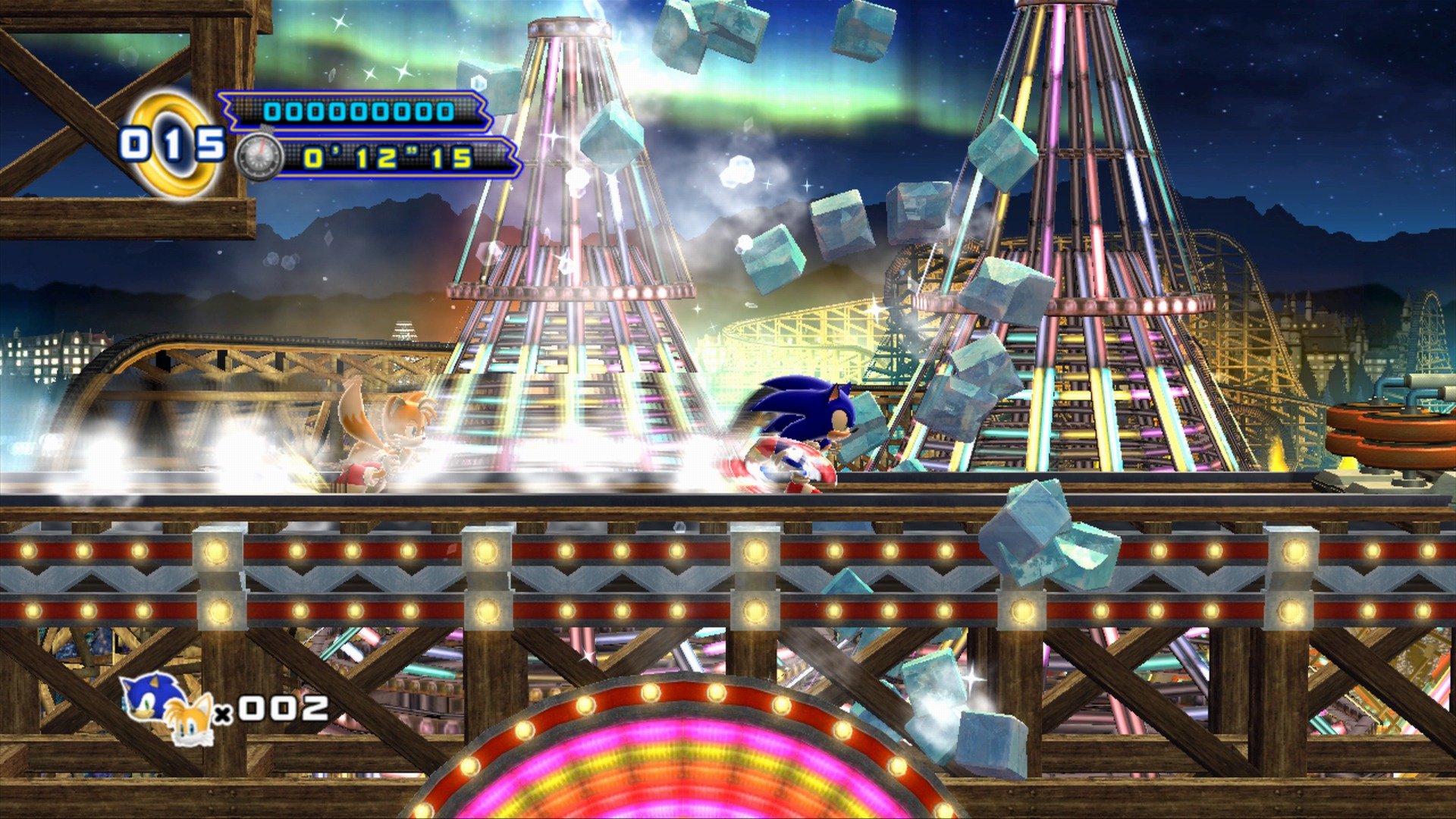
Tails gives the game its most useful distinction. Flying together, moving through water and combining into a stronger rolling attack turn the partnership into something that affects the level rather than remaining a story detail. I like how those actions change what a section can ask from Sonic. The characters are cooperating through the controls, and the game gives that cooperation an obvious purpose. The limitation is that a clearly marked team requirement can also become a pause to perform the expected move. I enjoy the system more when it feels connected to the movement already underway than when it seems to stop the route for a small demonstration. The episode manages both effects. The teamwork is worthwhile overall, but I do not want to praise every mandatory use as equally inventive. Its best quality is giving this adventure its own practical identity, not automatically making every obstacle more interesting simply because two characters are involved.
The zones support that identity with a stronger sense of place. The watery setting of Sylvania Castle and the colder industrial spaces of White Park give the adventure more personality than a sequence of generic callbacks would. I like how a change of environment can suggest a different kind of route while keeping the main platforming recognizable. The episode also makes its Sonic CD connection visible through Metal Sonic and the later events, giving the story a useful thread without requiring long interruptions. I do not need an elaborate plot here, but a recognizable rival and a reason for the journey help the stages feel connected. The short structure remains a limitation. I enjoy the available environments enough that I would welcome more substantial room for the idea to grow. The game makes a good impression through its selection, then reaches its boundary before the team mechanics have exhausted all the possibilities I would like to see explored.
The special stages add a familiar but useful change of emphasis. Steering through a ring-collecting challenge asks for a different sort of attention from the main side-scrolling acts, and the Emerald pursuit gives a completion-focused run another goal. I like having an optional demand that does not simply mean repeating the ordinary route without a different purpose. The challenge can be enjoyable when the next group of rings is readable and the movement feels under control. It can also become more frustrating than the main acts when a requirement is missed and the attempt has to be rebuilt. That does not ruin the extra route for me, but it means I would recommend the ordinary adventure more confidently than every step of the full Emerald hunt. The bonus content works as an addition to an enjoyable foundation. I would not want its requirements to become the only way someone judges whether the main platforming is worthwhile.
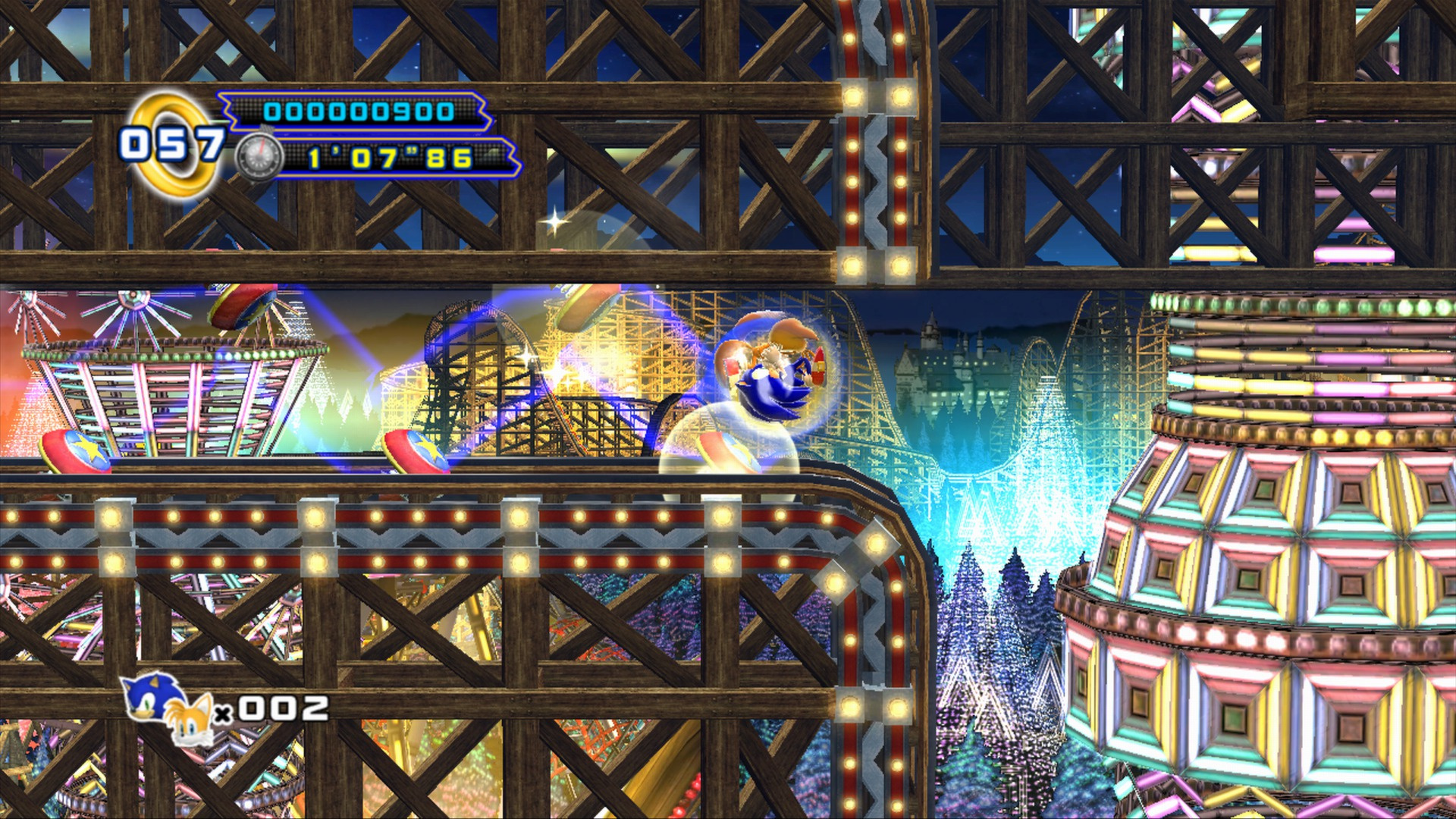
The presentation contributes substantially to the episode's appeal. I enjoy the colorful scenery and how the characters remain easy to read against it, especially when the team actions briefly change the shape of the movement. The soundtrack gives the zones an identity without overwhelming the action, and Metal Sonic provides a more distinctive visual presence than another anonymous machine would. The game also offers cooperative play, which is a sensible extension of a system already built around two characters. I like that the partnership is part of the basic design rather than an unrelated extra mode attached afterward. At the same time, I would not let the existence of co-op stand in for the quality of the solo stages. The ordinary route has to remain enjoyable in its own right, and that is where my positive score comes from. The additional way to approach it is welcome because the core experience is already appealing, not because a feature list alone makes the episode strong.
Episode II leaves me with a clear positive impression. The team actions make Tails useful, the zones have an enjoyable identity and the routes provide enough satisfying movement to make replaying them worthwhile. The adventure is short, and some mandatory team moments feel more scripted than expressive, but neither problem takes away the basic fun. Eight out of ten reflects a game I recommend for what it does rather than for the promise of a larger episodic project around it. I like the partnership and the sense that the stages have been built to accommodate it. I also like that the familiar Sonic foundation remains important instead of disappearing behind the new mechanic. There is room for a longer, richer version of these ideas, but the episode that exists is enjoyable enough to stand on its own. It gives me a good reason to keep moving and a practical reason to be glad Tails is there.
Final thoughts
Episode II makes its partnership useful through enjoyable team actions and more distinctive stages. The short campaign and some prescribed teamwork moments limit the freedom, but the platforming and presentation remain consistently appealing. I like this second episode as a worthwhile adventure in its own right. 8/10.
Final score: 8/10.
Reviewed on PC. No review copy was provided.
 The Murder of Sonic the Hedgehog Review
 Sonic the Hedgehog 4 Episode I Review
 SEGA AGES Sonic the Hedgehog 2 [Switch] Review