A demanding hoverboard racer whose systems make the effort worthwhile
Sonic Riders becomes much more enjoyable when I stop expecting it to behave like an ordinary kart racer. The boards, air supply, tricks and class routes all belong to the same racing system, and I like how much a better understanding of that system can change a run. This is not simply Sonic placed in a vehicle with a familiar set of items. It has its own rhythm and its own demands. The learning process can be rough, and the game is not always as clear as it should be about why a race is going badly. That is my main qualification rather than a reason to dismiss it. Eight out of ten is my score. I find the racing distinctive and rewarding once its parts begin to connect, with enough character and route variety to make another attempt worthwhile. It asks for more patience than a casual first impression suggests, but I enjoy what that patience can uncover.
The air supply is the decision that gives the whole race its shape. Boosting, sharp turns and other actions have a cost, so spending speed is not separate from maintaining the board's ability to keep racing effectively. I like having to think beyond the next immediate overtake. A boost can be useful now while leaving less room for the next section, and a mistake can affect more than the position lost at that moment. Running out and ending up on foot makes the resource matter in a very visible way. The system can feel harsh before the track and its opportunities are understood, which is why I would have preferred a more welcoming introduction. Once it makes sense, though, I find it more interesting than treating every burst of speed as a free button press. The resource gives the route a developing condition and makes a clean race feel like a sequence of connected decisions.
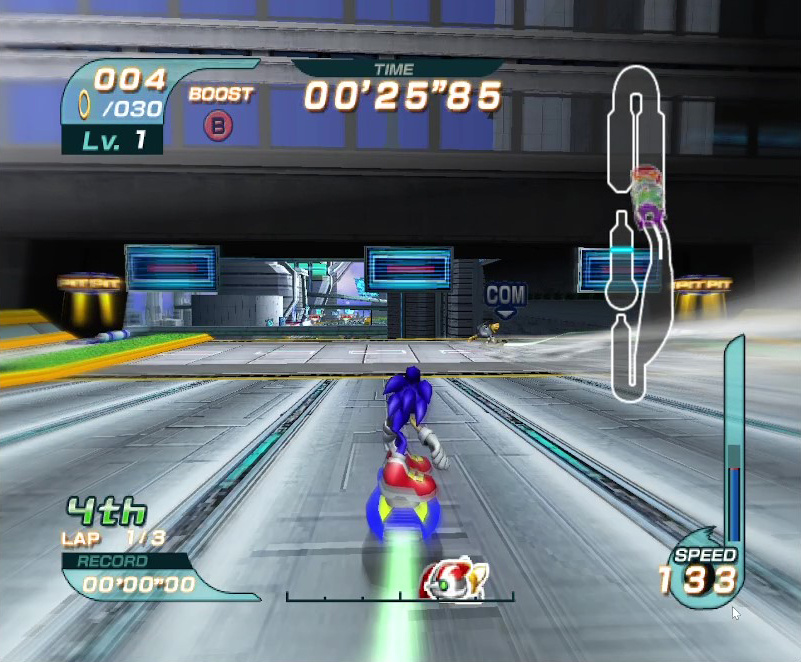
Tricks are an important part of that connection rather than decoration added to the jumps. A better result can replenish more air, so a ramp is a practical opportunity to improve the next part of the race. I like how this gives the time in the air a purpose beyond watching an animation. The landing and the setup matter because they lead back into the resource that supports the board on the ground. That relationship makes the game feel coherent when it is working well. It also explains why an unfamiliar route can be so unforgiving. Missing an opportunity may mean losing the immediate advantage and the air that would have made the following section easier to handle. I enjoy that depth once the track is readable, but I do not think the game always does enough to help the first attempts become informative. The reward for learning is strong. The early frustration could have been managed with more care.
Turbulence gives the racing another useful layer. Riding the trails left by other racers can turn their position into an opportunity rather than simply a problem to solve through a direct overtake. I like the way the course changes through the presence of the field. The line that is attractive at one moment may not be the same when another racer moves through, so the environment is not entirely fixed from lap to lap. It makes the race feel more active than a route learned once and repeated without adjustment. The limitation is how many systems the game expects to be understood at the same time. Air management, tricks, class routes and the behavior of other racers can become a lot to read before any one of them feels comfortable. That complexity is part of why I like Riders, but it is also why I would not call it immediately accessible. Its systems have value without being equally friendly to learn.
The character classes make alternate paths more than a scenic choice. Speed characters can use rails, flight characters have their own aerial opportunities and power characters can break through certain obstacles. I like that the track has different possibilities depending on who is racing. It gives the familiar cast a practical role and makes trying another character more useful than changing the model on the board. Different Extreme Gear adds another reason to experiment, with properties that can affect how the same course is approached. The danger with that much choice is that the game can feel opaque before the important differences are understood. I want to choose a setup because I can see how it suits the route, rather than because a menu contains more options than it explains comfortably. Riders becomes more rewarding as those relationships become clear. The process of reaching that clarity is the part of the package I find less polished than the racing deserves.
The presentation gives the game a strong identity. The boards fit the characters, the courses have enough visual variety to make the journey inviting and the Babylon Rogues give the story a rival group suited to this particular competition. I like Jet as a presence who can challenge Sonic on the game's own terms instead of simply repeating an existing conflict. The story is not the main reason I want another race, but it gives the competition some useful personality. The mission challenges provide a more practical source of replay value, asking for focused objectives within the same racing systems. I enjoy that when the challenge encourages a better use of the course rather than only another ordinary win. There is a substantial package around the core racing, although its most important achievement is still the moment when a familiar track starts to feel manageable and a stronger line becomes possible through understanding rather than luck.
I rate Riders eight out of ten because it offers a racing style I find genuinely worth learning. The air, tricks, turbulence and class paths work together to make the course more interesting than a road to follow. The cast and boards give those systems an appealing identity, and the extra challenges make the learning useful beyond a first story run. The rough introduction and uneven clarity are real weaknesses. I would not recommend it by pretending those first races are necessarily comfortable or that the game behaves like an easy kart-racing alternative. I recommend it because the distinct systems provide a satisfying result when they come together. There is more thought in the next turn, jump and overtake than the colorful appearance might imply. For me, that is what makes this PS2 racer worthwhile, even while I wish the game had done more to make its own best ideas easier to understand at the beginning.
Final thoughts
Riders connects air management, tricks, turbulence and character routes into a rewarding racing system. Its rough introduction and limited clarity make the early effort harder than it should be, but the result is distinctive and enjoyable once understood. I like it far more as its own racer than as a kart-game substitute. 8/10.
Final score: 8/10.
Reviewed on PlayStation 2. No review copy was provided.
 Sonic Dash 2 Sonic Boom Review
 Sonic Free Riders Review
 Sonic Riders Zero Gravity Review