
A hoverboard racer whose physical controls get between me and the fun
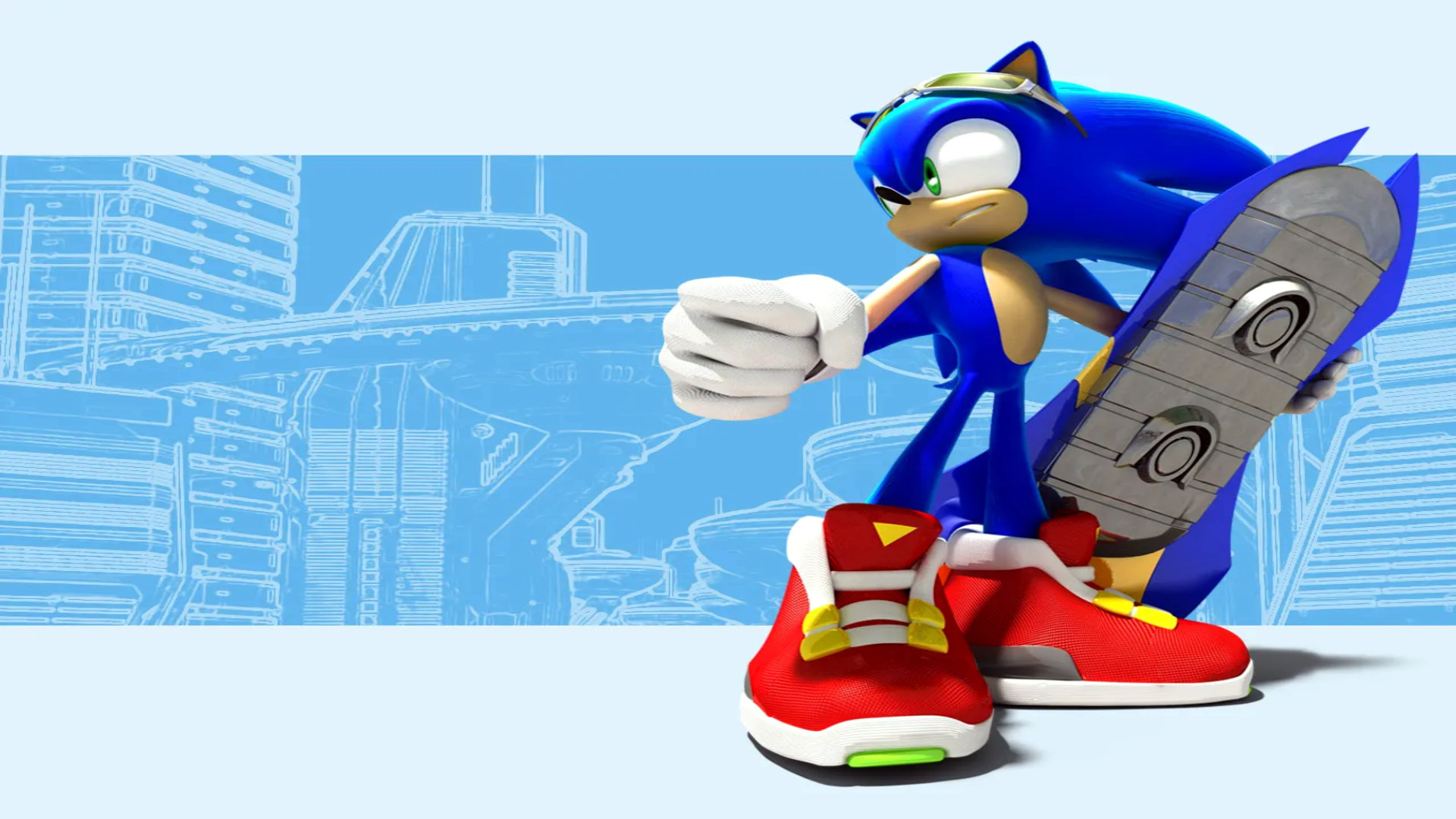
Sonic Free Riders has an idea I can understand immediately: make the player steer a hoverboard with their body instead of a controller. It fits the image of the sport, and the familiar cast gives the competition a clear identity. The problem is that I find the physical interaction much less enjoyable than the racing it is meant to support. I want to think about the next corner, route and opponent. Too much attention goes into performing the gesture needed to communicate an ordinary intention. Three out of ten is my score. The Xbox 360 Kinect game contains recognizable Riders ideas, but its input dominates my reaction in a way that the courses and characters cannot overcome. I do not reject motion controls simply for being different. I reject the experience when the difference makes the basic act of racing more awkward than exciting, and this game spends far too much of its time on the wrong side of that balance.
Steering is the most important part of any racing game because it connects almost every other decision to the road. Here, bending the body is meant to make that connection physical, turning a corner into a gesture rather than a small stick movement. I like the thought of a racer that creates a different sensation through its controls. I do not find this particular relationship comfortable enough to carry an entire game. A useful racing action needs to be quick to express and clear to read, especially when a correction is needed during another maneuver. The physical demand makes those adjustments feel less direct than I want. That is a criticism of how the game feels to play, rather than a claim about an exact tracking failure in a particular room. The setup is part of the experience, but the more fundamental issue is that I do not enjoy the chosen gestures enough to want them between every intention and its result.
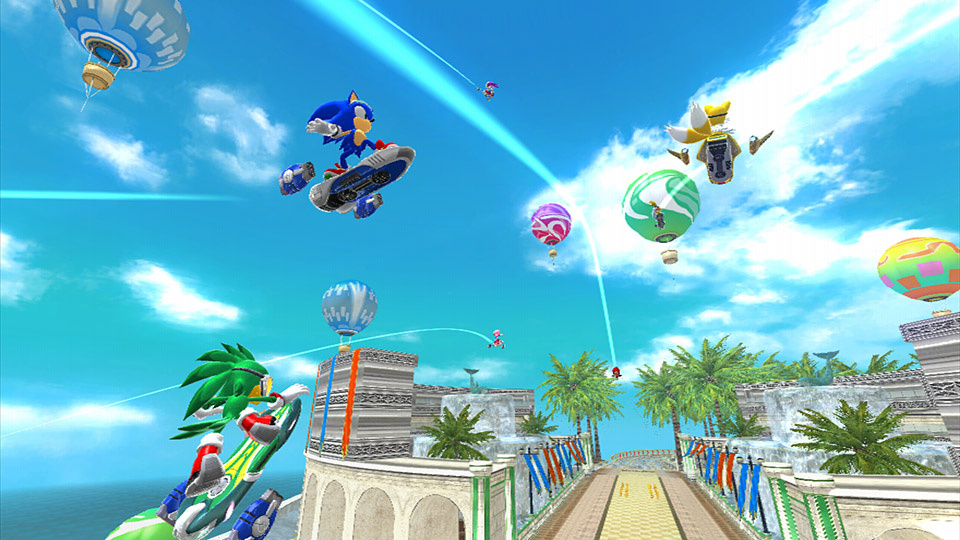
The other actions expand that problem. Kicking for speed, crouching into a jump and reaching for an object make the player's body responsible for several parts of the race. The idea sounds coherent when described as an imitation of riding. In practice, I find the number of physical motions more tiring to manage than satisfying to connect. A jump should be an exciting opportunity to improve the run. I am less interested when preparing the motion becomes more noticeable than reading the ramp itself. The same applies to activating an item. Giving each action a recognizable gesture can make the first attempt amusing, but a racing game needs those actions to remain useful through repetition. Novelty does not guarantee a good rhythm. Free Riders repeatedly asks the input concept to provide the excitement that the actual race should be generating, leaving a design I find much more interesting to explain than to keep carrying out.
The gear system has worthwhile possibilities underneath that interaction. Parts can change which advantages are available, and shifting stance can make a different choice relevant during a race. I like the idea of being able to adjust how a route is approached instead of having every shortcut fixed entirely by the initial character selection. It gives the course a reason to be read actively. The limitation is that another layer of physical interpretation sits between the choice and its use. A clever equipment system is less appealing when applying it does not feel as straightforward as the decision deserves. The game has real mechanics beyond its camera novelty, so I would not dismiss it as having nothing underneath the presentation. The frustration is that those mechanics are trapped behind the part I enjoy least. I can see how a route or a gear choice might be satisfying, while still wishing I could reach that satisfaction through a more direct and comfortable form of control.
The tracks and cast provide a familiar Riders atmosphere, with colorful environments and characters whose different appearances suit the board-racing premise. I like that the game is recognizably part of this branch of Sonic rather than an unrelated camera demonstration using his name. Rings, shortcuts and the competition give the stages an understandable purpose. The problem is that understanding the race is not the same as enjoying how it must be played. The setting cannot make an uncomfortable adjustment feel good, and a favorite character cannot make another required gesture an appealing decision. That gap remains present even after the first surprise of seeing the character respond to movement has passed. I want the world and systems to invite another lap because the driving is fun. Here they mostly remind me that there could have been a more enjoyable racer using these ideas if the ordinary interaction were less determined to turn every task into a physical performance.
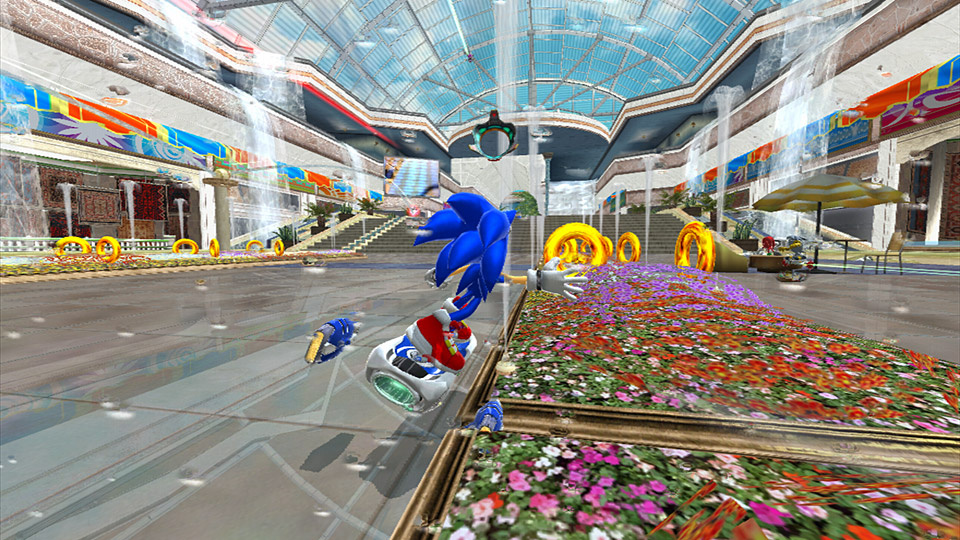
The additional race types and team activities give the package more than a basic series of single-player events. I can appreciate the effort to build cooperative and competitive variations around the physical premise. The issue is that another mode still depends on enjoying the same fundamental actions. Coordinating a gesture may create a different requirement, but it cannot make the gesture itself more comfortable. I do not find a larger feature list persuasive when the central input is the reason I am reluctant to continue. The campaign's shorter dialogue presentation also gives the characters less room to carry the experience than the larger story sequences in earlier Riders games. I do not need extensive cutscenes for a racer, but the simpler framing leaves the course and controls with even more responsibility for holding attention. The game has enough material to show that it is trying to be a full package. It lacks the enjoyable foundation needed to make that material feel valuable.
I rate Free Riders three out of ten because its basic physical interaction weakens nearly everything built around it. The cast, routes and flexible gear ideas are recognizable positives, and the premise is not unreasonable. I simply do not find steering, jumping and using items through these gestures satisfying enough for a racing game that repeats them constantly. A different control method should create another enjoyable way to engage with the course. For me, this one keeps drawing attention away from the route and toward the effort of expressing the action. I would rather have a more direct racer with these characters and ideas than a larger selection of modes depending on input I do not enjoy. The game has a clear identity, but identity is not enough to make the next lap worthwhile. The Kinect concept becomes the main obstacle to the fun instead of the reason the competition feels exciting, and the rest of the package never recovers from that problem.
Final thoughts
Free Riders has recognizable racing ideas and some useful gear flexibility, but I find its body-controlled steering and actions too awkward to enjoy repeatedly. The courses and cast cannot compensate for the discomfort at the center of the game. The physical premise gets in the way more than it adds. 3/10.
Final score: 3/10.
Reviewed on Xbox 360 (Kinect). No review copy was provided.
 Sonic Dash 2 Sonic Boom Review
 Sonic Riders Zero Gravity Review
 Sonic Riders Review