Good handheld pinball with more personality than its small table selection suggests
Sonic Pinball Party understands that a licensed pinball game needs to be enjoyable before the characters decorating it can matter. I like the straightforward control, the distinct themes of its tables and the way it turns familiar Sonic Team properties into a reason to try another set of rules. It is not a huge collection, and the surrounding modes do not all add the same amount of value. The central pinball is good enough to make those limitations feel like qualifications rather than a reason to avoid the game. Seven and a half is my score. I enjoy it as a focused handheld game that can give a short stretch of play a clear objective, whether that is improving a score or advancing a particular challenge. The cast gives it charm, but the more important achievement is making me interested in what the ball is doing and what the table is asking for next.
The basic controls keep the action approachable. Two flippers handle the central job, while the ability to nudge the table gives a little extra influence when the ball is heading somewhere unhelpful. I like that the small control scheme does not stop the game from asking for attention. Deciding when to use a flipper and reading where the ball is likely to return are enough to create a satisfying little rhythm. The themed objects and targets are most useful when they make a scoring opportunity clear, rather than simply placing recognizable artwork behind the action. Pinball Party generally has a good sense of that distinction. I enjoy looking at the tables, but I also want the presentation to help me understand them. A pretty background would not compensate for a game that felt unpleasant to direct, and the fact that the basic interaction works is what lets the character of the tables become a positive addition.
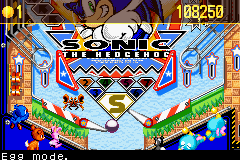
The three main tables give the package a more interesting identity than an entirely Sonic-only selection would have. Sonic, NiGHTS into Dreams and Samba de Amigo each bring a different atmosphere, and I like moving between those moods without leaving the same basic game. The tables have their own rules, so the change is more useful than swapping a background image. There is a reason to learn what a particular board rewards instead of expecting every target to have exactly the same role everywhere. That makes the small selection feel more substantial. It is still a small selection, though. I would enjoy another strong table more than another minor extra, because the main attraction is getting comfortable with a board and finding a better way to play it. The variety is enough to support a positive recommendation, but not enough for me to describe the package as especially broad or inexhaustible. Its focus is appealing, while its boundaries become clear fairly quickly.
Story Mode gives the Sonic side a framework through the Egg Cup tournament. I do not need a complicated narrative from a pinball game, but a progression of goals can make the next attempt feel different from simply starting another score run. Rescuing the characters gives the familiar faces a function in that structure, and the Casinopolis setting is a sensible place for the whole thing. I enjoy the added direction when it makes me pay attention to a particular demand from the table. My reservation is that a story goal is not automatically more entertaining than a free attempt. Sometimes I would rather concentrate on the scoring possibilities without the game deciding which result matters most. Having both approaches is useful because they suit different moods. The story gives the package an endpoint to work toward, while Arcade mode preserves the simpler pleasure of seeing whether the next run can be handled better than the previous one.
The tutorial is a worthwhile feature because themed pinball rules are not always obvious from the first glance at a board. Omochao can explain how the tables work, giving the game a practical way to introduce its goals instead of expecting the artwork to communicate everything on its own. I like being able to understand why a particular action matters before repeatedly trying to achieve it. That helps the distinction between tables become part of the enjoyment rather than another small barrier to getting started. It also makes the game more welcoming to someone attracted by the characters without already knowing much about pinball. The limitation is that learning the rules and enjoying them are still separate things. Some objectives are more immediately appealing than others, and no explanation can make every part of a small selection equally interesting. The tutorial does the right supporting job, though: it helps the player reach the actual game rather than simply decorating the menu with another feature.

The extra activities add some value without becoming the reason I would recommend the package. The Tiny Chao Garden gives rings another use and provides a slower change of pace outside the tables. The Casinopolis diversions and linked Party options offer more things to inspect, but I do not find their presence as important as the quality of the core pinball. I like a handheld game that gives a little variety without insisting that each extra is a major new mode. Here the additions mostly work as optional distractions. They can make the package feel more generous, while also showing how much of its lasting appeal still rests on the three boards. I would not trade a well-designed table for a longer list of small side activities. Pinball Party has enough worthwhile material in the center to make the extras welcome, but the extras are not substantial enough to hide the limits of that center from someone wanting a very large pinball collection.
I come away liking the game for its focus and character. The flipper action is enjoyable, the table themes are distinct and the story and score modes give useful choices about what to pursue. I appreciate the tutorial and the way the familiar properties have been made part of the rules rather than treated solely as decoration. The small number of tables and uneven importance of the extras keep the score at seven and a half. That is still a clear recommendation for the kind of handheld experience it offers. I do not need every Sonic spinoff to become a large adventure, and this one benefits from keeping a modest central idea clear. It gives me a good reason to watch the ball, learn the boards and try for a better run. The characters help make that process appealing, while the actual pinball is strong enough to justify spending time with them.
Final thoughts
Pinball Party has enjoyable core play, distinct Sonic Team-themed tables and useful choices between story goals and score chasing. The tutorial helps, while the side activities are welcome rather than essential. A small table selection limits the package, but I still find it easy to enjoy at 7.5/10.
Final score: 7.5/10.
Reviewed on Game Boy Advance. No review copy was provided.
 Sonic Dash 2 Sonic Boom Review
 SONIC PICO PARK Review
 Sonic Rumble Review