Cheerful Sonic party chaos that is more appealing in bursts than over repeated rounds
Sonic Rumble is enjoyable when its small toy-like characters are racing through a crowded course and the next obstacle still feels like a fresh surprise. The idea suits the cast, and the combination of running, surviving and collecting rings gives the competition more than one immediate goal. I like the cheerful energy and the way a recognizable Sonic setting can become a playful party challenge. My enthusiasm fades as the repeated rounds expose how limited some of the interactions feel. Six and a half is my score. There is fun here, especially in short stretches, but I do not find the complete loop deep or varied enough to sustain the same excitement for much longer. The characters and presentation make a strong invitation. The ordinary movement and repeated objectives have to support that invitation, and they do so unevenly. I enjoy Rumble as a light diversion without finding it an especially compelling long-term Sonic experience.
The toy-world presentation is the clearest success. Sonic and the other characters look appealing as small figures inside exaggerated environments, and the style gives the hazards a playful scale. I like that the game does not simply shrink an ordinary Sonic stage and call it a party course. The setting has a reason to be a little ridiculous, which makes the crowded movement and sudden reversals easier to accept as part of the idea. Familiar locations and devices help establish the series' identity, while the larger objects make the course feel different from a conventional platforming route. The limitation is that visual character cannot keep an ordinary obstacle fresh indefinitely. A cheerful tumble can be funny, but the action leading to it still needs to be enjoyable after the surprise has been understood. Rumble looks inviting more consistently than every round feels interesting to repeat, and that difference becomes important once the initial pleasure of seeing the cast in this format has passed.

The running rounds give the controls a clear purpose. Reaching the goal means judging gaps, avoiding hazards and finding a useful line through the crowd, so there is something to learn beyond simply holding toward the finish. I enjoy a course where understanding the timing makes another attempt feel more confident. Sonic's speed-themed identity also gives the format a sensible visual fit. The problem is how much the group can interfere with the satisfaction of a clean decision. A route that looks useful can become crowded, and the next awkward contact can matter more than the timing of the jump. Physical chaos belongs in a party competition, but I do not find every messy result entertaining. The game is strongest when a better line still feels worth seeking despite the crowd. It is weaker when the surrounding disruption makes the outcome feel less connected to the useful part of the action. That balance is not consistently comfortable enough for me to be more enthusiastic.
Survival challenges change the emphasis in a worthwhile way. Staying away from danger and reading the next movement of a hazard requires a different rhythm from rushing toward an exit. I like having those changes inside the same event because the controls can remain simple while the objective becomes different. The better rounds make patience and observation useful rather than treating speed as the answer to everything. The reservation is how quickly some of those patterns become familiar. A repeated survival arrangement needs enough variation to keep the next decision interesting, not merely another set of competitors standing in the same place. The surrounding players can create that variation, but they can also make the outcome more chaotic without making the challenge substantially deeper. I enjoy the contrast with racing while still wishing the individual activities gave me a stronger reason to study them. The selection creates variety in the short term, with less consistent staying power once its basic demands are known.
The ring-focused competition gives the event another useful priority. Finishing a section or surviving a hazard is not always the only thing worth considering if the number of rings also affects the result. I like that the game uses a familiar Sonic object for a practical purpose rather than simply as decoration along the route. Collecting can create a reason to take a different line or accept a little more risk, which gives the movement another decision to support. The limitation is that another scoring objective cannot automatically make the underlying interaction more satisfying. If a course or encounter has already become routine, asking for more rings may only extend the same familiar activity. I enjoy the scoring layer when it changes a choice in a visible way. I am less interested when the reward structure is doing most of the work of making another round feel necessary. The game has good ideas for its event structure, but their value still depends on the quality of the individual stages.
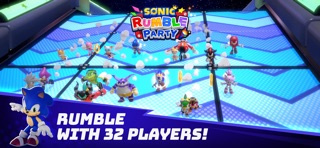
The cast gives the competition plenty of personality. Choosing a familiar character and seeing their expressions inside the toy setting is pleasant, and the music helps the rounds feel lively rather than anonymous. I like having room for that kind of playful identity in a Sonic spinoff. The cosmetic and collection elements are supporting benefits, not the reason I would recommend the game. A new look can make a character more personal without making a familiar obstacle more enjoyable. My larger reservation is that progression can become another reason to repeat rounds after their immediate appeal has started to thin. I would rather the next event be attractive because its movement and objectives are fun than because the reward list needs another step. Rumble has enough enjoyable moments that the loop is not empty. It simply does not keep those moments strong enough across repeated play for the broader progression to feel equally compelling.
I finish Sonic Rumble at six and a half because the idea is a good fit for the cast and the short-term fun is real. The toy presentation is charming, the different objectives give the competition a sensible shape and the better courses reward learning a route or a hazard pattern. The movement, crowd interference and repeated round demands are less consistently satisfying. I enjoy the game most when one quick challenge leads into another with enough change to keep the event lively. I enjoy it less when the same pattern is repeated mainly for another reward. That leaves a positive but qualified recommendation. Rumble is an entertaining Sonic party diversion with a clear identity, but the presentation and familiar characters are stronger than the depth of every activity underneath them. It gives the cast another playful place to exist without making that place one I want to keep returning to with the same enthusiasm indefinitely.
Final thoughts
Rumble has a charming toy-world style and enjoyable short bursts of racing, survival and ring collecting. Crowd interference and familiar round patterns make the longer loop less compelling, while rewards cannot fully replace fresh play. A cheerful Sonic party diversion with clear limits. 6.5/10.
Final score: 6.5/10.
Reviewed on iOS using iPhone 13 Pro Max. No review copy was provided.
 Sonic Dash 2 Sonic Boom Review
 SONIC PICO PARK Review
 Sonic Forces Speed Battle Review