Three characters, one team, and a wonderfully entertaining reason to keep switching
Sonic Heroes takes an idea I already find appealing and builds an entire adventure around it: Sonic and his friends should be useful together while I am actually playing. The three-character formations make that happen immediately. Running, flying and breaking through obstacles are connected by a quick change of leader, so the group matters through the controls rather than only through dialogue. I love how easily that gives a stretch of level several different things to ask of me. A fast section can lead into a gap that calls for flight, then into enemies or barriers better handled with power. The game keeps moving while the role changes, and that makes the teamwork feel active. For me, this is a fantastic interpretation of what a Sonic ensemble adventure can be. It is colorful, energetic and full of reasons to enjoy the characters as a group. The concept is simple enough to understand quickly, but it gives the stages a personality I find incredibly entertaining.
Every team has all three formations. Team Sonic pairs Sonic, Tails and Knuckles; Team Dark brings Shadow, Rouge and Omega; Team Rose combines Amy, Cream and Big; and Team Chaotix uses Espio, Charmy and Vector. The important distinction is between choosing a team for its campaign and switching the active formation during a stage. I am not swapping entire campaigns in the middle of a run. I am choosing which member leads the trio already on screen. I like how clearly those roles divide the immediate problems. Speed supports fast movement and its associated actions, flight makes vertical space accessible, and power deals with obstacles and tougher opposition. The characters have a purpose beyond looking different, while the shared structure means a new team does not demand learning an unrelated game. That combination works beautifully for me. It makes the larger cast useful without turning every change of character into a lengthy interruption or a separate collection of disconnected activities.
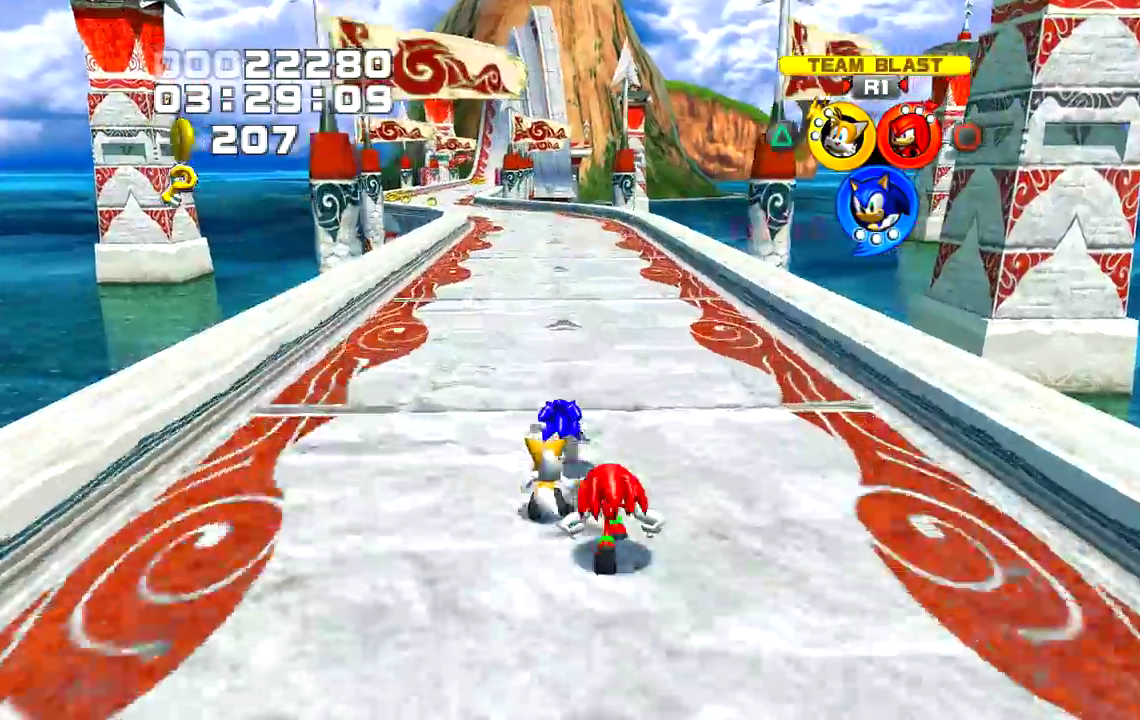
The stages are where that basic structure becomes especially enjoyable. Beaches, cities, casinos and more unusual environments give the adventure a strong sense of variety, while rails, platforms and enemies keep the formations relevant. I enjoy having to read the space in front of the team instead of treating speed as the answer to every situation. Flight can turn a vertical obstacle into an opportunity, and power changes how a blocking enemy or breakable object fits into the route. That does not mean every section offers three completely separate solutions. Sometimes the level is clearly asking for a particular role, and I am happy to work within that direction. The pleasure is in keeping the sequence moving as those demands change. Sonic Heroes gives me plenty of bright, elaborate places to run through, but I like that the scenery is built around actions rather than existing only as decoration around a straight sprint to the goal.
Combat fits into the team structure rather than sitting entirely outside it. The formations affect how enemies are approached, and power cores can improve the characters' effectiveness during a run. Team Blast supplies a bigger special attack, giving each trio another expression of its identity. I enjoy that the group can feel forceful as well as fast. There is a satisfying contrast between passing quickly through a space and stopping long enough to clear a threat properly. I would not claim that every enemy encounter is equally interesting, or that repeated robot fights can never interrupt the pace. Some sections are stronger when the game lets movement take the lead. Even with that reservation, the combat does not cancel the appeal for me. It gives power characters a meaningful place in the adventure and makes the team changes matter beyond crossing gaps. I like the broader rhythm created by having something to tackle as well as somewhere to run.
Replaying familiar environments with the different groups is a large part of what I value here. The campaigns share plenty of scenery, but they do not all ask exactly the same thing of the player. Team Rose offers a gentler approach, Team Dark raises the challenge, and Chaotix introduces mission objectives that shift attention toward specific tasks. I like those differences because they make the cast a reason to reconsider a level rather than just a different set of faces for the same run. There is repetition, certainly, and someone who only wants entirely new scenery at every step will feel it more strongly. For me, returning with a different group is part of the appeal. Performance ranks give another reason to improve a route, while keys and the special stages add goals beyond simply reaching the end. The game offers several ways to stay involved with the spaces it has already taught me to understand.
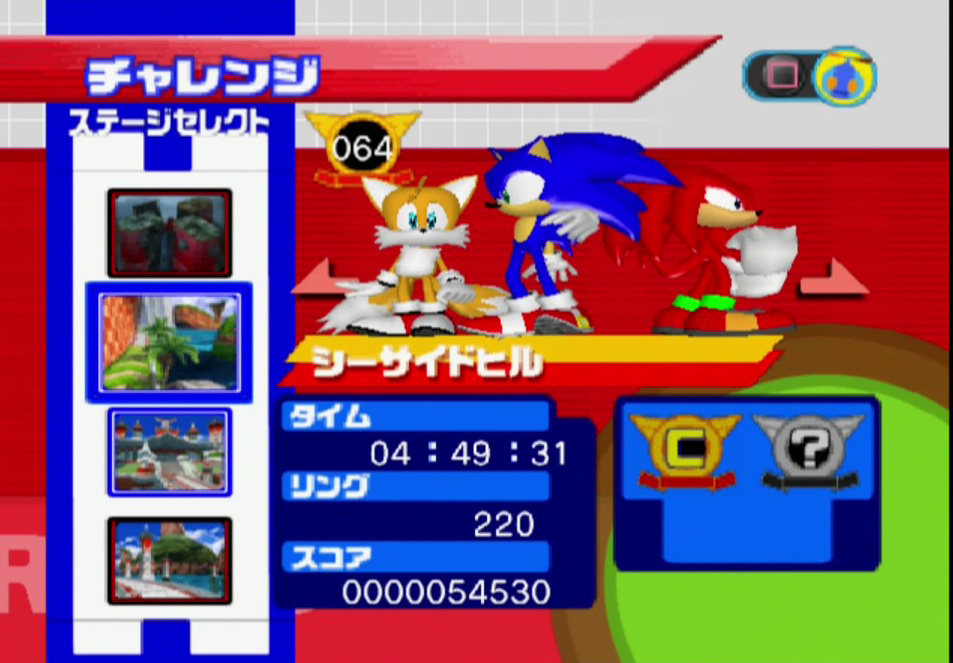
Presentation does a great deal to make that repetition enjoyable. I love the bright color, expressive character groups and energetic soundtrack. The music suits a game that is constantly encouraging another push forward, and the visual themes make the adventure feel enthusiastic about being a video game. I do not need the story to become heavier or more complicated to enjoy that tone. The teams have enough personality to give the journey a playful shape without overwhelming its main attraction. At the same time, a busy screen and a moving camera can make some situations less clear than the broad visual confidence suggests. I can recognize that friction without treating it as the defining feature of the whole game. What stays strongest for me is the combination of places, characters and sound. It makes the team-based movement feel like part of a complete, cheerful adventure rather than a clever mechanic searching for a setting.
My enthusiasm for Sonic Heroes comes from how well those parts support the kind of Sonic game I want to enjoy. The formations give the friends a practical purpose, the stages keep changing the immediate task, and the presentation makes it inviting to return. I do not consider a ten a claim that every camera angle, fight or repeated section is beyond criticism. It means that the overall experience gives me the enjoyment I am looking for so consistently that those reservations do not change my recommendation. This is a game with a strong identity, and I love that it commits to the team idea instead of treating it as a brief novelty. Running with one character is fun; making the whole trio useful adds another layer of pleasure to the adventure. Sonic Heroes is inventive in a way I can feel through the controls, and it remains one of the most entertaining expressions of this cast for me.
Final thoughts
I love Sonic Heroes for making the team matter throughout the actual platforming. Its speed, flight and power formations give the colorful stages a lively rhythm, and the different groups make returning to those stages worthwhile. Repeated encounters and occasional readability problems are real reservations, but they do not outweigh the fun for me. The soundtrack, cast and constant changes of role make this an exceptional adventure.
Final score: 10/10.
Reviewed on PlayStation 2. No review copy was provided.
 Sonic Dash 2 Sonic Boom Review
 SONIC PICO PARK Review
 Sonic Rumble Review