A thrilling new direction that makes simply moving through Sonic's world feel incredible
Sonic Frontiers is incredible because it gives Sonic room to make movement itself feel like an adventure. The open zones let me see something interesting, change direction and use the character's speed to connect one small discovery to another. I love that freedom. The game still has focused stages, combat and clear progression, but it no longer needs every moment to exist inside the same corridor toward a finish line. Ten out of ten is my score because the overall combination works so strongly for me. I enjoy exploring, I enjoy the contrast of Cyber Space and I enjoy how the larger battles make Sonic's abilities feel important at a different scale. There are edges to the presentation and a degree of repetition in the objectives, but they do not weaken my enthusiasm for the experience at its center. This is a bold, entertaining adventure that finds a convincing new use for what makes Sonic enjoyable in the first place.
The open-zone structure is the biggest reason that use feels fresh. An island can contain a puzzle, a combat encounter, a rail sequence and a distant point of interest without requiring a separate menu between every decision. I like being able to notice one activity while traveling toward another. It makes the landscape feel active rather than simply large. Sonic's speed is useful for exploring it, and the movement turns the ordinary distance between objectives into something worth enjoying. The game does not need every object in the environment to look naturally placed for the play to work. What matters most to me is how the different routes connect through the controls. I can appreciate a focused, authored stage and still love this more open approach. Frontiers gives that familiar pleasure another context, allowing a small piece of platforming to be part of a larger journey instead of always being the whole destination.
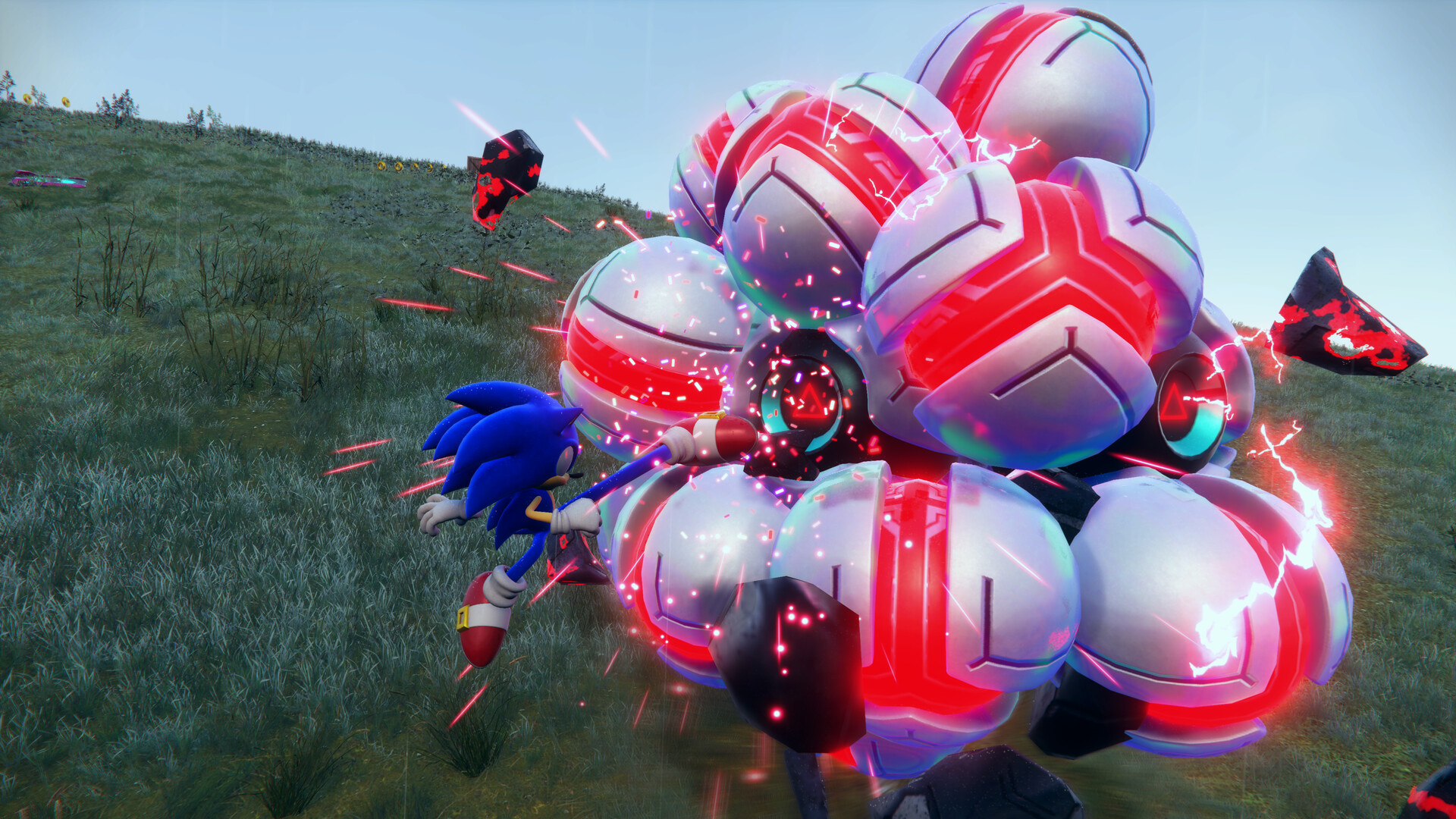
The Cyloop is a particularly smart connection between movement and interaction. Drawing a loop around something makes Sonic's path useful for solving a problem or changing a combat situation, so running is not only the way to arrive at an objective. It becomes part of what the objective asks for. I love that the mechanic belongs to the character rather than feeling like a completely separate puzzle tool. It is easy to understand and flexible enough to have several applications. The smaller environmental challenges also give the islands a practical structure, making exploration reveal more than another attractive view. I enjoy that sense of a landscape gradually becoming understood. Some activities repeat their basic idea, and I do not think every individual puzzle is equally memorable. The larger rhythm works because the next piece can lead naturally into another kind of action. The variety is most effective when it stays close enough together that the island feels inviting rather than like a checklist of isolated chores.
Combat gives the wider spaces another reason to exist. The enemies ask for more than simply a familiar jump into a target, and the range of attacks and defensive actions makes Sonic feel capable of carrying a more substantial encounter. I like having to recognize what kind of threat is in front of me and choose an approach rather than treat every opponent as the same obstacle with a different shape. The larger guardians make especially good use of that change in scale. They can turn the environment and the movement into part of the fight, which makes the open-zone idea feel relevant to the action rather than only the travel. I do not need every encounter to be equally demanding to enjoy the system. The appeal is that fighting can provide a meaningful change of rhythm without making Sonic stop feeling like Sonic. The game gives his speed and agility another expression, and I find that expression far more exciting than a token combat system added only to fill space.
Cyber Space provides a useful contrast. The compact stages place the movement inside clearer routes and focused objectives, giving the adventure another kind of pace when the open zone has encouraged a looser direction. I enjoy moving between those approaches. A short stage can become a challenge to improve, while the island outside it remains somewhere to explore on less fixed terms. That keeps the new structure connected to the series' established strengths without making it dependent on them at every moment. The stages also give rewards a practical role in the larger progression, so they do not feel completely detached from the journey. My strongest enthusiasm still belongs to the islands, but the focused sections make the package more varied. I like a game that can offer a destination with a precise route and then return me to a world where I decide which direction is interesting next. Here the two approaches support each other more often than they compete.
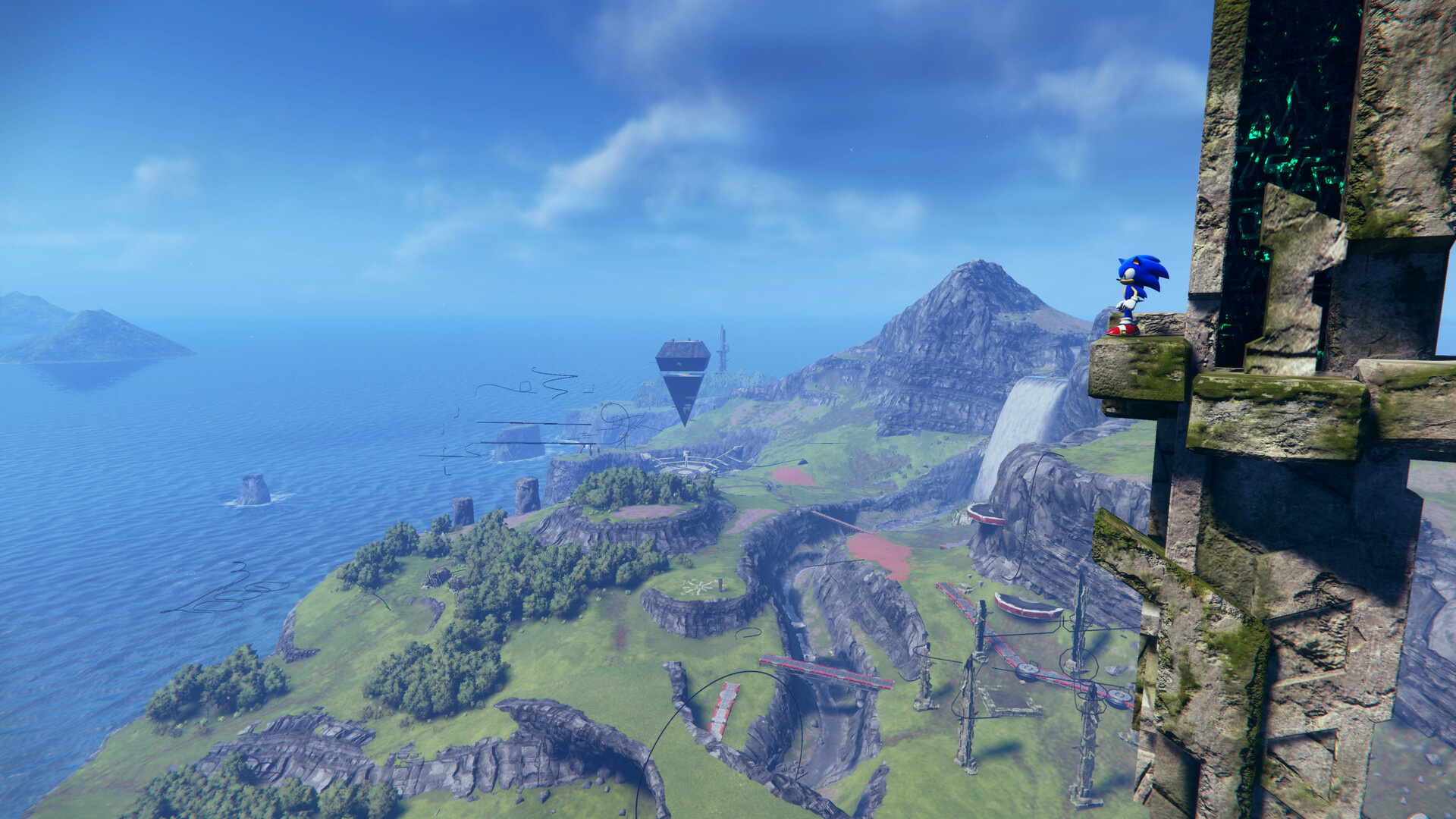
The atmosphere and music make a substantial difference to how the adventure feels. The quieter island mood gives the exploration room to be curious and a little mysterious, while the larger confrontations can become loud and dramatic without making that contrast feel pointless. I love how confidently the game changes its scale. The story around Sonic, his friends and Sage gives the setting an emotional direction without needing every moment of movement to stop for another explanation. The presentation is not uniformly smooth, and some of the visual transitions are easier to notice than I would like. Those are qualifications I can recognize without letting them dominate the whole experience. The game is memorable to me because of what it lets Sonic do and how its different moods support that action. The strongest scenes and battles make the larger journey feel exciting rather than merely lengthy, giving the new direction an identity beyond the fact that the spaces are open.
Frontiers earns its ten through the way its parts come together around movement. Exploring the islands is enjoyable, the Cyloop makes a route into an action and combat gives Sonic another scale of challenge without abandoning his identity. Cyber Space supplies focused replay opportunities while the wider world keeps offering another direction. I love that the game takes a real step forward instead of only rearranging familiar stages, and I love how entertaining that step is to carry out. The repeated objectives and visible presentation edges are not invisible to me. They are simply much less important than the amount of freedom, energy and personality the adventure delivers. Ten out of ten reflects that complete reaction. I find this a fantastic Sonic game, with a new structure that makes discovering a route, crossing an island and taking on a huge threat feel like different expressions of the same wonderfully enjoyable character.
Final thoughts
Frontiers makes Sonic's movement feel exciting in a new context. The islands, Cyloop, larger combat encounters and focused Cyber Space stages create a varied adventure whose freedom I love. Repeated tasks and visible presentation edges remain, but the overall experience is exceptional to me. 10/10.
Final score: 10/10.
Reviewed on PC. A review copy was provided by SEGA.
 Sonic Dash 2 Sonic Boom Review
 SONIC PICO PARK Review
 Sonic Rumble Review