
A compelling city simulation that asks for patience with its console presentation
SimCity 2000 is appealing to me because a city becomes a collection of connected decisions rather than only a picture to make larger. A new district needs infrastructure, the infrastructure costs money, and the budget has to support what the growing population requires. I like how those relationships give an apparently simple act, such as drawing another road or zoning another area, a place within a larger problem. The Saturn version keeps that underlying appeal, even though I find working with a management interface on the console less comfortable than the planning itself. This review concerns the Japanese Saturn release, with the presentation and access considerations that come with that version. My seven reflects a simulation I enjoy thinking through more consistently than I enjoy carrying out every selection within its console format. The city-building systems are strong enough to make the package worthwhile, while the interface keeps the recommendation qualified.
Zoning gives the city its basic direction. Residential, commercial and industrial areas have different roles, so expanding the map is not simply a matter of placing more of the same tile everywhere. I enjoy how a plan becomes a question of relationships between places. Housing needs access to the rest of the city, commercial activity needs a setting in which it can function, and industry brings useful growth alongside problems that have to be considered. That makes the layout interesting before the city becomes especially large. A good idea has to account for what is near it and what will be required afterward. For me, this is the strongest kind of management appeal: a small visible decision contributes to a larger system that continues to respond. SimCity 2000 makes the city feel like something to understand rather than simply a surface on which to arrange an attractive collection of buildings.
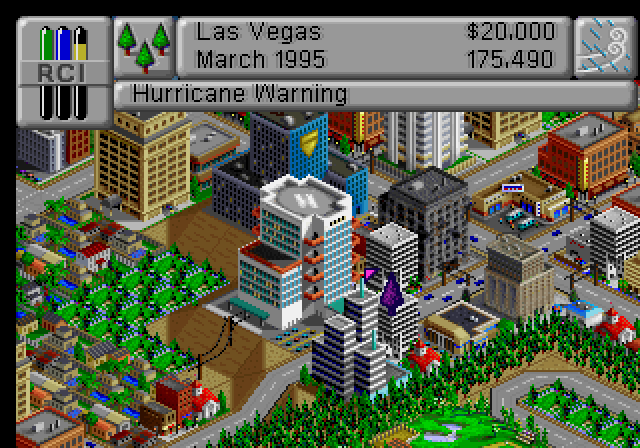
Power and water make those relationships more practical. A zoned area needs more than the correct color on the map before it can function as part of the city. Providing the underlying services turns a broad plan into a series of concrete requirements. I like that the simulation keeps the less glamorous work relevant. Building another district is more interesting when it also means considering how the district will be supplied and connected. The infrastructure gives expansion a cost in both space and money, which prevents growth from becoming entirely automatic. My enjoyment comes from finding a workable arrangement rather than only watching a number increase. The game is effective at making a successful connection feel like a small solution inside the larger plan. That is a good foundation for a city builder, because it gives the player reasons to care about the invisible support underneath the visible streets and buildings.
Transport adds another layer to the same problem. Roads, rail and other connections influence how the city can move and how different areas relate to one another. I enjoy having a reason to look at the layout again after growth has made an earlier arrangement less suitable. A road that was adequate for a smaller district can become part of a much broader transport question. That gives the simulation a useful sense of continuation. The initial plan does not become irrelevant, but it may need to be understood differently as the city develops. I find that more interesting than a system in which every new building can simply be placed without affecting what already exists. At the same time, the growing amount of information makes comfortable access to the tools increasingly important. The more the city asks me to compare and adjust, the more I notice the effort of navigating the console interface around those decisions.
The budget keeps the expansion from becoming a completely free construction exercise. Taxes, services and the ongoing demands of the city have to be considered together, so a desirable project is not automatically the sensible next expense. I like the way that gives the planning consequences beyond whether something fits on the map. A hospital, school or other service can be useful while still requiring support from the city's finances. The appeal is in deciding what can be provided and when, with the knowledge that another decision will follow. I do not need the simulation to provide one final, universal solution for that to be enjoyable. The changing relationship between growth and cost is the point. For me, the game is strongest when a visible problem leads to several connected considerations instead of a single obvious button that resolves it. The financial structure gives the city that worthwhile resistance to an otherwise simple expansion plan.
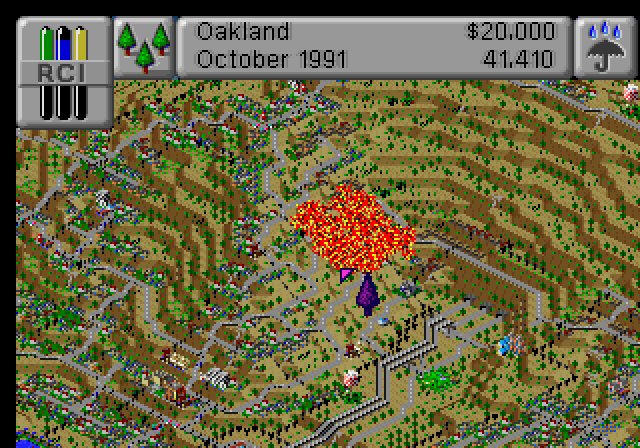
The isometric presentation makes the result enjoyable to watch. I like seeing a city gain a clearer identity as its districts develop, while the underlying map remains important to understanding why that development is happening. The visual change gives the systems a visible consequence without replacing the need to examine them. My main reservation about this version is the practical work around the planning. A management game asks for frequent selections, changes of tool and inspection of information. I find that process more deliberate and less fluid in this console presentation than the ideas being managed. The Japanese release also has its own language considerations, which should not be ignored when describing the edition. Those qualifications do not remove the appeal of the simulation, but they matter because so much enjoyment depends on being able to work comfortably with the city's information. The underlying design is more inviting than every part of accessing it here.
I recommend this Saturn SimCity 2000 with that distinction made clear. The zoning, infrastructure, transport and budget form a compelling collection of relationships, and I enjoy how a growing city continues to ask for another decision. The visible development gives those decisions an appealing result. I find the console interface and the demands of working through the information less consistently comfortable, so my enthusiasm is moderate rather than unconditional. A seven reflects a city builder with a strong underlying appeal inside a version that requires patience. I can enjoy the problem of making a district function and the broader plan hold together, while still wishing that carrying out the next adjustment felt more natural. The city simulation provides the reason to stay interested. The particular presentation of this Japanese Saturn release is the reason I would explain the qualifications before recommending it.
Final thoughts
I enjoy SimCity 2000's connected zoning, infrastructure, transport and budget decisions. Watching a city grow gives those systems a satisfying visible result. The console interface makes working with the information less fluid than the planning itself, and this Japanese Saturn edition has its own language considerations. It remains a worthwhile simulation with practical qualifications, earning 7/10 from me.
Final score: 7/10.
Reviewed on Sega Saturn. No review copy was provided.
 Onimusha: Way of the Sword Review
 Disney Speedstorm Review
 Zap Blastum Review