A playful Sega showcase whose physical novelty lasts longer than some of its minigames
SEGA Superstars is a good idea for an EyeToy game. Sega's characters already have recognizable movements, sounds and goals, so turning them into short physical activities makes more sense than attaching the camera to an ordinary adventure and hoping for the best. I enjoy the immediate silliness of seeing familiar worlds respond to broad movements. The problem is how uneven the collection becomes once that first impression has passed. Some activities have an appealing rhythm, while others feel too slight to make me eager for another attempt. Six and a half is my score. It is a playful PS2 package with enough personality and variety to be worthwhile, but not enough consistently strong minigames to make the whole thing an enthusiastic recommendation. I like the way it presents Sega's history as something to interact with. I just wish more of those interactions had the staying power to match the affection behind the selection.
The camera changes the kind of attention the game asks for. A conventional controller keeps the important actions under the fingers, while EyeToy puts the player's own image and movement into the activity. I like that difference when the goal is clear enough to make the physical action feel natural. Reaching toward a target or matching a broad direction can be entertaining without needing a long explanation. The best moments make the unusual input the point of the game rather than an obstacle between the player and it. My reservation is how little room some of the activities have to grow beyond that first recognition. Once the basic movement is understood, another attempt needs a useful challenge to improve, not only the same novelty again. The package sometimes delivers that through timing and score chasing, and sometimes seems satisfied that a familiar character has reacted to the camera at all. That unevenness is the main limit on how much I enjoy returning.
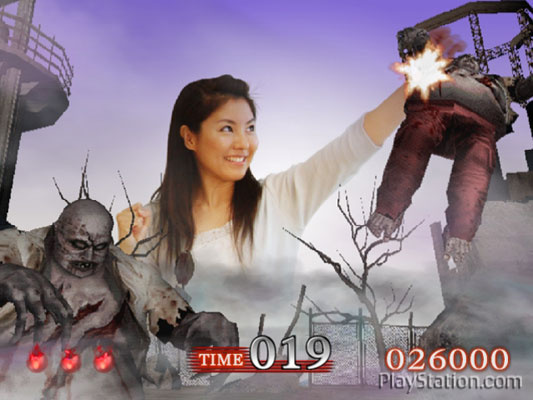
The variety of Sega properties is the most appealing part of the selection. Sonic, NiGHTS, Samba de Amigo and other recognizable worlds give the activities different moods instead of asking one character to carry every kind of minigame. I like how the presentation can communicate a game's identity quickly. Music, a familiar setting and a recognizable action are enough to give a short challenge context without requiring a lengthy story. The small format also allows a property to appear without pretending that its entire original game has been reproduced. That is a sensible use of a collection like this. The limitation is that recognition cannot do all the work. An activity still needs to be enjoyable if the familiarity is set aside. I enjoy seeing the characters, but I do not want a beloved name to become the only reason to repeat a minigame whose actual demand has already become dull.
The more direct activities suit the format better for me. I want to understand what a movement is meant to accomplish, see the result clearly and have a reason to improve the next attempt. A simple challenge can be satisfying when the timing and feedback work together, so I do not think these games need to become complicated to be worthwhile. The trouble comes when simplicity leaves too little to consider. A quick burst of movement can be funny the first time and much less interesting when it is the entire activity again. I like the collection in shorter stretches because changing the theme and the demand keeps that issue from taking over immediately. A long succession makes the unevenness more obvious. Some games invite a better score, while others mostly invite moving on. That difference matters more to my recommendation than the number of familiar properties on the menu.
EyeToy is also part of the practical character of the package, rather than a detail that can be ignored when judging it. These are activities built around a camera view and physical space, not controller games with an optional alternative. I like the accessibility of a broad gesture when the goal is easy to read, but I do not find that kind of interaction equally appealing for every challenge. A game can be perfectly understandable and still offer less fine control than I would prefer. That is a reservation about the style of play, not a claim that every activity fails to recognize movement. The collection asks for a willingness to enjoy a looser, more physical kind of interaction. I can enjoy it on those terms in the stronger minigames. I am less persuaded when a weaker one relies on the same looseness without adding an appealing rhythm or a strong reason to improve.
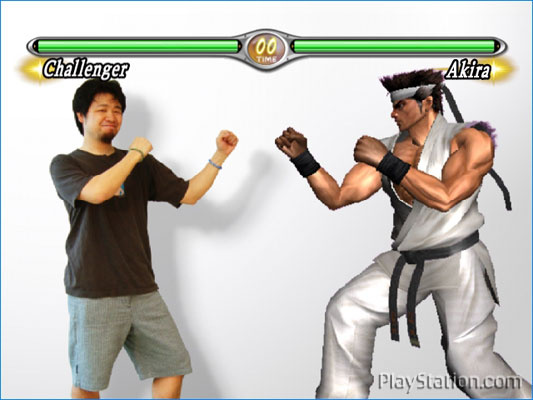
The presentation helps keep the package cheerful. The bright environments and familiar music make it easy to understand the intended mood, and I like that the game does not treat its physical play as something that needs a serious explanation. It is comfortable being a collection of small, playful activities. That confidence makes the weaker minigames easier to move past, though it does not make them stronger. The extras and scoring goals can give a short challenge another purpose, but the basic action still decides whether that purpose is attractive. I would rather repeat a genuinely enjoyable minigame for a better result than work through several less interesting ones just to say the collection has been explored thoroughly. Superstars has enough appealing moments to make that selective approach worthwhile. It does not have the consistency to make every part of the selection feel equally valuable or equally likely to bring me back.
I finish SEGA Superstars with a positive but limited recommendation. The use of familiar worlds is thoughtful enough to give the collection its own identity, and EyeToy makes the stronger activities feel different from ordinary controller minigames. The quick changes of theme are enjoyable, and the presentation keeps the mood light. My enthusiasm fades when an activity has little left after the first physical joke or the first successful attempt. Six and a half out of ten reflects a package I like in parts, with a style of play that suits short bursts better than sustained attention. I do not need every experiment to become a deep game. I do need enough enjoyable reasons to repeat it, and the collection only delivers those consistently in part of its selection. It is a pleasant Sega detour, but an uneven one whose novelty is sometimes doing more work than the actual challenge.
Final thoughts
Superstars uses EyeToy and Sega's cast to create a cheerful, immediately understandable collection. The stronger minigames have an enjoyable rhythm, but several lose their appeal once the physical novelty has passed. I like the variety more consistently than the individual challenges. 6.5/10.
Final score: 6.5/10.
Reviewed on PlayStation 2 (EyeToy). No review copy was provided.
 SEGA Superstars Tennis Review
 Sonic Superstars Review
 SEGA AGES Sonic the Hedgehog 2 [Switch] Review