
A space-themed children’s ride whose simple shooting gives me very little enjoyment
SEGA Sonic Cosmo Fighter Galaxy Patrol is a children's arcade attraction, and its format is essential to understanding what it offers. Sonic enters a small spaceship, Eggman supplies the trouble, and the player takes part in a short shooting adventure supported by a moving cabinet. I can understand why that combination would be inviting to a young child. A familiar character and a physical vehicle provide an immediate idea of what the attraction is meant to be. My reaction to actually evaluating the game is extremely negative, however. I find the shooting too limited in appeal to make the surrounding presentation worthwhile for me. There are working controls, changing situations and an objective. I simply do not find their combination remotely satisfying enough to recommend as something worth playing for its own merits.
The controls give the cabinet a clearer identity than a simple screen inside a decorative shell. There is a button for firing weapons, another for equipping rocket fists, and a speed-up lever that tilts the cabinet. The joystick is also connected to the movement of the ride. I appreciate that the physical presentation and the game are intended to work together. Those are concrete attempts to make the player feel involved in Sonic's vehicle. My problem is that the attraction of those actions is much stronger as a description than as a reason for me to remain interested. A lever, a tilt and a firing button can create a playful relationship with a machine, but the activity they support still has to be enjoyable. For my taste, the physical framework does not make the shooting more compelling. It adds something distinctive around the game without giving me much pleasure in the game itself.
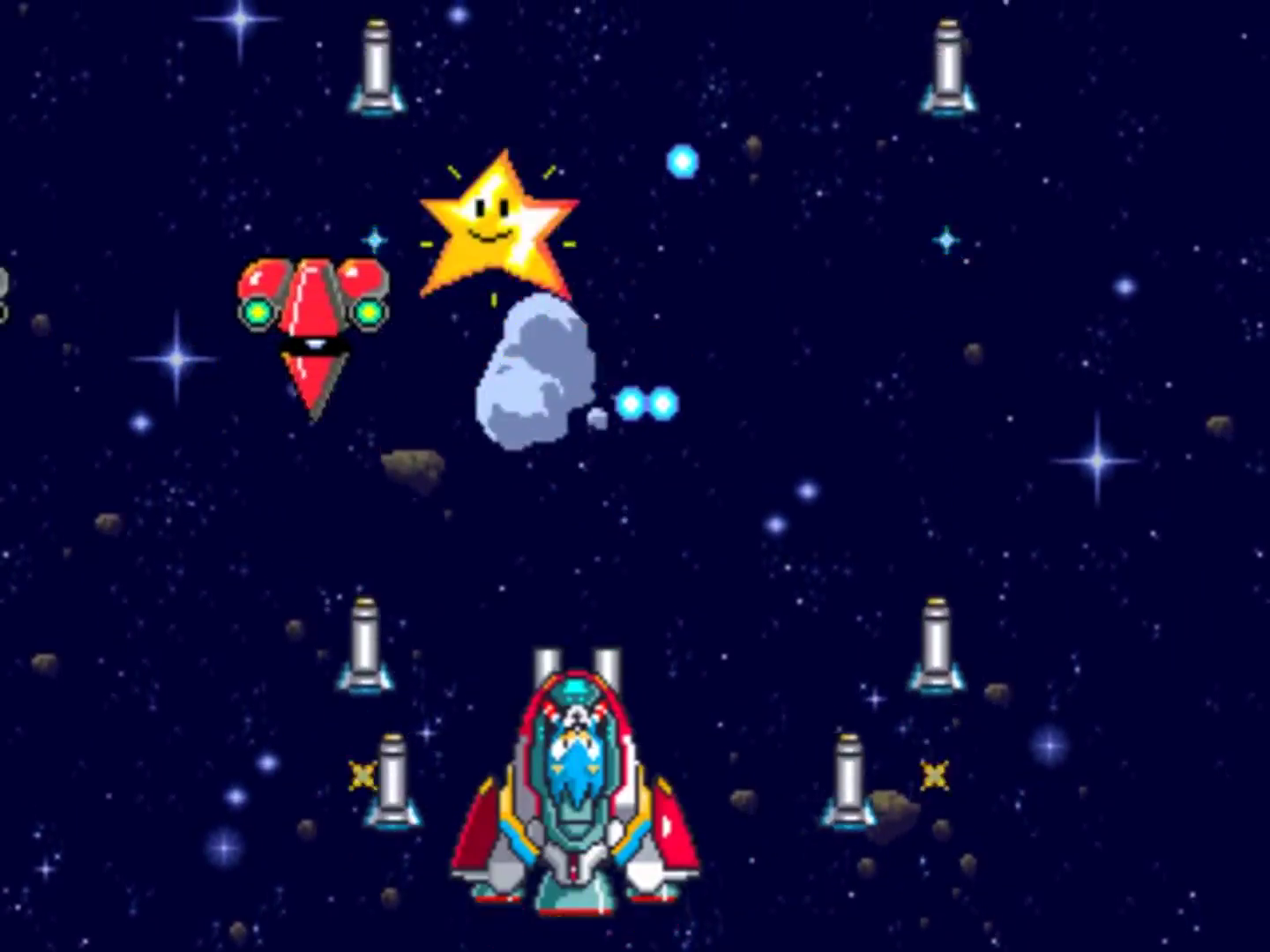
The early shooting puts obstacles and bombs in the path of Sonic's pursuit. Destroying what appears ahead contributes stars, so there is a visible connection between taking action and being rewarded for it. I do not want to erase that structure just because I dislike the result. The game does ask the player to respond to what is happening, and it gives those responses a purpose. What I find unappealing is how little satisfaction I get from the process of clearing the way. Shooting at incoming material is a sensible starting point for a children's space attraction, but it does not become entertaining enough for me to care about improving the result. The stars provide feedback; they do not automatically provide enjoyment. I want the act of aiming, firing and reacting to carry the experience, rather than relying on the presence of a reward to make the routine feel worthwhile. Here, that routine leaves me almost entirely uninterested.
Eggman's direct attacks give the later part of the game a different focus. The confrontation at the station involves avoiding his vehicle and returning fire, followed by a more elaborate machine whose arms and head become targets. That is a real change within the attraction, and I would not describe the whole sequence as one unchanging action. I can see the attempt to give the ride a small escalation and a recognizable climax. My disappointment is that the change does so little for my overall enjoyment. Breaking the confrontation into targets adds a clearer structure, but the shooting remains too slight in appeal for me to find that structure exciting. I do not need a long campaign or a large selection of weapons from an attraction with this purpose. I do need the small sequence it offers to make me care about carrying it out. The additional confrontation does not manage to create that interest for me.
The Sonic identity makes the premise recognizable quickly. A red spaceship, familiar characters and a rescue mission give the game a friendly framework without requiring much explanation. I like the broad idea of letting an arcade attraction put Sonic into a different kind of activity. There is no rule that every use of the character has to reproduce the platformers. My criticism is not that the game should secretly become a running adventure. It is that this particular shooting activity gives the character too little enjoyable work to do. The surrounding theme makes it easy to recognize what I am looking at, while contributing much less to why I would want to keep interacting with it. Recognition can make an attraction inviting, but I do not think it is enough to make the actual experience rewarding. Here, the familiar face does far more for the initial curiosity than for my opinion of the play.

The ending's star rating at least gives the performance a simple summary. That fits the small scale of the attraction, and I can understand the value of offering a clear result without a complicated explanation. I do not object to the game being accessible or to its limited duration as a ride. Those choices make sense for the audience it is trying to reach. My objection is more basic: I find almost no appeal in repeating the activity to improve that result. A compact experience can be excellent when its few actions are especially enjoyable, and a simple rating can encourage another attempt when the underlying challenge is fun. For me, neither condition is met strongly enough here. The physical controls and recognizable theme do not turn the shooting into something I want to revisit. I can acknowledge the logic of the design without finding the experience worthwhile as a game for my own tastes.
That is why my score is so low even after recognizing the attraction's intended audience. I am not claiming that children have to share my reaction, or that the cabinet should be judged as a full console release. I am judging the amount of enjoyment the actual shooting and interaction provide for me. The answer is very little. The controls, changing confrontation and star rating give the experience a basic structure, but they do not make it entertaining enough for me to recommend. Its place among the stranger uses of Sonic is easier to appreciate than its play. I find it curious as an unusual arcade machine and deeply unconvincing as something to spend time playing. A one reflects that reaction directly. There is an understandable attraction concept here, but understanding what it is trying to do does not make me enjoy the result, and the Sonic connection cannot rescue it for me.
Final thoughts
I find Cosmo Fighter interesting as an unusual Sonic arcade attraction and almost entirely unappealing as a shooting game. Its firing controls, moving cabinet and changing Eggman confrontation are real parts of the design, but none gives me enough enjoyment to recommend it. The familiar theme is stronger than the play beneath it. For my tastes, this is a firm 1/10.
Final score: 1/10.
Reviewed on Arcade. No review copy was provided.
 SEGA AGES Sonic the Hedgehog 2 [Switch] Review
 SEGA AGES Sonic the Hedgehog [Switch] Review
 Sonic Dash 2 Sonic Boom Review