A colorful rhythm party whose central interaction never becomes satisfying enough for me
Samba de Amigo Party Central looks like a game I should enjoy much more than I do. The colors, the expressive characters and the idea of shaking maracas to music create an immediately cheerful invitation. The problem is that the act of matching the targets does not become comfortable or satisfying enough to support that invitation. I find myself thinking about the gestures and the screen more than feeling carried along by the song. Four out of ten is my score. I can appreciate the personality and enjoy the idea behind the format, but the core interaction does not give me enough reason to keep returning. A rhythm game needs the connection between action and music to feel rewarding, and that is where the experience falls short for me. The surrounding modes and customization add things to inspect without changing the part I find least enjoyable about actually playing.
The basic concept is easy to understand. Targets appear around the screen, rhythm cues approach them and the player responds with the appropriate direction and timing. I like how directly the maraca idea communicates the activity. It does not need an elaborate explanation to feel distinct from pressing buttons along a straight note track. The difficulty is that understanding the required action is not the same as enjoying it. I want the physical response to become part of the music, with the screen helping that connection rather than dominating my attention. Here the process feels more mechanical than musical too often. The next cue becomes another instruction to carry out instead of a satisfying continuation of the rhythm. That is a significant weakness for me because the entire format depends on repeating those responses. The concept can remain charming while the interaction underneath it stays less appealing than the presentation promises.
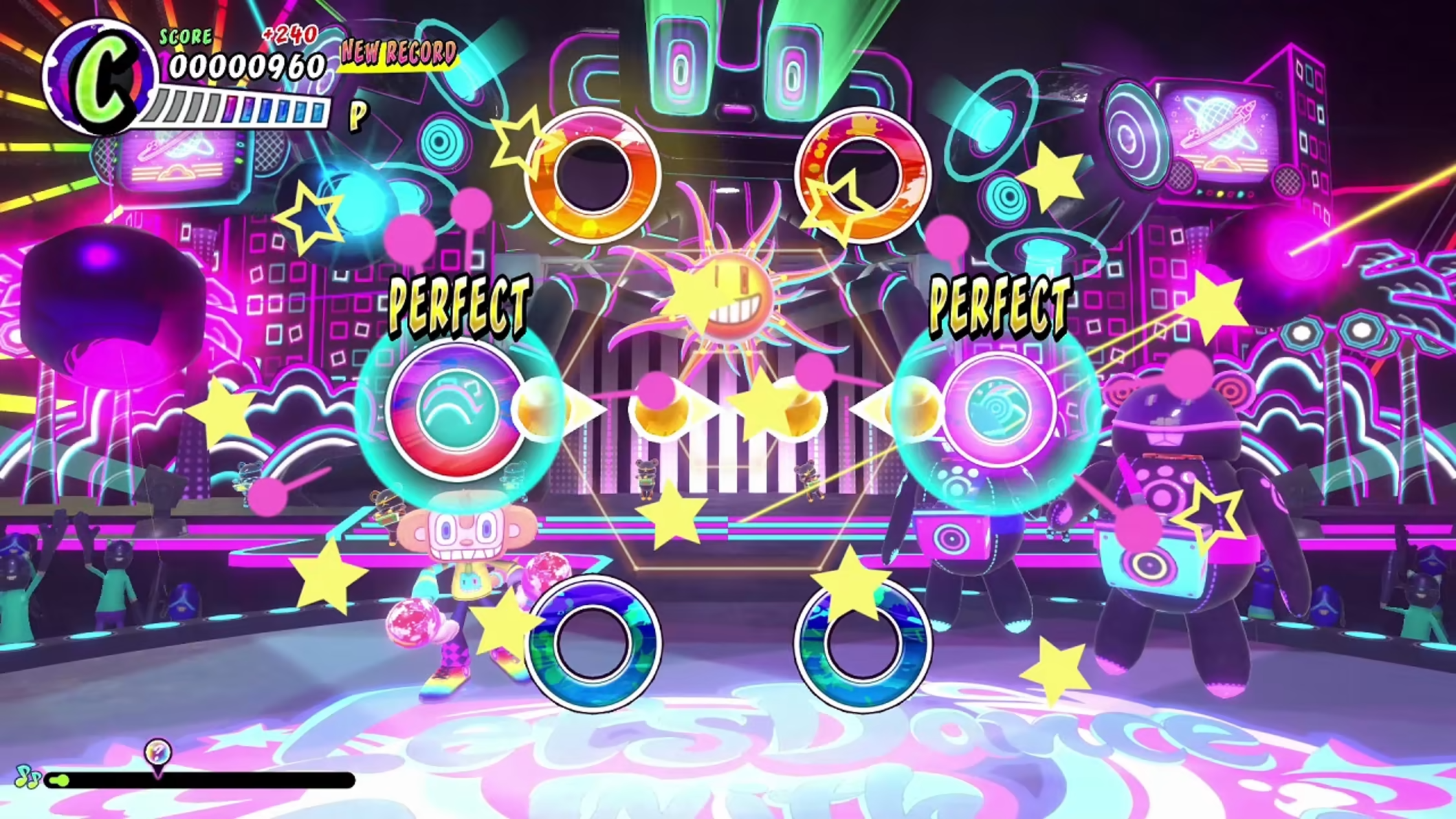
Changing the height and direction of the gestures gives the game a physical identity, and I appreciate that it tries to make movement part of the enjoyment rather than simply reproduce another rhythm format. A good motion game can make a small action feel playful through its timing and feedback. My reaction is that the attention needed to place each response does not consistently turn into a pleasing sense of flow. I am more aware of satisfying the target arrangement than enjoying the broader phrase of the song. That is a personal disagreement with the interaction, not a claim that the game has no rules or that the input is universally broken. I can understand the direction and still dislike how it feels to keep carrying it out. The game needs that repetition to be its strength, and for me it becomes the main reason the experience loses its appeal. A cheerful animation after the fact cannot supply the missing satisfaction.
The song selection gives the package variety, but a rhythm game's soundtrack needs the play attached to it to work as well. I like the willingness to bring different moods into the same colorful setting. A new song can change the pace and the pattern without requiring the whole format to be explained again. The limitation is that another track does not solve my larger problem with the action. A song I enjoy hearing is not automatically one I enjoy interpreting through these gestures. I want the pattern to make the music feel more engaging, not merely place another demand on top of it. There are moments when the connection is pleasant, but they do not arrive consistently enough to make the full session compelling. The selection provides breadth while the ordinary movement remains the deciding factor. I would rather have fewer songs attached to an interaction I love than a broader list that repeatedly brings me back to the same discomfort.
The party-focused additions give the game another way to use its exuberant presentation. Changes of rules and playful interruptions can make the activity less predictable, which is sensible for a format that wants to be social as well as rhythmic. I appreciate the attempt to create more than a straightforward sequence of tracks. My reservation is that surprise can interrupt the little flow I am beginning to find. A rhythm game already asks for concentration, and another sudden demand is not always the kind of variety I want at that moment. The result can feel busy without becoming more enjoyable. I do not think every party element is a bad idea; I think the main interaction needs to be satisfying enough that the extra chaos has something strong to build on. Here I am often still trying to become comfortable with the ordinary cues when the game is asking me to appreciate another layer around them.
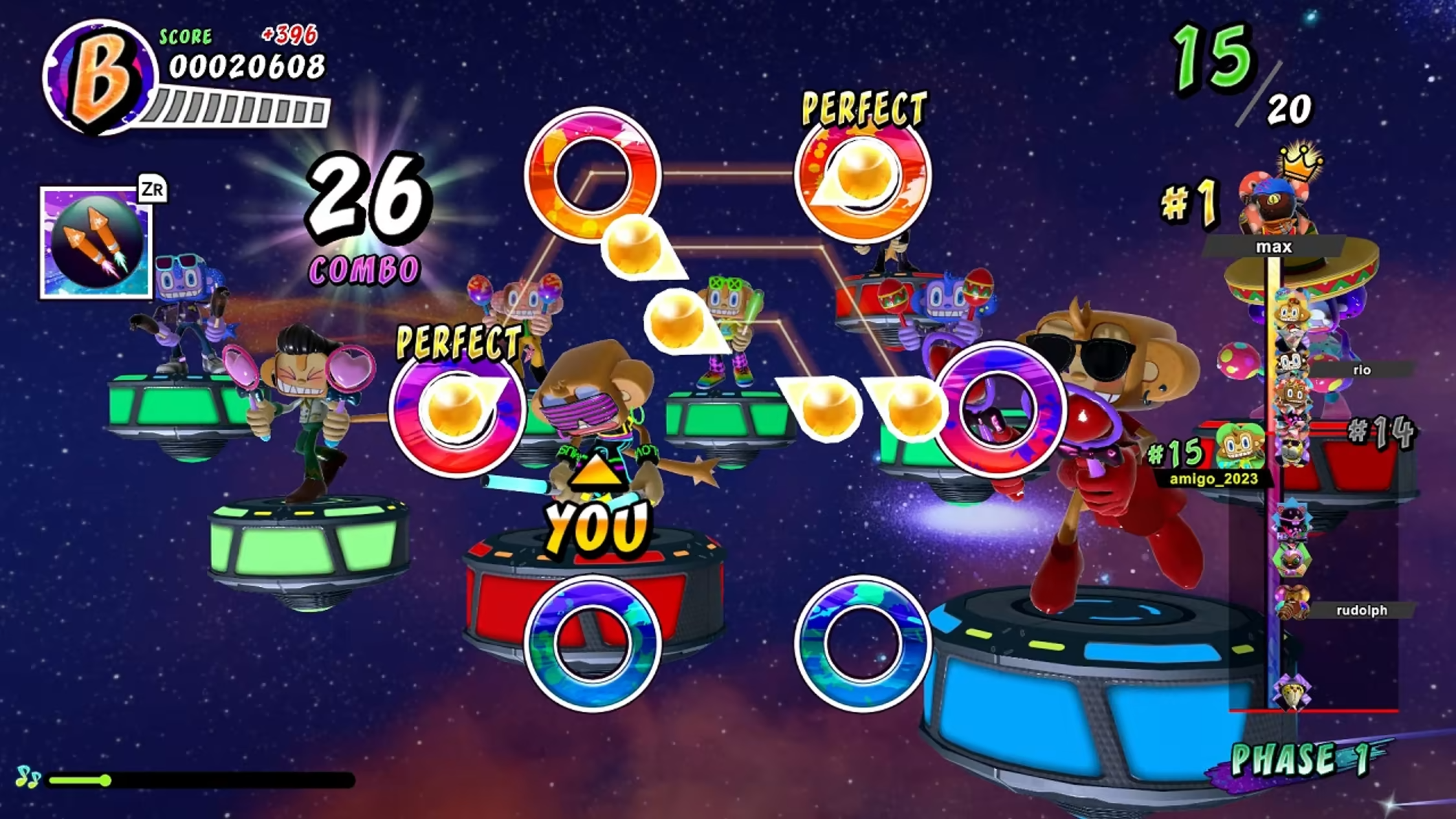
The presentation is clearly the strongest positive. Amigo and the surrounding characters have a cheerful energy, the colors suit the music and the game is happy to look ridiculous without treating that as a problem. I like that confidence. Customization also gives the cast another playful role outside the track itself. Those qualities make the package pleasant to look at and easy to recognize. They cannot carry a rhythm game whose main interaction I do not enjoy consistently. The extra activities and rewards provide reasons to return on paper, while my actual motivation still depends on wanting to play another song. I find the invitation stronger than the activity it leads into. That is disappointing because the whole idea has such a clear identity. The game does not need to become restrained or serious. It needs the connection between movement, timing and music to feel as joyful as the surrounding visuals are trying to suggest.
I finish Party Central at four because the core repetition is not rewarding enough for me. The maraca concept is understandable, the presentation has plenty of personality and the selection of songs gives it a useful range of moods. I enjoy those ideas more than the act of repeatedly matching the targets. The physical input never becomes a comfortable musical flow often enough, and the extra party demands can make the experience feel busier rather than better. I would love the same bright identity attached to an interaction I found more satisfying. As it stands, I do not recommend the package strongly. A rhythm game lives through the pleasure of performing its repeated action, and this one does not make that action enjoyable enough for me to overlook the frustration. Four out of ten reflects a lively-looking game whose central experience falls well short of the party it appears to promise.
Final thoughts
Party Central has a cheerful identity and an appealing maraca premise, but I do not find its target-matching interaction consistently satisfying. The songs and party additions cannot create the musical flow I want from the core play. I enjoy the presentation much more than the experience. 4/10.
Final score: 4/10.
Reviewed on Nintendo Switch. No review copy was provided.
 Sonic Pinball Party Review
 Onimusha: Way of the Sword Review
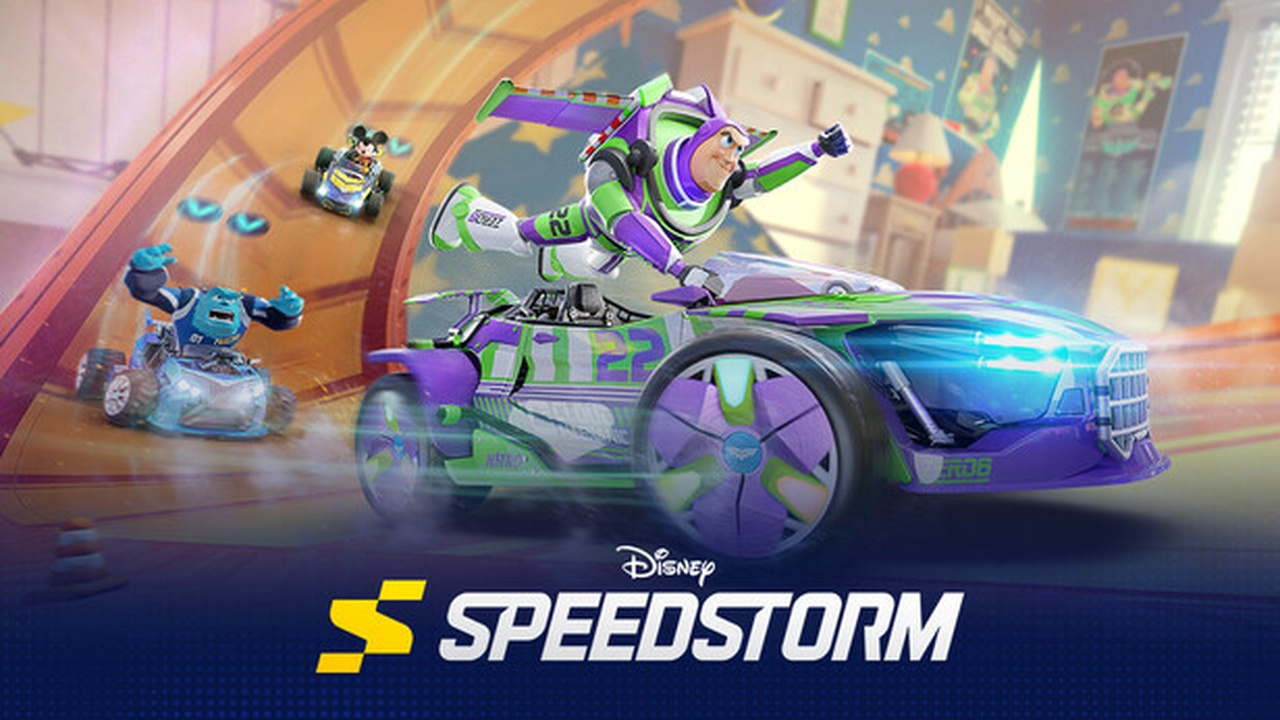 Disney Speedstorm Review