Two strong puzzle foundations make a combination I find more tiring than entertaining
Puyo Puyo Tetris 2 combines two puzzle games with obvious depth, but I do not enjoy the resulting package enough for that depth to become a recommendation. Clearing lines and building Puyo chains each have a rhythm that makes sense on its own. Switching between those rhythms, learning the different demands and keeping up with the surrounding modes feels more exhausting than fun to me. Three out of ten is where I land. That score is not a claim that the games lack strategy or that success has nothing to do with skill. It reflects how little pleasure I take from the combination and the way the package asks me to engage with it. There is a lot to learn here, and I can recognize the thought behind its systems. I simply do not find the ordinary process of playing them enjoyable enough to want the larger commitment they invite.
Tetris has a clear kind of pressure: a shape arrives, space becomes limited and every placement changes what the next piece can do. I can appreciate why that structure is satisfying, especially when a prepared gap turns into a useful line clear. My reaction inside this package is less enthusiastic. The speed of the demands and the need to keep planning while the stack changes do not settle into an enjoyable rhythm for me. A successful move can be understandable without making the surrounding pressure pleasant. I do not want to confuse my dislike with the absence of choices. The choices are present, and the consequences of a placement are central to the game. They just create a form of concentration I find more tiring than rewarding here. The combination with another puzzle style increases that feeling, because becoming comfortable with one way of reading the board does not remove the need to immediately adapt to the other.
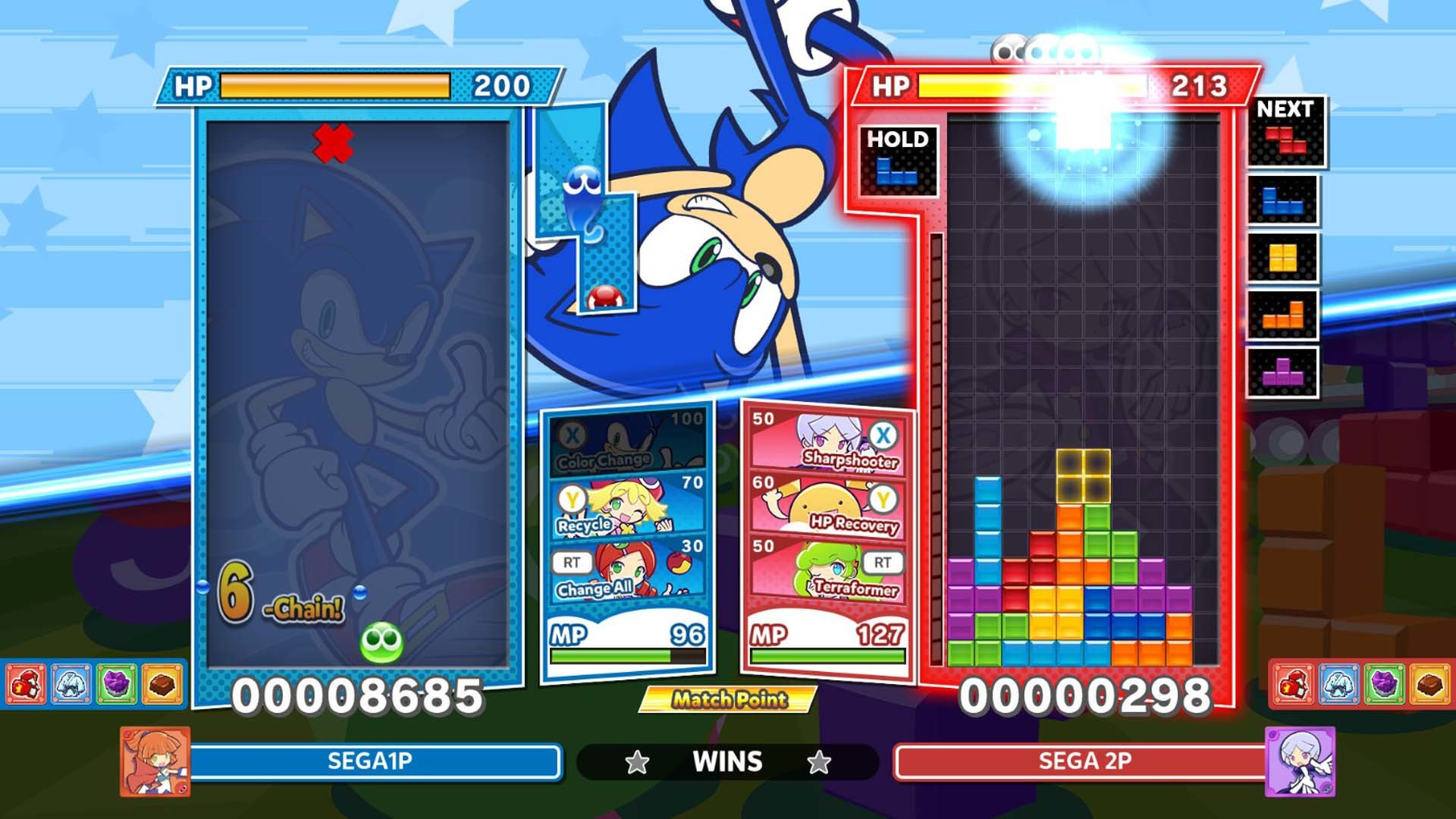
Puyo Puyo asks for a different sort of preparation. Matching colors and arranging chains makes the board a place to build a delayed result rather than simply clear the most immediate obstruction. I like the idea of a setup paying off through several connected reactions. The actual process does not hold my interest as strongly as the idea. I find the combination of planning and incoming pressure more demanding than enjoyable, especially when the useful next move is less clear than the scale of the punishment for a weak one. That is an issue of appeal for me, not an argument that the system is arbitrary. A good chain is a real achievement. I just do not enjoy building toward it enough to make the repeated attempts feel inviting. Putting the system beside Tetris gives the package variety, but it also means carrying two different ways of managing pressure instead of finding one central activity I want to keep returning to.
The modes that mix or alternate the two games are the part I find least comfortable. I understand the attraction of bringing different puzzle habits into the same contest, and the change can make the format feel distinct from simply owning two separate games. For me, that distinction is not automatically a benefit. Switching the kind of board I need to read can interrupt whatever rhythm has begun to form. I am more aware of adapting to the format than enjoying the decisions inside it. The design has a purpose, but that purpose does not match what I want from the experience. I would rather a puzzle game make the next action appealing than continually remind me of how many different skills it can demand. The combination offers room for mastery, yet the route toward that mastery feels too busy and too tiring to become a reason I want to stay. More variety does not compensate when the variety itself is part of what I dislike.
Adventure Mode gives the package a lighter framework through its characters and progression. I appreciate that it tries to make the different rules approachable through a sequence rather than expecting every option to explain itself from a menu. The colorful presentation also keeps the world from feeling sterile. The problem is that the story does not improve my enjoyment of the actual puzzle demands. Moving toward another event can become more appealing than repeating the one currently required, which is not a good balance for a game built around repetition. Skill Battle adds character statistics and abilities to the structure, giving the roster a role beyond its appearance. That is another meaningful system, but it is also another layer I find less attractive than the package seems to expect. I want a stronger connection with the basic play before I want to manage more features around it. The progression expands the amount to consider without resolving the part I find least enjoyable.
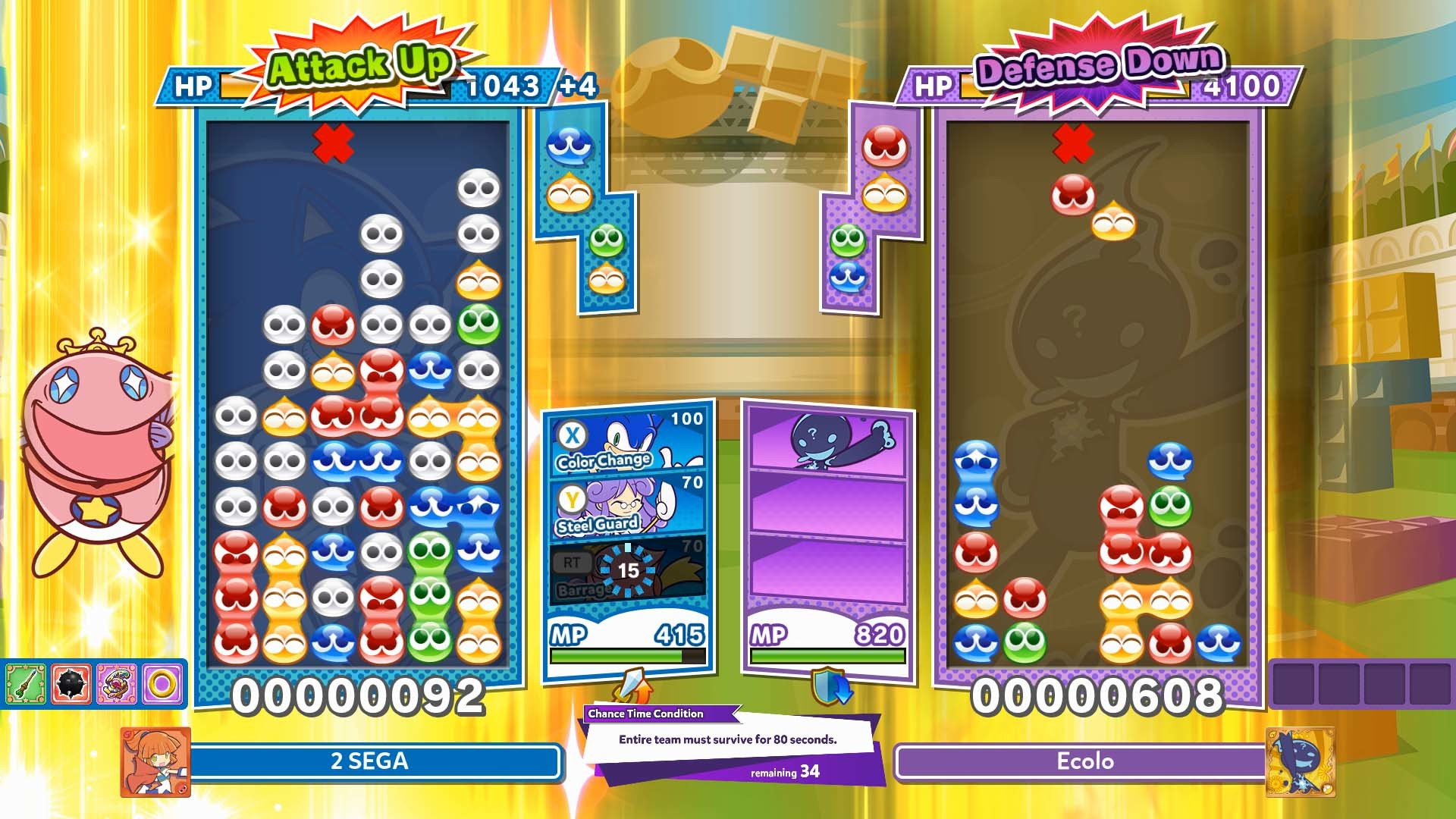
There is no shortage of personality or competitive intent. The characters, voices and bright boards make the package easy to recognize, and the multiplayer options give the puzzle systems several contexts in which to be used. I can see the value for someone who enjoys the interaction enough to want more ways to compete. My response is that the same additions make a weak personal fit feel more elaborate rather than more enjoyable. A new opponent or another mode cannot change how much I like reading the board and responding to its pressure. The presentation is pleasant to look at, but the constant activity can also make the whole thing feel more demanding when I want a little clarity. I do not need the game to remove its energy. I need that energy to support an activity I find rewarding. Here the strong identity sits around a combination whose pace and demands keep pushing me away from it.
My final opinion stays negative because the central combination never becomes something I want to spend much more time with. Puyo Puyo Tetris 2 has real strategy, multiple modes and a clear effort to give its characters a place inside the rules. Those qualities make it substantial, but substance is not the same thing as enjoyment. I find the switching, the pressure and the additional progression more tiring than satisfying. Three out of ten reflects that reaction to the complete package. I would not claim that there is nothing to learn or no reason an enthusiast might value it. I am saying that learning what is here does not feel appealing enough to me. The two foundations are capable of depth, yet the way this game brings them together leaves me less interested in continuing rather than more excited about the next opportunity to improve.
Final thoughts
The two puzzle systems have genuine depth, but I find their combined pace and demands exhausting. Adventure progression and extra battle layers make the package larger without improving my connection to its core play. I recognize the strategy and still do not enjoy the result enough to recommend it. 3/10.
Final score: 3/10.
Reviewed on PC. No review copy was provided.
 Onimusha: Way of the Sword Review
 Disney Speedstorm Review
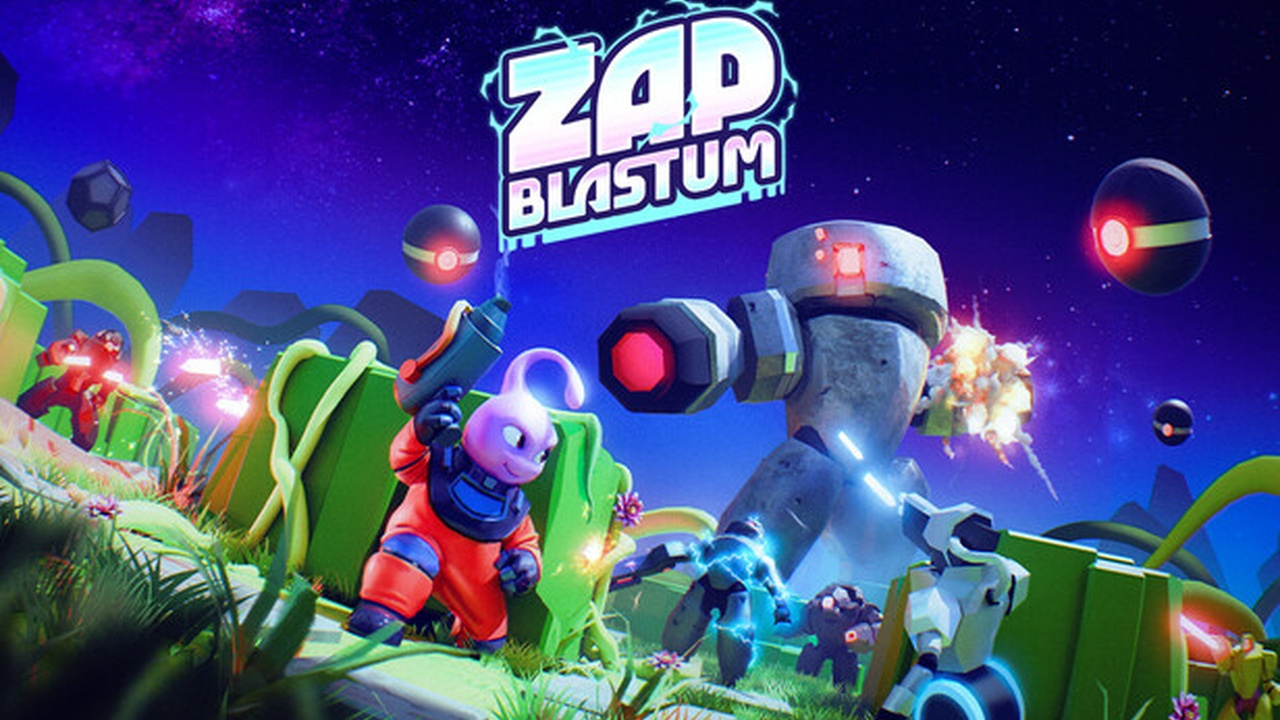 Zap Blastum Review