
An extraordinary sandbox that makes curiosity and creativity feel endlessly worthwhile
Minecraft is incredible because it makes a simple action feel like the beginning of something much larger. Breaking a block, placing another and deciding what should exist in the space between them is immediately understandable, yet that small set of actions can support exploration, survival, construction and elaborate mechanisms. I love how naturally those possibilities connect. A useful shelter can become an interesting building, a trip for materials can become an adventure and an unfinished idea can provide its own reason to return. Ten out of ten is the score that fits my opinion. The freedom is not merely a large list of activities supplied by the game. It is the ability to decide what those activities are for and to change that decision without abandoning the world around them. I find that combination of clarity and possibility exceptional, with enough structure to make a goal matter and enough openness to let the goal become personal.
Survival gives the world a practical starting point. Resources have to be gathered, tools have to be made and a place to stay becomes useful because darkness and hostile creatures change the conditions outside. I like how those needs establish direction without requiring an elaborate narrative to explain every step. The next goal can grow from a problem that is visible in the world. A better tool opens another possibility, a supply of food makes an expedition more comfortable and a safer route can make a distant area feel connected to home. The game makes preparation meaningful without insisting that preparation is the only way to enjoy it. There is also a good tension between security and curiosity. Staying close to a familiar space is comfortable, but the landscape keeps suggesting another reason to go farther. I love how even a modest decision about what to carry or where to travel can make a simple journey feel purposeful.
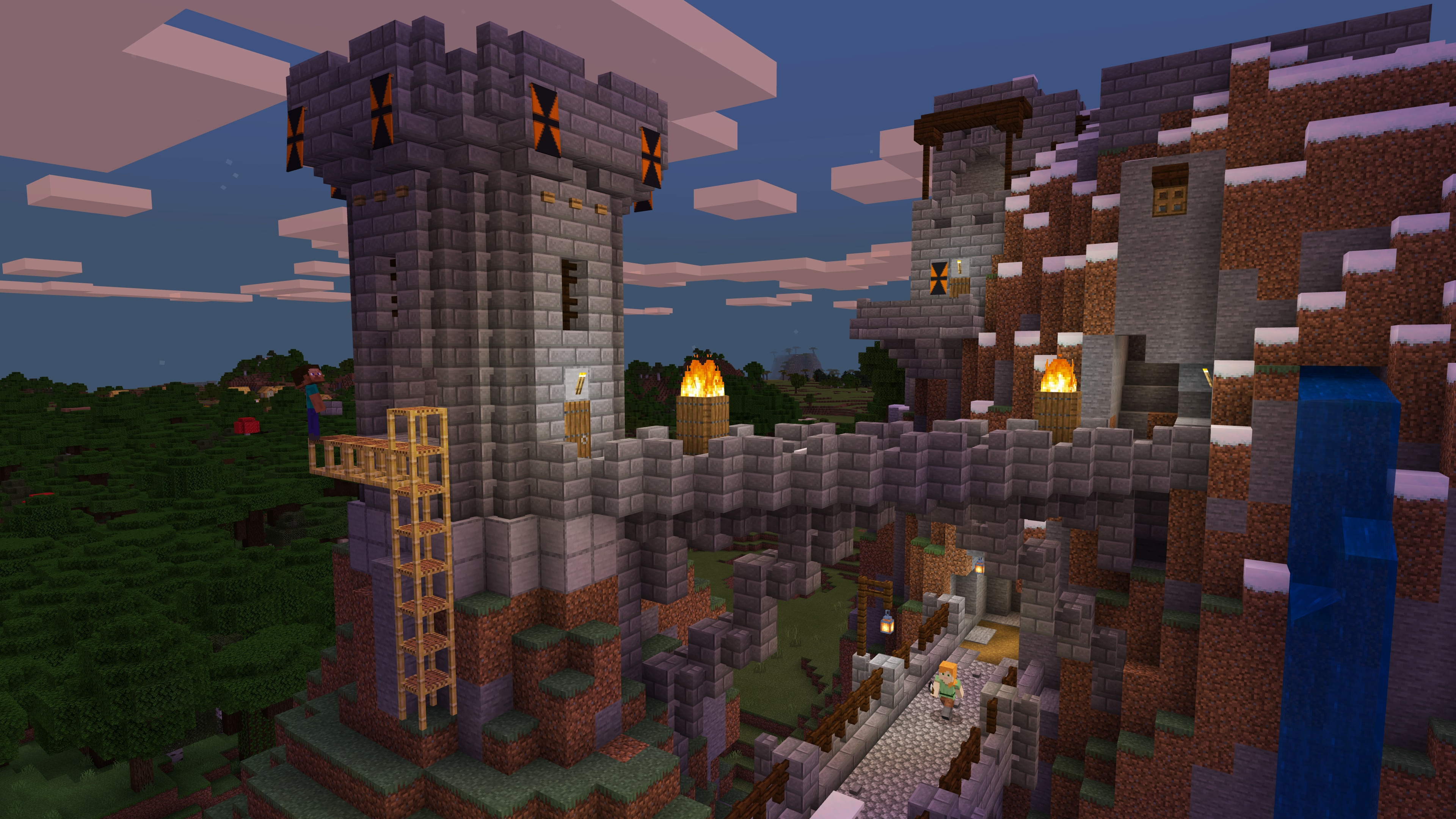
Building is the part that gives those practical decisions a lasting identity. A block can be useful because it closes a wall, and interesting because of how that wall relates to the rest of a structure. I enjoy being able to move between those two ways of thinking without changing to another game. A functional place can gradually become something expressive, with a shape, a route through it and details that matter because someone chose them. The visual language is simple enough to understand quickly, while the variety of blocks gives that language room to become surprisingly elaborate. I do not need the game to evaluate a project with a score to feel that it has improved. The improvement is visible in the project itself. That is a powerful kind of satisfaction, and Minecraft makes it available at many scales, from a small alteration to a larger construction whose next section is still only an idea.
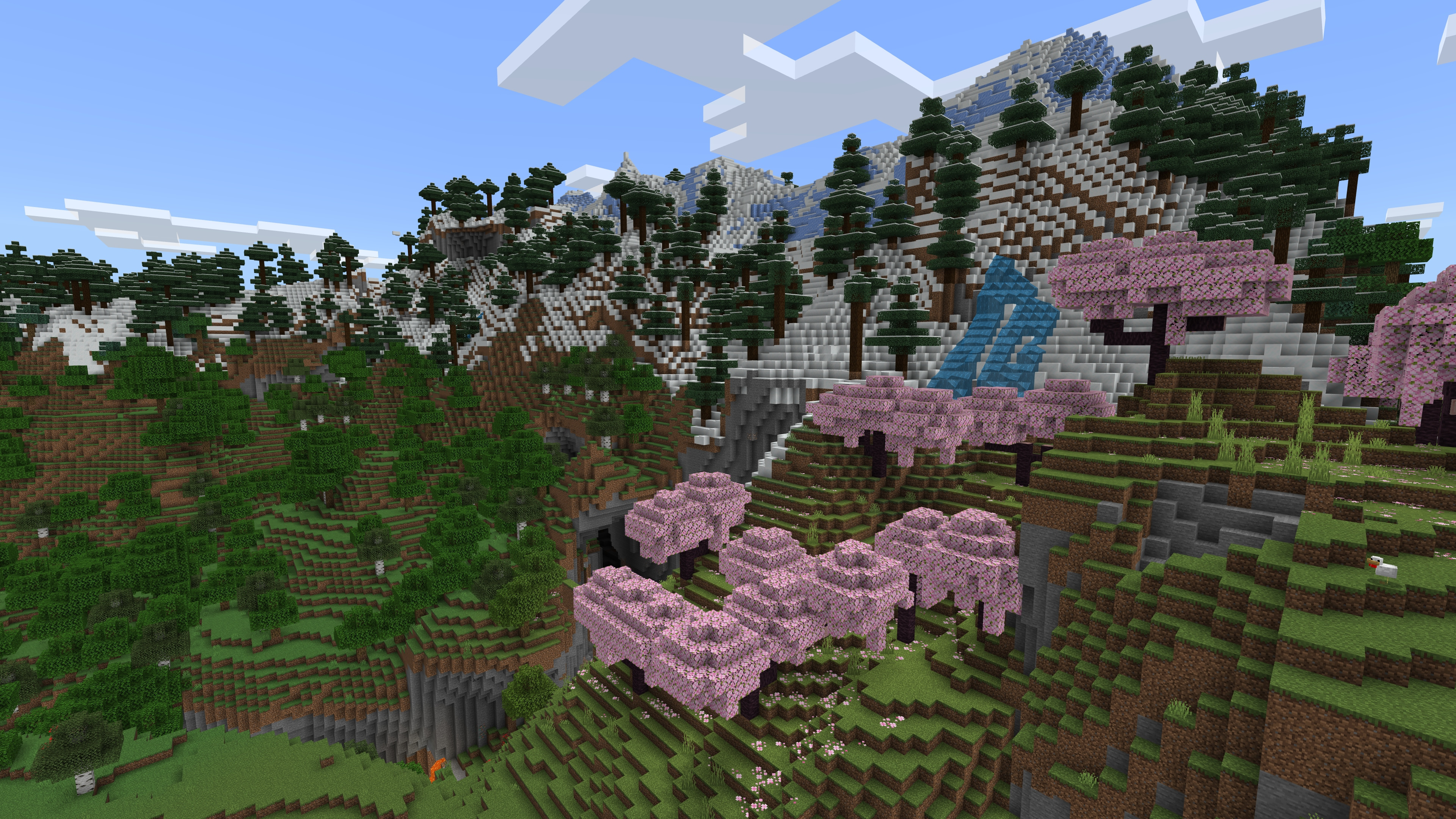
Exploration gives the world a reason to exist beyond the space already changed by the player. Different biomes, cave systems and landscapes make a journey interesting before a destination has been chosen. I like how the terrain can suggest a project as easily as a project can suggest a journey. A location might be useful for a resource, attractive for a building or simply curious enough to investigate. Those motivations can coexist. The world does not need every place to contain a scripted revelation for discovery to matter. Sometimes learning how two areas connect is itself a useful result. The danger in Survival adds another layer without being the only source of interest. A trip can feel tense because resources and safety matter, while still being enjoyable for the shape of the land around it. I love that the same world can support caution, experimentation and a relaxed change of direction, depending on what I want from it.
Creative mode makes the game's central freedom even clearer. Removing the ordinary resource and survival pressures lets construction become the main activity, and I appreciate that the game treats that as a valid way to play rather than a lesser version of the experience. It creates room to try an idea, change its scale or abandon an unsatisfying section without every experiment depending on another gathering trip. Survival gives building a particular kind of investment; Creative gives it a different kind of immediacy. I enjoy having both approaches available because they answer different motivations. The game does not need to force every player into the same relationship with effort and danger. Its strength is allowing the world to serve more than one purpose. That flexibility makes the simple block interaction feel richer, because the importance of a decision can come from a practical challenge, a visual intention or the pleasure of trying something unfamiliar.
Redstone and multiplayer expand those possibilities without changing the fundamental appeal. Building a mechanism adds another question to a project: not only what it should look like, but what it should do and how its parts should connect. I like that a world assembled from simple pieces can support functional systems as well as static structures. Shared play gives projects another kind of meaning, with different people able to contribute ideas and make a place feel collectively developed. Neither feature needs to be the center of every session to matter. They are further directions the same foundation can support. My only practical qualification is that openness asks for some willingness to choose a goal. The game is not constantly prescribing the next objective. For me that is a major strength, because curiosity and unfinished ideas are enough to provide direction. The freedom feels useful rather than empty precisely because the basic actions are so understandable and their consequences remain visible.
Minecraft earns its ten through the connection between its simplest interactions and its largest possibilities. Gathering, building and exploring do not feel like disconnected modes competing for attention; they can feed one another in whatever proportion makes the world interesting. Survival supplies pressure, Creative supplies room to experiment and the same recognizable blocks support both. I love that a project can begin as a response to a need and become something worth developing for its own sake. I also love that the game leaves space for another person to want an entirely different project. It is beautiful in a way that comes from clarity, scale and the choices made inside the landscape rather than from chasing a particular kind of realism. The result is a game I consider exceptional. Ten out of ten reflects how completely the freedom, the practical systems and the act of creating something work together to make the world worth caring about.
Final thoughts
Minecraft turns simple building, gathering and exploration into an extraordinary range of meaningful possibilities. Survival gives projects practical weight, Creative invites experimentation and the world keeps creating reasons for curiosity. I love how freely those motivations can connect without losing the clarity of the basic interaction. 10/10.
Final score: 10/10.
Reviewed on PC. No review copy was provided.
 Onimusha: Way of the Sword Review
 Disney Speedstorm Review
 Zap Blastum Review