
A wonderfully inventive platforming toolkit with a campaign worth enjoying on its own
LittleBigPlanet 2 is a game I love because its imagination is practical. It does not only show a handmade-looking world full of clever ideas; it gives those ideas actions, rules and tools that make them enjoyable to play with. The campaign is charming, the new equipment creates memorable changes of pace and the creation side opens the design far beyond a conventional set of platforming stages. Nine out of ten is my score. The movement can feel loose when I want a particularly exact jump, and the larger toolkit asks for patience if it is to be used well. Those qualifications do little to weaken the strength of the complete PS3 game. I enjoy it as an adventure to move through and as a collection of possibilities to experiment with. Sackboy's world feels welcoming without being slight, giving the playful appearance enough substance that the creativity remains appealing after the first impression has passed.
The campaign is the best starting point because it demonstrates the ideas through enjoyable stages rather than a long explanation of what the editor might eventually allow. I like how a new object can change the next action without requiring the whole game to abandon its identity. The grappling hook is an especially good example. Swinging gives gaps and moving objects a different purpose, turning a familiar platforming space into something with a more active rhythm. The Grabinators and other equipment similarly let the stage ask for something beyond ordinary jumping. The variety feels connected because the same playful materials and readable goals carry between the changes. I love that balance. A campaign built around an editor can become little more than a catalogue of features, but this one has enough character and movement to justify being played as a complete adventure rather than only inspected as a demonstration of available tools.
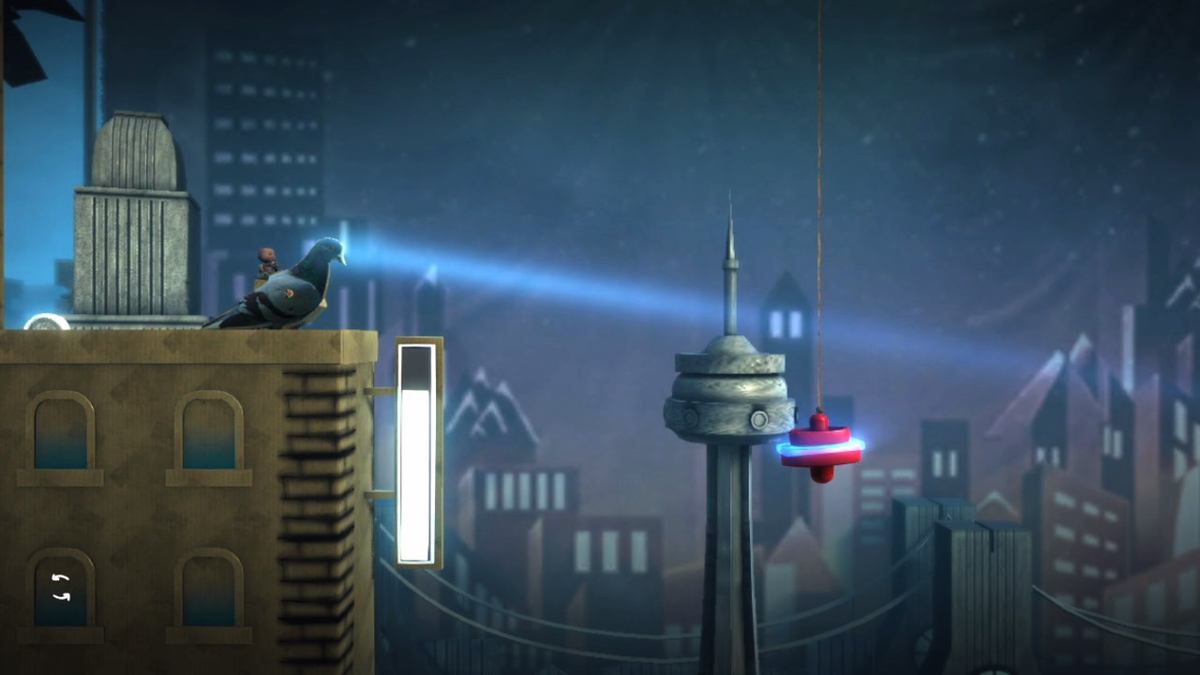
Sackboy's movement is the main qualification I would attach to that praise. The jumps have a light, elastic feel that suits the world, and the layered spaces allow stages to develop in a way that is different from a flat side-scroller. I like that identity more than I would like a completely anonymous platforming model. The looseness can still be frustrating when a section asks for a particularly exact landing. A style can be charming and imperfect at the same time. I find the game strongest when its stages give that movement room to feel playful rather than demand a level of precision it does not comfortably provide. Most of the campaign has enough variety and generosity that the rougher moments remain interruptions rather than the defining experience. I enjoy the way the character interacts with the world, while wishing a few demanding sections had been built more carefully around what that interaction does best.
The Controlinator makes the creation side much more interesting than a straightforward platforming editor. Mapping inputs to a mechanism or a character allows the underlying rules of an activity to change, so the toolset is not limited to placing another line of platforms. I love the significance of that choice. A vehicle, a puzzle or another small game can be designed around its own actions instead of trying to disguise the same basic Sackboy controls every time. That gives the package a genuine reason to expand beyond the first game's foundation. The possibilities are not a guarantee that every idea will work immediately, and learning the tools takes effort. I find that effort worthwhile because it leads to more control over an actual design, not merely a larger range of decorations. The toolkit gives curiosity somewhere useful to go, making the question of what to build as appealing as the question of which story stage comes next.
Sackbots, recorded sequences and the other logic tools strengthen that freedom. I like being able to think about how an object should behave, how a scene should unfold and how a player's action should affect the next event. The creation process can become a game of its own through arranging, testing and adjusting those relationships. That is the kind of depth I value here. It is not simply a large count of objects; it is a set of ways to make those objects respond meaningfully. The music sequencer and presentation tools add another layer, allowing the mood and timing of an idea to be shaped alongside its mechanics. I love that the game treats those different parts of creation as connected. A small level can have a rhythm, a visual joke and a practical rule working together, which makes building something feel more substantial than decorating a route that already exists underneath it.
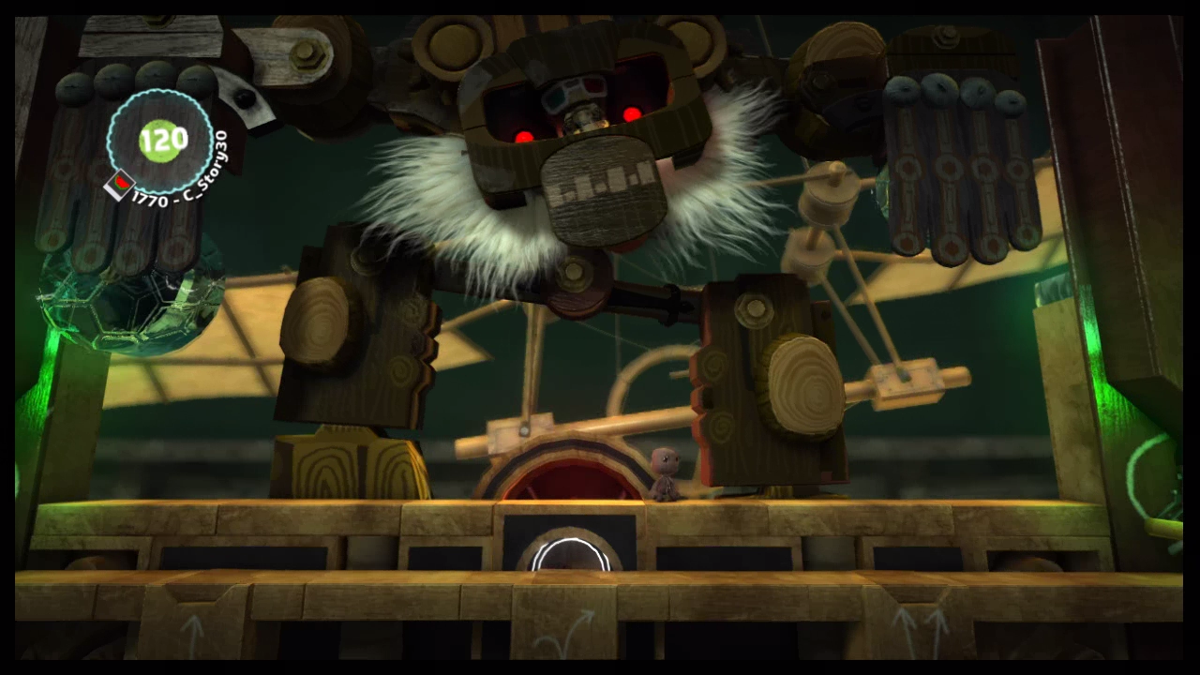
The presentation is another major strength. The fabric, paper and collected-object appearance makes the world feel like something assembled with affection, and the music helps give the campaign an identity beyond a display of craft materials. I enjoy how naturally Sackboy fits that setting, with a simple, expressive design that leaves room for the surroundings to be strange. Customizing the character and placing objects in the editor suit the same mood, so the adventure and creation tools do not feel like unrelated halves. I love that sense of continuity. A material that looks playful can also suggest how an object should behave or how a scene might be arranged, giving the appearance a practical role in thinking about a level. The campaign and toolkit support the same curiosity from different directions. One invites me to follow a clever idea already made; the other provides a way to work out why an idea is enjoyable and how another version might be built.
I finish LittleBigPlanet 2 at nine out of ten because its creativity becomes enjoyable interaction instead of remaining an attractive idea. The campaign uses its equipment well, the handmade world is charming and the toolkit gives the player meaningful ways to shape rules as well as appearances. The loose platforming and learning curve are clear qualifications, but they do not outweigh how much the complete game offers. I love that it can be approached as an inviting adventure and then continue into a much more involved process of making something personal. Those are different pleasures supported by the same confident design. It is not a game I admire only for what somebody else could theoretically create. The included stages already show a worthwhile sense of invention, and the tools allow that feeling to become something the player can explore directly. For me, that makes it one of the most distinctive and rewarding packages on PS3, with a playful surface and a great deal of practical imagination underneath.
Final thoughts
LittleBigPlanet 2 pairs an imaginative campaign with creation tools that can change rules, behavior and presentation rather than only decorate stages. The loose jumping and editor learning curve are real limits, but the charm and practical creativity make the PS3 package excellent. 9/10.
Final score: 9/10.
Reviewed on PlayStation 3. No review copy was provided.
 Onimusha: Way of the Sword Review
 Disney Speedstorm Review
 Zap Blastum Review