Colorful obstacle-course chaos with enough skill underneath to keep another round appealing
Fall Guys works for me because its silliness does not remove the satisfaction of getting better. The characters wobble, collide and tumble through bright obstacle courses, but reading a moving platform or choosing a cleaner line still matters. I enjoy that balance. It can be funny when a situation falls apart and rewarding when a good decision carries the character through a crowded section. The weak side is how quickly the chaos can become irritating when another collision overwhelms the plan. Repetition also becomes more noticeable when the same kinds of rounds keep returning. Those limits stop me from being unconditionally enthusiastic, but the core idea is strong enough for an eight. I find it a very enjoyable multiplayer game with an immediately clear goal and more room for learning than its soft, toy-like appearance suggests. Its best moments make the next attempt feel inviting instead of making elimination feel like the end of the fun.
The controls are simple enough that the obstacle in front of me can become the main concern. Running, jumping, diving and grabbing provide a small set of actions with many uses, and I like how the game builds variety from those familiar tools rather than constantly changing the control scheme. A jump across a gap asks for a different judgment from a dive toward a finish, while grabbing can create another option or another nuisance in the crowd. That makes the simplicity useful. It gives a new course a clear starting point without making every course feel identical. I do not need a long list of abilities to feel that an action game has decisions. I need the obstacles to make the available abilities worth choosing between. Fall Guys often does that well, using timing and positioning to give the basic movement a practical role inside an environment that is trying very hard to make it look ridiculous.
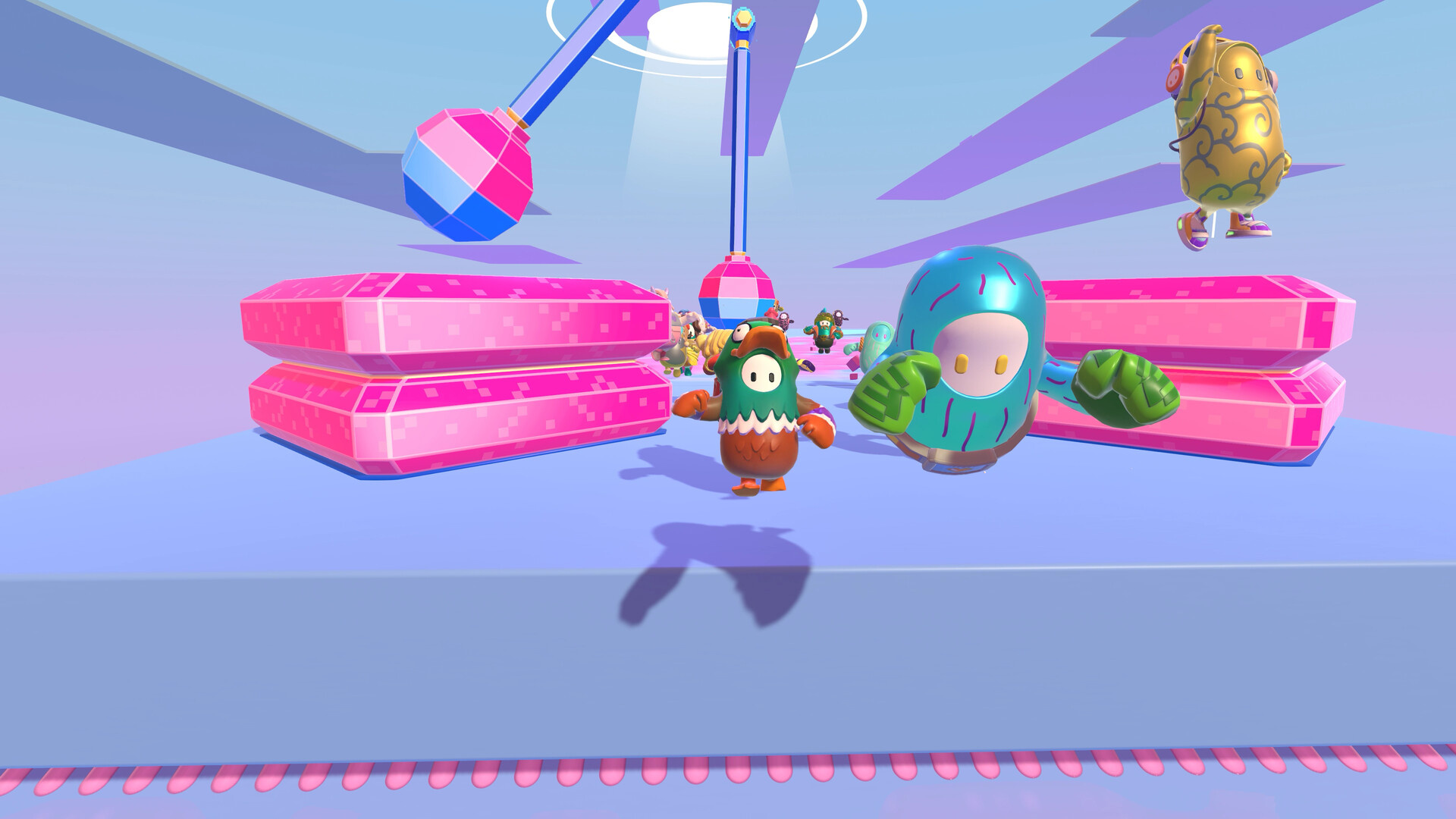
The races are most enjoyable when the route offers more than one sensible way forward. I like deciding whether a difficult shortcut is worth attempting or whether the safer path will preserve enough momentum to qualify. A crowd can change that calculation before the obstacle itself changes. An opening that looks attractive in isolation may become less appealing when several other characters are arriving at it together. That makes awareness of the surrounding players part of reading the course. The frustration comes when a collision feels more important than the choice that preceded it. Physical interference belongs in this kind of game, but it can make the outcome less satisfying when the direction of a tumble overwhelms the useful part of the decision. I enjoy the messy competition without enjoying every messy result. The game is strongest when a better line still feels worth looking for, even while the crowd keeps it from becoming a perfectly predictable exercise.
Survival and other elimination challenges change the emphasis in a useful way. Instead of simply reaching an exit, a round can ask for patience, observation or a better understanding of where a hazard is about to move. I like that a longer event does not always mean a longer race. The different requirements give the same character movement more than one purpose and help the sequence feel like a small competition rather than a single obstacle stretched out. Some round types are more appealing to me than others, and the rotation can occasionally put too much distance between the ones I most want to play. That is a limitation of a package built around a shared sequence. I accept that the next challenge will not always be my favorite, but I want enough variety and pace that accepting it does not become the main thing I notice. The stronger combinations make the whole event feel lively rather than merely random.
Elimination is a sensible structure for the idea because the objective stays easy to understand. Qualifying makes the next round feel earned, while the shrinking field gives an ordinary platforming action more pressure as the event continues. I like how the same simple movement can feel different when there is less room for error. The final contest has a clear reason to be tense without needing an elaborate story around it. Losing can still be frustrating, particularly when an awkward contact seems to decide more than the route or timing did. The game's visual humor helps soften that reaction without completely removing it. A funny tumble does not automatically make an unsatisfying result good. What keeps the experience appealing is that the next event can offer another practical chance to improve. The reset needs to feel like a fresh opportunity, and the game is generally much better when the rhythm between attempts keeps that opportunity close.
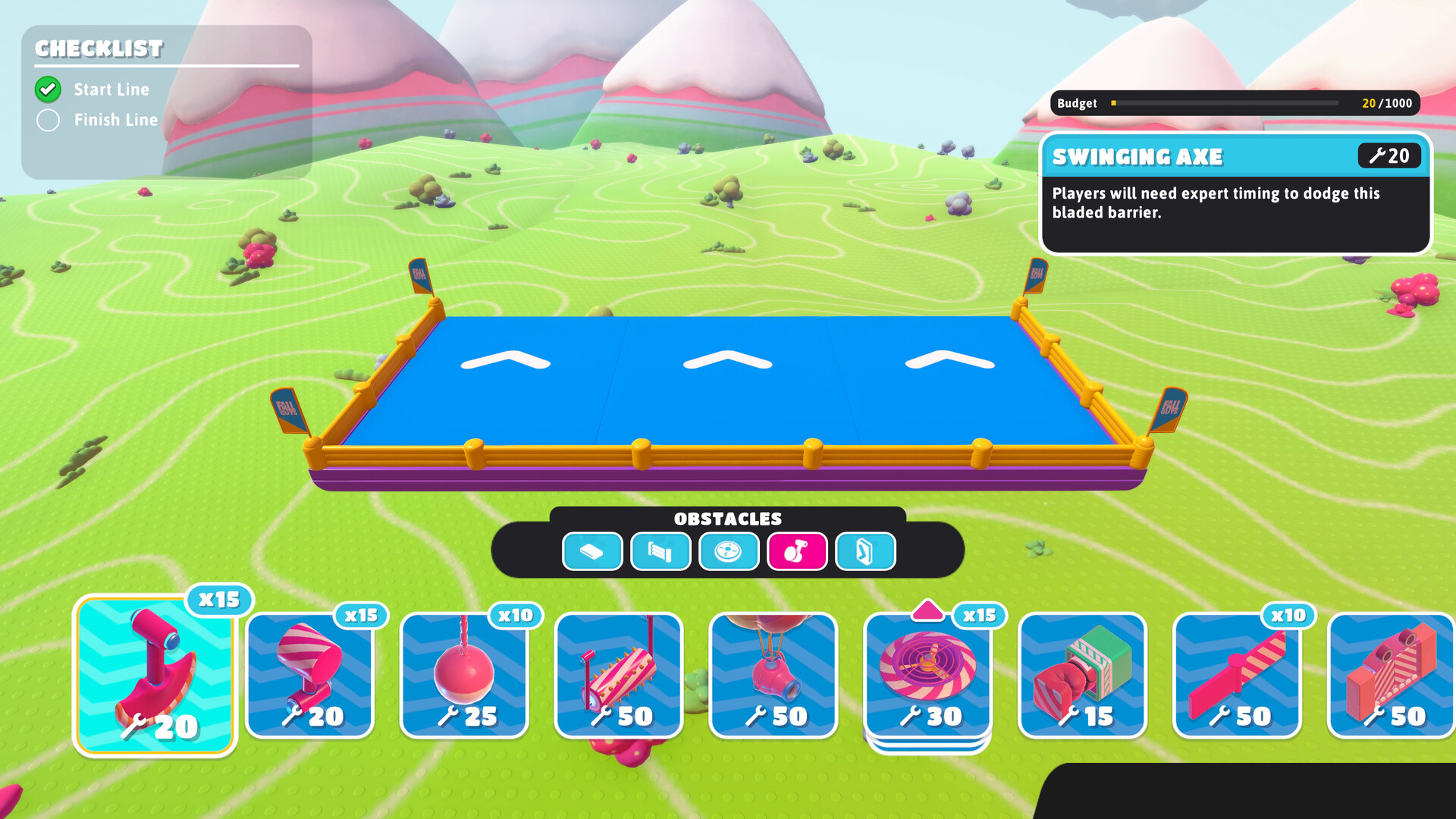
The art is an important part of why the package is so easy to approach. Bright colors, exaggerated obstacles and expressive little characters make the action understandable without asking the game to look serious. I like that the presentation can be playful while the competition still matters. The courses are designed to look inviting even when their timing is demanding, which makes learning them less intimidating. Cosmetics add another form of expression, although dressing a character is not a substitute for another good round to play. My longer-term reservation is repetition rather than a lack of surface personality. Once a familiar challenge has appeared several times, the surrounding chaos has to work harder to keep it interesting. The strongest courses support improvement through cleaner movement. The weaker ones rely more on the immediate joke, and that joke naturally loses some force with repetition. There is a good multiplayer game beneath the bright wrapping, but the quality of each round still matters.
I recommend Fall Guys because the basic combination is genuinely enjoyable: accessible movement, understandable goals and courses that make timing and positioning useful even when everything looks comical. The physical chaos creates memorable situations without removing every reason to learn. It also creates some of the game's most irritating moments, and I would not pretend that every elimination feels equally fair or informative. Repetition and uneven round preferences are additional qualifications. Eight out of ten feels right for a game I can enjoy strongly without wanting every part of it in every mood. I like the way it makes improvement visible through a small set of controls, and I like that its sense of humor does not require the competition to be meaningless. The best rounds make skill and silliness support one another. That is enough to keep the whole idea appealing even when an especially messy result briefly tests my patience.
Final thoughts
Fall Guys makes simple movement useful through varied obstacles, readable goals and cheerful multiplayer chaos. Learning a route is rewarding, although collisions and repetitive rounds can make some results frustrating. I enjoy the balance of skill and silliness enough to recommend it strongly, with those qualifications. 8/10.
Final score: 8/10.
Reviewed on PC. No review copy was provided.
 Onimusha: Way of the Sword Review
 Disney Speedstorm Review
 Zap Blastum Review