Charming characters and useful team choices share space with too much routine upkeep
Cookie Run Kingdom is very good at making its cast appealing, and reasonably good at giving that cast something useful to do. The expressive designs, voices and story give the characters more personality than their small size suggests, while team building and kingdom development provide two different kinds of progress. I enjoy that combination in parts. My enthusiasm drops when the movement between those parts becomes a repeated cycle of collecting, upgrading and checking what the next requirement needs. Six and a half is my score. The game has enough charm and meaningful choices to be worthwhile, but the routine around them can feel more demanding than the reward. I like putting together a useful team and making the kingdom look more personal. I am less interested in the familiar maintenance that repeatedly sits between those decisions. The presentation creates a strong invitation, while the overall pace makes the recommendation much more qualified than that invitation first suggests.
The characters are the clearest strength. Each Cookie has a recognizable look and attitude, and the game gives their skills enough personality that choosing a team is not simply choosing five nearly identical portraits. I like having a reason to care about the roster beyond a ranking of statistics. The story and voice work help make the world feel more substantial than the premise might initially imply, with the cast able to support both playful moments and a larger fantasy conflict. That matters because a character-collection game asks for a lot of attention to its roster. The limitation is that affection can become a reason to tolerate the progression rather than a result of enjoying it. A character I like is not automatically one I can develop into a useful role without more familiar work. The cast gives the package identity, but it cannot carry every ordinary requirement attached to using that identity in battle.
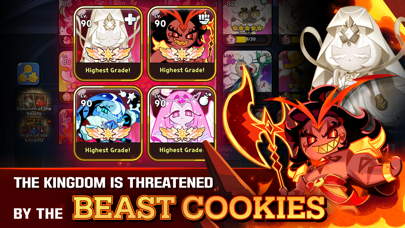
Team composition provides a worthwhile strategic layer. A party needs a useful relationship between its roles and abilities rather than only a collection of appealing designs, and I enjoy thinking about how one choice can support another. Treasures and Toppings give the preparation additional options, making development more than a single linear increase. The combat is most interesting when those choices have a visible result. A skill arriving at a useful moment or a better balance between the team members gives the setup a practical purpose. I am less enthusiastic when an encounter feels as though the main question has become whether enough ordinary upgrading has been completed. The game has meaningful systems, but the repetition can make their possibilities feel less immediate than the next resource threshold. I want to revise a team because a different idea is interesting, not only because the current numbers have stopped being sufficient. That distinction keeps the battle loop enjoyable in some stretches and much less engaging in others.
The kingdom gives progress a more visual expression. Buildings, decorations and the layout can make the place feel like something being developed rather than a static menu, and I like being able to put a little intention into how it looks. Production also gives the kingdom a functional role, connecting the setting to the resources used elsewhere. That is a sensible way to make the two sides belong to the same game. The problem is how quickly the functional side can become the part demanding attention. Collecting output and preparing the next requirement can feel more like regular upkeep than an interesting construction decision. I enjoy a building choice when it changes how the place feels or works. I enjoy another routine check much less when its purpose is only to keep the wider progression moving. The kingdom is charming, but charm does not make every production step equally rewarding to carry out.
The relationship between building and battling is strongest when one naturally supports the other. A useful improvement in the kingdom can help the team develop, while progress through the adventure gives another reason to expand the place. I like that the game is trying to make its activities connected instead of offering unrelated distractions. The weakness is pacing. When several small requirements accumulate, the route toward the next interesting battle or story moment can feel unnecessarily crowded. A game can have a lot to do while still leaving a relatively small amount I am excited to do at a particular moment. That is the main reservation here. The activities do not need to disappear, but I would enjoy them more if they produced meaningful changes more consistently. Too often a practical task leads into another practical task before the next satisfying decision arrives. The connection between systems is understandable, while the amount of maintenance needed to keep those systems moving is less appealing.
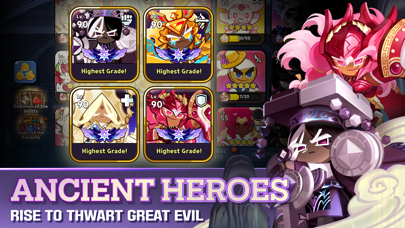
The variety of battle contexts gives a developed roster more than one purpose. Competitive and cooperative activities can make team choices useful in different ways, and I appreciate the breadth for someone who enjoys the central loop enough to want more of it. My reaction is more selective. Another mode does not automatically make familiar development work feel fresh, especially when the main attraction remains the same group of characters and the same repeated effort to strengthen them. The presentation helps keep those returns pleasant. The colors, animations and expressive skills make the game inviting to inspect, and the story gives its world an identity beyond the resource systems. I like those qualities without wanting to treat the quantity of activities as a substitute for a smoother pace. The strongest parts make me interested in what the team can do next. The weaker parts make me think mainly about what still has to be collected before that next step is comfortable.
I finish Cookie Run Kingdom at six and a half because its strengths are clear and its routine remains an important limitation. The cast is charming, the team-building choices are worthwhile and the kingdom gives development a personal visual side. I enjoy all three when they connect naturally. Repeated production checks, familiar upgrades and the accumulation of small requirements make the complete package less consistently enjoyable. I would rather the next meaningful choice arrive sooner than receive another reason to repeat the same maintenance. The game is still worth exploring for its character and the possibilities in its party system. I simply do not find every part of the long-term structure equally compelling. The result is a positive but qualified recommendation: a mobile RPG with a lovely identity and enough substance to matter, held back by how much ordinary upkeep sits around its best ideas.
Final thoughts
Cookie Run Kingdom has a charming cast, worthwhile team choices and a kingdom that gives progress a personal look. Repeated production and upgrade requirements weaken the pace between the good decisions. I enjoy its identity and systems more consistently than the routine needed to maintain them. 6.5/10.
Final score: 6.5/10.
Reviewed on iOS using iPhone 13 Pro Max. No review copy was provided.
 Onimusha: Way of the Sword Review
 Disney Speedstorm Review
 Zap Blastum Review