
A clever ring tool trapped inside a flying game that gives me far more tension than enjoyment
Tails spends Skypatrol in the air, yet the game gives me much less of the freedom I enjoy about his flight. The screen keeps moving, the route has to be negotiated and the flight meter keeps asking for attention. That is the basic design, not a missing feature or an accidental restriction, but I find it deeply unappealing. The golden ring is a genuinely interesting tool, giving Tails ways to attack and interact with the environment beyond simply moving around a scrolling screen. My disappointment is that using that tool rarely makes the surrounding pressure enjoyable enough. I am more aware of keeping the run from ending than of taking pleasure in the flight itself. A three reflects that reaction plainly. Skypatrol has an unusual idea and some smart interactions, but the complete experience feels too restrictive and demanding in the wrong ways for me to recommend it positively.
The forward movement makes the game very different from a platformer where Tails can stop, turn around and reconsider a section. He can adjust his pace and vertical position, but the action continues toward the next part of the route. I understand the intention to make flight a continuous challenge. It gives the stages an immediate direction and keeps the scenery relevant as something that has to be responded to. For me, however, the constant advance reduces the pleasure of controlling the character. I want a useful movement to feel like a choice within a space, while the game repeatedly makes that movement part of satisfying the next demand before the screen carries on. That can create tension, but tension is not the same thing as enjoyment. I find the rhythm tiring rather than exciting, especially when interpreting the next obstacle matters as much as having the room to react to it comfortably.
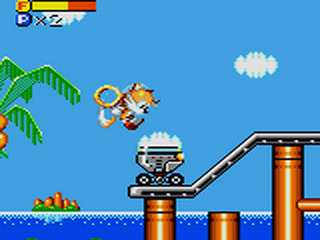
The ring is easily the best part of the concept. Tails can throw it as a projectile, and charging it changes the reach of the action. It can also connect with objects in the stages, allowing the same tool to participate in movement through the environment. I like that the ring has a purpose beyond being another familiar Sonic symbol. It gives an encounter or a piece of scenery a practical relationship with the character. There is even a distinction between holding the ring in its spinning state and using it to latch onto something, so the tool asks for more thought than simply pressing the attack button whenever an object appears. Those are worthwhile ideas. My frustration is that the game around them keeps placing the emphasis on urgency. I enjoy understanding what the ring can do more than I enjoy having to organize the right action within the continuous forward pressure.
The flight meter adds another demand to that pressure. It falls over time, and collecting the candy scattered through the levels restores the resource needed to stay airborne. I appreciate that the pickups have a clear function inside this version of the action. They are not merely decoration placed along the route. The problem for me is how the resource shapes the mood of the flight. A useful route is not only somewhere safe to move; it also has to be considered in relation to keeping the meter healthy. That can make a small decision meaningful, but I find the cumulative effect more stressful than rewarding. The game gives the player something to manage constantly, and the management becomes more prominent than the pleasure of the movement. I do not want a flight game to be empty of danger. I want the danger and the character's freedom to produce an enjoyable relationship, and this balance does very little for me.
Taking a hit introduces a particularly demanding recovery. Tails can spiral out of control, with rapid button presses offering a way to recover before a collision ends the attempt. That recovery also costs part of the flight meter, connecting damage to the resource already being managed. I can see the logic: a mistake has consequences without every enemy contact having to end the run immediately. For me, the connection makes the experience feel more burdensome rather than more interesting. Recovering control, avoiding the terrain and protecting the remaining meter all compete for attention within a game that continues moving forward. The result is a sequence of demands I find difficult to enjoy, even though their relationship is understandable. I would rather the ring and the environment create satisfying opportunities for movement than have so much of the experience's identity tied to protecting an attempt from the next interruption.
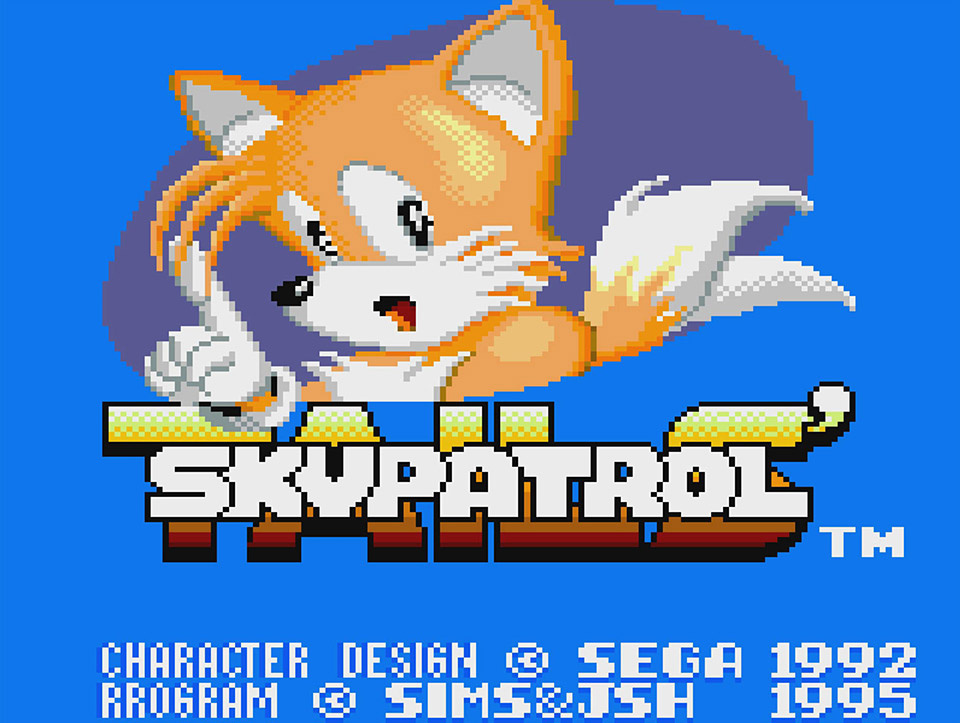
The stage objects show the design's imagination more clearly than the resource pressure does. A bar, cart or other device can become something the ring connects with, making the environment part of the tool's function. I like that a familiar-looking object can offer a different kind of movement instead of existing only as another hazard. Those moments give Skypatrol its best claim to an individual identity. It is a flying action game with a useful central gadget, not simply a platformer whose character never lands. The colorful presentation helps make that unusual structure appealing at a glance as well. My reservation is that appreciating the concept does not turn into much pleasure in carrying it out. The ring suggests a playful relationship with the space, while the scrolling and meter repeatedly make that space feel like a succession of requirements. The more inventive interactions remain stronger than the overall enjoyment for me.
I finish Skypatrol with a low recommendation because the parts I find interesting never overcome the basic rhythm I dislike. The ring has several real functions, and the stage objects give it some clever ways to affect the flight. Tails also has a clear identity outside the usual platforming format. Those qualities are worth recognizing, but they are not enough to make the constant advance, resource management and recovery pressure enjoyable for me. I do not dislike the game simply because it is different from Sonic. I dislike the particular kind of constrained interaction it creates around a character whose movement ought to be appealing in its own right. For my tastes, there is far more effort spent protecting the run than pleasure found in the journey. That makes the result a disappointing three, with a good central tool inside an overall experience I find consistently difficult to enjoy.
Final thoughts
The golden ring is a clever tool, with useful roles in attacks and environmental interaction. I find the game surrounding it far less enjoyable. Constant forward movement, the flight meter and demanding recovery turn the experience into pressure I do not find rewarding. The unusual idea and colorful presentation cannot compensate for that rhythm. My score for Skypatrol is 3/10.
Final score: 3/10.
Reviewed on Sega Game Gear. No review copy was provided.
 Tails Adventure Review
 Tails and the Music Maker Review
 Onimusha: Way of the Sword Review