
A clever pinball adventure that is more interesting to understand than consistently fun to control
Sonic Spinball has an excellent reason to exist. Sonic already curls into a ball, moves through curved spaces and reacts to springs, so taking those ideas into a pinball adventure makes sense immediately. I like that the game tries to build something larger around the connection instead of simply placing Sonic artwork behind a conventional table. The main stages combine flippers, targets, routes and Emerald objectives into places that have to be understood. There is imagination in that structure, and the industrial atmosphere gives the game a strong identity. My reaction to the actual play is much more mixed. I enjoy figuring out what a section is asking for, but I do not find the process of directing Sonic through it consistently satisfying. The game can feel clever and awkward at the same time. A six and a half reflects a worthwhile experiment whose best ideas are stronger than the regular pleasure of carrying them out.
The flippers are the clearest connection to ordinary pinball. They give a bounce a purpose, asking for timing and an understanding of where the ball needs to go next. I enjoy when a useful shot connects the immediate action to something visible in the table. That can make a large, complicated-looking space become more understandable one interaction at a time. The difficulty for me is how often the route to that useful shot feels less comfortable than the idea behind it. I want the process of sending Sonic toward an objective to be enjoyable even before the objective is completed. Here, an interesting target can be followed by a stretch of bouncing and repositioning that I find more tiring than exciting. It is a reaction to the balance between the control available and the precision I want from the next movement.
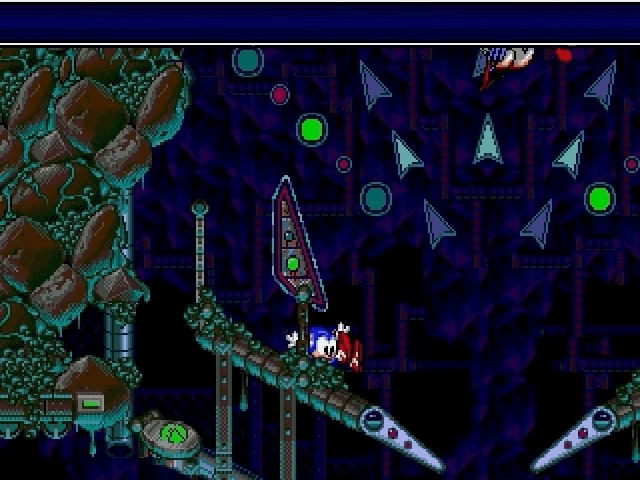
Sonic's limited movement outside the flippers gives the design a platforming influence too. He is more than an entirely passive pinball, and those small opportunities to direct or reposition him help connect the tables to the familiar character. I like that the game is trying to take advantage of both identities. The most enjoyable moments make the pinball and platforming aspects feel related, with a small movement contributing to the next useful bounce or route. Elsewhere, I find the combination less natural. A space can look like something I should be able to negotiate with the freedom of an ordinary Sonic stage, while the pinball structure asks for a very different kind of patience. That mismatch is where much of my frustration comes from. The game gives me a good reason to recognize Sonic in the ball, but it also reminds me how differently I have to think about moving him.
The Emerald objectives are what make the tables feel like stages rather than only score-chasing spaces. Collecting what is required opens the route toward the boss, so the layout has a larger purpose beyond keeping the ball active. I enjoy that sense of working through a place. A target, passage or mechanism can matter because it contributes to understanding how the stage fits together. That is more interesting to me than simply adding more points to a counter. The reservation is that a clearly understood objective does not always make reaching it pleasant. Once I know what needs to happen, having to keep arranging the same movement can make the design feel longer than the satisfaction it provides. I like the adventure structure, but I would prefer a smoother relationship between recognizing a solution and being able to work toward it. The game is often more rewarding to understand than it is to execute.
The four main levels give that structure a useful variety of settings. Toxic Caves establishes the mixture of industrial machinery and hazardous surroundings clearly, while later spaces expand the sense of being inside an elaborate mechanical environment. I enjoy that the scenery has a purpose within the pinball design. Platforms, channels and mechanisms do not feel like unrelated decorations placed around a set of flippers. They help turn the table into a location. The bosses extend that idea by making a larger machine part of the stage's conclusion. This is where I find the game most imaginative. It knows what kind of atmosphere it wants, and it uses the ball's journey through a constructed space to express it. I just wish that imaginative arrangement translated into a more dependable feeling of control and momentum. Looking forward to another location is not always the same thing as enjoying all the movement required to reach it.
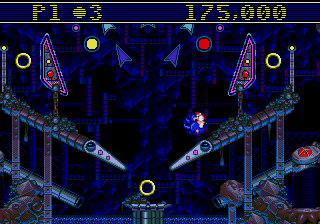
The presentation is memorable even when the play is testing my patience. I like the heavier industrial mood and the way Sonic fits into spaces full of machinery rather than only bright natural scenery. It gives the spin-off a personality of its own. The more conventional bonus pinball rounds also provide a useful contrast, presenting the connection to ordinary tables more directly than the larger adventure stages do. I appreciate having that different emphasis inside the package. It helps explain what makes the main game unusual: the goals and routes are doing more work than a simple high-score table would require. My mixed reaction remains tied to the interaction rather than the premise or the visual identity. There are plenty of appealing things to look at and understand. I do not find enough consistent pleasure in controlling the ball to make all of that appeal translate into a particularly strong recommendation.
I come away from Spinball liking the experiment more than I like the complete experience. Turning Sonic into the center of a pinball adventure is a smart connection, and the Emerald objectives give the tables a sense of progression that I appreciate. The mechanical environments and larger encounters make the package feel distinct from the main series. Those are substantial strengths. The regular frustration of arranging a movement or returning toward an already understood objective keeps them from adding up to something I love. I would recommend the game with qualifications to someone curious about unusual Sonic designs or pinball mixed with adventure structure. I would be much less confident recommending it simply because someone enjoys running through the traditional stages. For me, it is a mixed but worthwhile six and a half: inventive enough to be interesting, and awkward enough that the interest is not always matched by the fun.
Final thoughts
I like the idea of the large, objective-driven tables in Spinball, and the mechanical environments give the game a memorable identity. Collecting Emeralds and opening routes makes the pinball feel like an adventure. The movement and repeated attempts at a useful shot are less consistently enjoyable than the design around them. It is an inventive but awkward 6.5/10, best approached with clear expectations.
Final score: 6.5/10.
Reviewed on Sega Genesis. No review copy was provided.
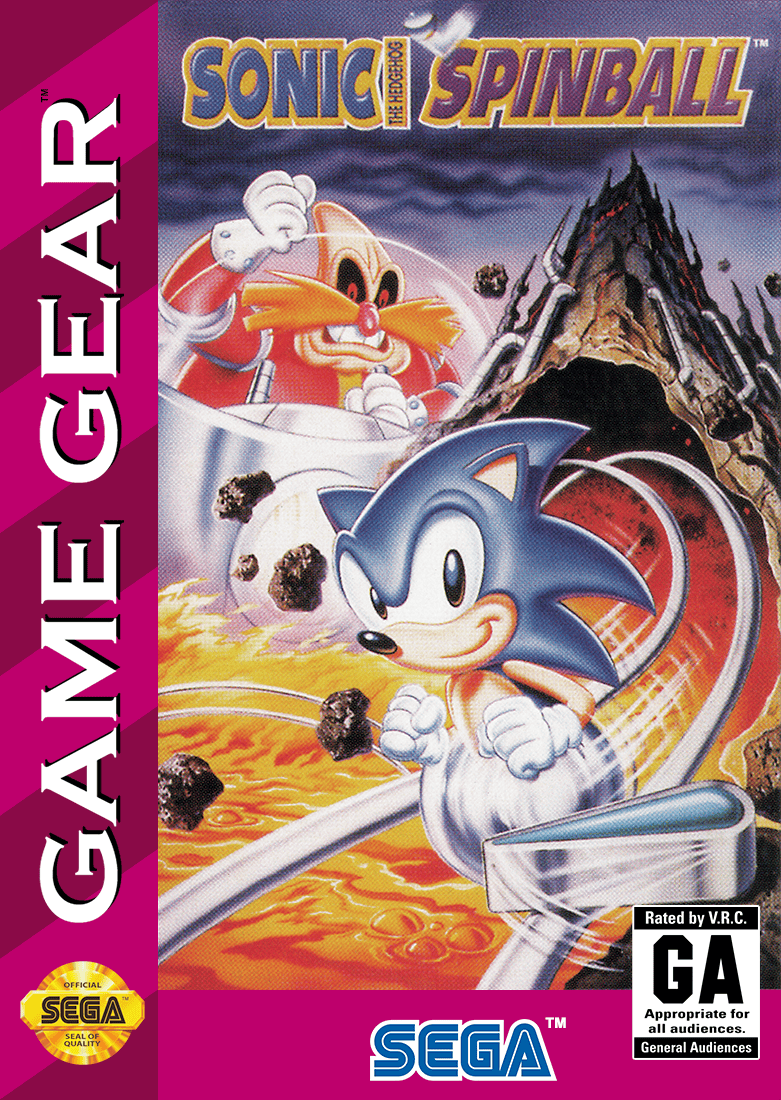 Sonic the Hedgehog Spinball [8-bit] Review
 The Murder of Sonic the Hedgehog Review
 Sonic the Hedgehog 2 16-bit Review