
A colorful Pico activity collection with more charm in its framework than depth in its games
Sonic the Hedgehog's Gameworld makes more sense to me as a collection of children's activities than as an unusual platforming adventure. The Sega Pico format gives it a different relationship with the player, using the Magic Pen and the system's other controls to select and carry out small tasks. I like that the game commits to that format. Sonic, Tails and Amy provide a recognizable cast around an amusement-park-like tower, making the collection feel connected rather than completely abstract. My reaction to the activities themselves is much more moderate. There is charm in seeing how the familiar characters fit the Pico's style of interaction, but I find the regular tasks fairly slight in appeal. The package is understandable and occasionally pleasant without becoming something I would recommend strongly for its games. A five and a half reflects that mixture of curiosity about the format and limited enjoyment of the individual activities inside it.
The tower gives the collection a simple reason to move from one activity to another. Eggman has hidden Emeralds within the Gameworld, and the characters work through the games on each level as part of the larger objective. I appreciate having that connecting idea. A small framework can help a collection feel like a place rather than a menu of unrelated exercises. It also gives the familiar characters something clear to be doing without requiring a complicated story. My reservation is that the framework is more appealing than the progress through it. I am curious about what another part of the tower contains, but the activities do not consistently make carrying out that progress rewarding. The idea of a miniature amusement park is a good fit for a collection of short tasks. For me, though, the setting gives the package a stronger identity than the play within that setting can regularly sustain.
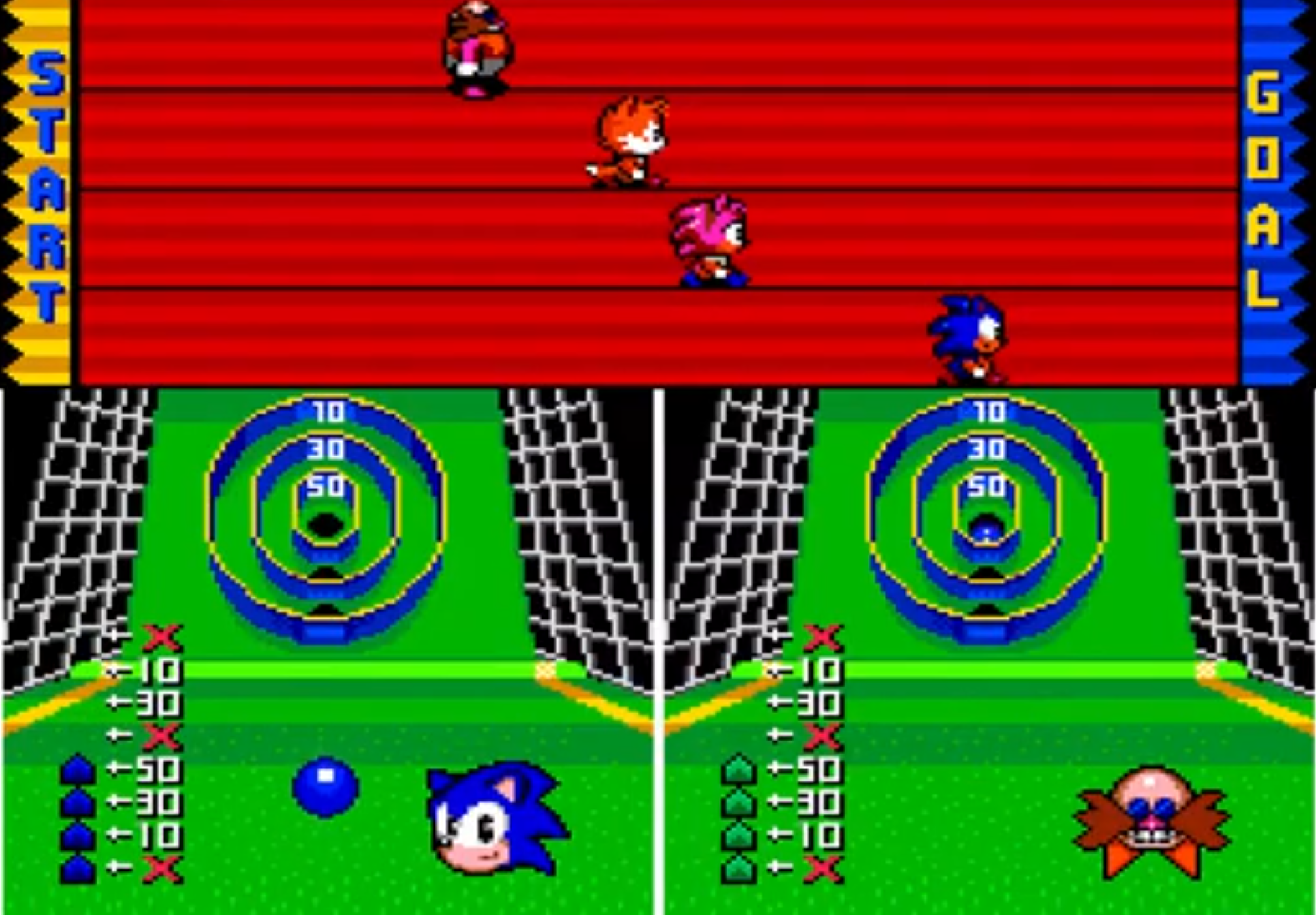
The Magic Pen is an important part of that identity. Pointing toward an activity makes the choice feel connected to the physical Pico format, while the onscreen icon indicates which control the selected game will use. Some tasks call for the pen, while others involve the directional input or the red button. I like that the collection makes the required interaction visible rather than assuming that every activity works in exactly the same way. That is a practical consideration for a program aimed at younger players. At the same time, variety in the input does not automatically make the activity itself interesting. My enjoyment depends on what the task asks me to do with the control once it has been selected. The package understands how to present a small interaction clearly, but I find the result more functional than engaging. The format remains a curiosity even when the specific action gives me little reason to want another attempt.
The sports-focused activities demonstrate that balance well. Racing, a ball game, hoops and a tree climb give the first area several recognizable kinds of task. I appreciate that the collection is not trying to stretch one interaction across the whole tower under different names. The activities have understandable goals and can provide a small change of focus as the player moves between them. What limits the appeal for me is how little interest I find in mastering those individual tasks. A short activity can be rewarding without becoming complex, but the basic action needs to make the next attempt inviting. Here, I am more likely to appreciate how the game has been fitted into the collection than to feel drawn to improve the result. That keeps the variety from becoming a strong recommendation by itself. There are different things to do, yet the presence of several tasks matters less when only a modest amount of enjoyment comes from doing them.
The performance scoring gives the games a way to recognize how well a task has been carried out. Easy and hard settings also acknowledge that the same collection may need to suit different levels of familiarity. I like those practical choices. They make sense for an activity package that wants to be approachable without offering exactly the same pressure to every player. The option for one or two players gives the collection another possible context too. These are real parts of the package, but they do not transform my reaction to the underlying activities. A score can encourage repetition when I already enjoy the action; it does less for me when the task itself feels only mildly entertaining. I am not looking for an elaborate competitive system from the Pico. I simply want the small activities to make their own results feel worth caring about, and that happens less often than the inviting framework suggests.
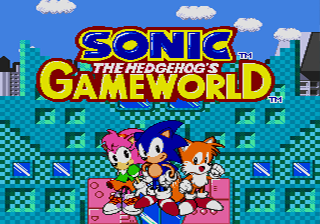
The characters and amusement-park setting make the presentation easy to recognize. I enjoy how Sonic's world can be adapted into a gentler collection without needing to reproduce the pressure of the main platformers. The familiar imagery gives the activities an inviting context and helps the tower feel like a little place to visit. That is more appealing to me than treating every screen as a completely separate educational exercise. My reservation is that personality does a great deal of the work. The collection is pleasant to look at and straightforward to understand, but the actual tasks do not have enough individual appeal to make the whole package especially enjoyable for me. The Pico's unusual format remains part of the attraction, while also making the program more specific in its audience and purpose than an ordinary Sonic release. I can appreciate that specificity without finding the experience particularly rewarding outside its intended activity-toy context.
Gameworld ends up near the middle for me because it has a clear purpose and a pleasant framework, even though I do not enjoy the individual games very deeply. The tower, control icons and recognizable cast give the collection a coherent identity. The different activities, difficulty settings and scoring provide sensible ways to use that framework. What is missing from my own enjoyment is a stronger desire to repeat and improve the actual tasks. I like seeing how the Pico format has been used more than I like spending time with the resulting games. That makes this a qualified recommendation for someone curious about Sonic's less conventional appearances, rather than a game I would point to for its lasting play value. A five and a half reflects genuine charm and an understandable design, balanced against activities that I find too slight to make the overall experience especially compelling.
Final thoughts
I enjoy the framework of Gameworld more than its individual activities. The Pico controls, amusement-park tower and familiar cast give the collection a clear identity, while the scoring and difficulty settings make practical sense. The actual tasks offer only modest enjoyment for me. It is a charming curiosity and a qualified 5.5/10, judged as an activity collection for children rather than a conventional Sonic adventure.
Final score: 5.5/10.
Reviewed on Sega Pico. No review copy was provided.
 The Murder of Sonic the Hedgehog Review
 SEGA AGES Sonic the Hedgehog 2 [Switch] Review
 SEGA AGES Sonic the Hedgehog [Switch] Review