
A lively side-scrolling runner whose best moments are stronger than the progression around them
The original Sonic Runners finds a more convincing use for automatic movement than I expected. Keeping the action side-on lets the familiar jumps, enemies and changes in height remain recognizable, while the simplified input makes a short attempt easy to begin. I enjoy that balance. It feels like a mobile interpretation of Sonic rather than an unrelated activity with his face attached. The weakness is the routine around the running. Progression and repeated attempts can become more prominent than the immediate pleasure of a good section, and the game does not maintain the same appeal across every reason it gives for returning. Seven out of ten is my score. I like the central action and the colorful presentation enough to value what this particular runner offered. I simply find its best quality in reacting to the route, not in treating every surrounding reward or collection target as an equally worthwhile commitment.
The side-scrolling view is a large part of why the idea works. A platform, enemy or group of rings has a relationship to Sonic that is easy to read, and the automatic forward movement makes timing the jump the immediate focus. I like how much can be communicated through a small set of actions when the route has a clear shape. The game does not need a full virtual controller to make a section demand attention. It needs a useful rhythm between seeing the next obstacle and choosing when to act. Runners has enough of that rhythm to make a successful stretch satisfying. The limitation is that control over the broader movement is deliberately reduced, so the stage has to keep making the available decisions interesting. When the arrangement becomes familiar, the simplicity that makes the game approachable also makes its repetition more obvious. I enjoy the format without thinking it replaces everything that is appealing about a fully controlled Sonic platformer.
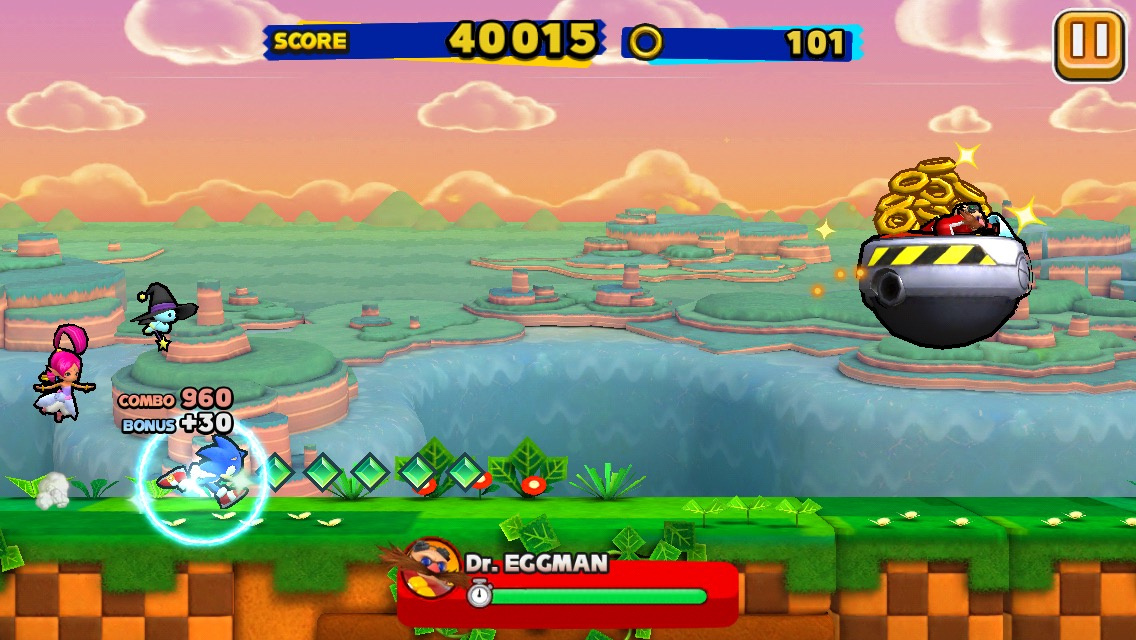
The characters provide another way to change the feel of an attempt. Their abilities and movement differences give the cast a practical place in the running rather than limiting the selection to another portrait. I like that a familiar character can suggest another way to handle a section. The attraction is strongest when that difference is apparent through the action itself, because a mobile runner benefits from changes that can be understood quickly. I am less interested in a progression target that makes a new character feel valuable mainly because it is another thing to collect. The cast is enjoyable enough to create curiosity, but the game still needs to make the next run worthwhile before that curiosity becomes a requirement to keep going. Runners generally has the stronger foundation for that than a simple feature list would suggest. I can enjoy the different approaches while still wishing the wider structure trusted the action more and asked for less attention to the surrounding systems.
The score chasing gives a successful route a clear purpose. Collecting rings and other items while avoiding an interruption makes the next decision more interesting than simply surviving long enough to see another section. I like a runner that rewards handling a sequence well, because an improved attempt can feel like a better performance rather than only a longer wait before failure. The game also has enough speed to make a clean stretch exciting without needing the player to direct every part of the forward movement. My reservation is that another score target does not automatically make a familiar route fresh. I enjoy improving when the action remains engaging. I become less enthusiastic when a target mainly asks for more repetitions of something already understood. That distinction shapes the whole package for me: a good immediate challenge supported by progression that sometimes adds useful direction and sometimes simply makes the same work feel larger.
The visual and musical identity helps the game considerably. The bright scenery, recognizable enemies and energetic movement give the small-screen format a clear connection to the series. I enjoy how the side view can show a route as an inviting stretch of platforms rather than reducing the world to a narrow corridor. The presentation is at its best when it makes the next hazard or reward readable, so the style and the action support one another. It is less valuable when another flourish merely makes a familiar sequence look busier. Runners has enough character that I do not see it as an anonymous phone game, and that matters to why I like it. The appearance makes another attempt inviting, while the actual jumping is strong enough that the invitation is not empty. The weaker stretches are the ones where the broader routine draws attention away from that simple pleasure and makes the game feel more concerned with another target than another enjoyable route.
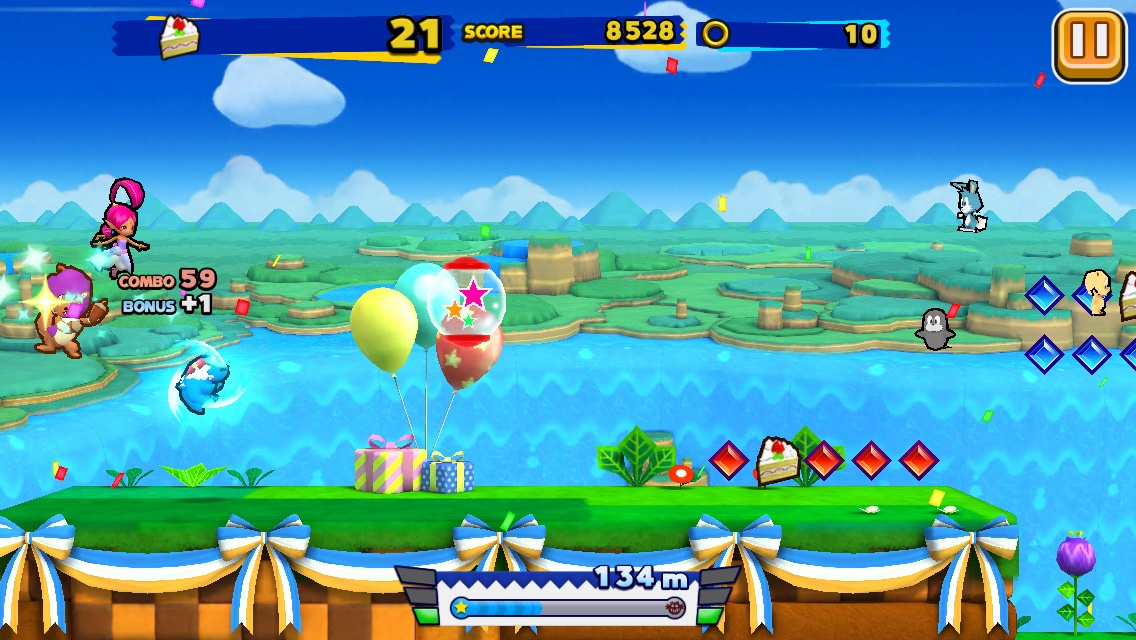
The surrounding progression is the main reason I keep the score measured. Helpers, character development and the other systems give the game targets beyond a single distance or score, which can make an unsuccessful attempt contribute to something useful. I appreciate that basic idea. I am less enthusiastic about how much of a mobile game can become organized around accumulating the next improvement. The central action is most appealing when a run feels like a quick challenge that can be enjoyed for its own sake. The wider systems can turn that challenge into another piece of ongoing maintenance if too much attention is placed on the reward. I do not need all progression removed. I want it to support the pleasure of playing instead of becoming the primary reason to repeat an activity. Runners offers both effects, with enough enjoyable action to remain worthwhile and enough surrounding routine to stop my enthusiasm from becoming unconditional.
I finish with a positive opinion of the original game as it existed, while recognizing that its official service is no longer operating. The side-scrolling format, simple timing and characterful presentation gave it a clear identity, and I enjoy how much of Sonic's familiar appeal survived the automatic movement. The progression and repeated targets were less consistently rewarding than the running itself. Seven out of ten reflects that balance. I value the game for the quality of a good attempt, not for the number of reasons it could provide to keep an account progressing. It was a worthwhile mobile interpretation with clear limits, rather than a substitute for the designed stages and fuller control of the main platformers. The best moments made the reduced input feel like a sensible choice. The weaker parts made the surrounding routine feel more demanding than the activity at its center needed to be.
Final thoughts
The original Runners made good use of side-scrolling action, readable timing and Sonic's visual identity. Its progression and repeated targets were less appealing than the running itself, but the core idea remained enjoyable. A worthwhile mobile interpretation at 7/10; the original official service is no longer operating.
Final score: 7/10.
Reviewed on iOS using an older iPhone. No review copy was provided.
 Sonic Runners Adventure Review
 Sonic Dash 2 Sonic Boom Review
 SONIC PICO PARK Review