Inventive routes and attractive worlds keep colliding with an awkward sense of movement
Sonic Lost World has ideas I genuinely want to enjoy. The rounded stages, the new emphasis on parkour and the colorful settings give the adventure a distinct identity instead of simply repeating another boost-focused campaign. On PC, I like the attempt to give Sonic more control over pace and more ways to use a surface. The problem is how unevenly those ideas come together. A stage can be enjoyable and inventive, then another interaction makes the movement feel much fussier than the simple objective deserves. Six and a half is my score. I find enough worthwhile platforming and visual personality to recommend a look, but not enough consistency to call the experiment a strong success. The game is interesting because it tries to change how Sonic occupies a level. It is frustrating because the extra possibilities do not always make crossing that level feel better, and the whole adventure depends on that distinction.
The change in pace is the first thing that makes the game stand apart. Sonic can move more deliberately before committing to a run, which gives a small platform or a tighter turn another kind of attention. I like the principle. A character associated with speed does not need to be moving as quickly as possible at every moment, and a slower option can make the faster stretches more satisfying by contrast. The reservation is that the transition between those approaches is not always comfortable. I want a deliberate movement system to make a small adjustment feel clear and dependable. Here the extra consideration can make an ordinary section feel more complicated than enjoyable. The game has worthwhile moments where choosing the pace improves the route, but it also has moments where I am more aware of managing the controls than appreciating the stage. That unevenness makes the new approach harder to enjoy consistently than its basic idea suggests.
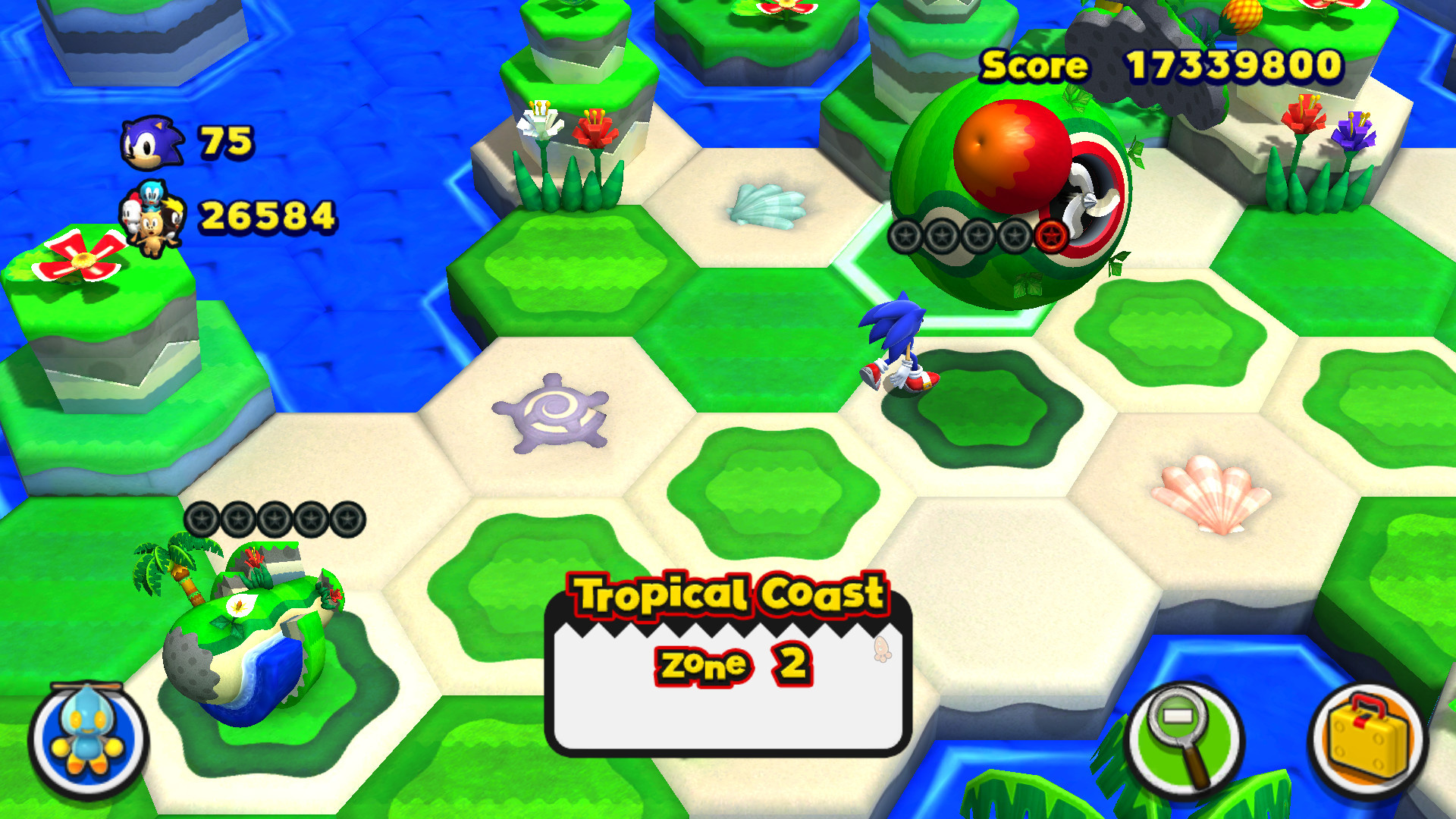
Parkour provides a more interesting use for the surrounding surfaces. Running along or climbing a wall gives the environment a function beyond enclosing the route, and I enjoy seeing a path that can continue in another direction instead of ending at a vertical barrier. The cylindrical shapes also change how a stage is read, making the scenery feel like a space that wraps around the character rather than a flat strip in front of him. Those are good ideas. The difficulty is how clearly the game communicates which action will occur at the next surface. A useful movement option becomes less appealing when the interaction feels more automatic or more particular than expected. I like what parkour can add to the route, but I do not want the whole adventure to feel like a negotiation with when the game decides a wall should be used. The best sections make the new actions feel connected; the weaker ones make them feel like an extra condition attached to ordinary movement.
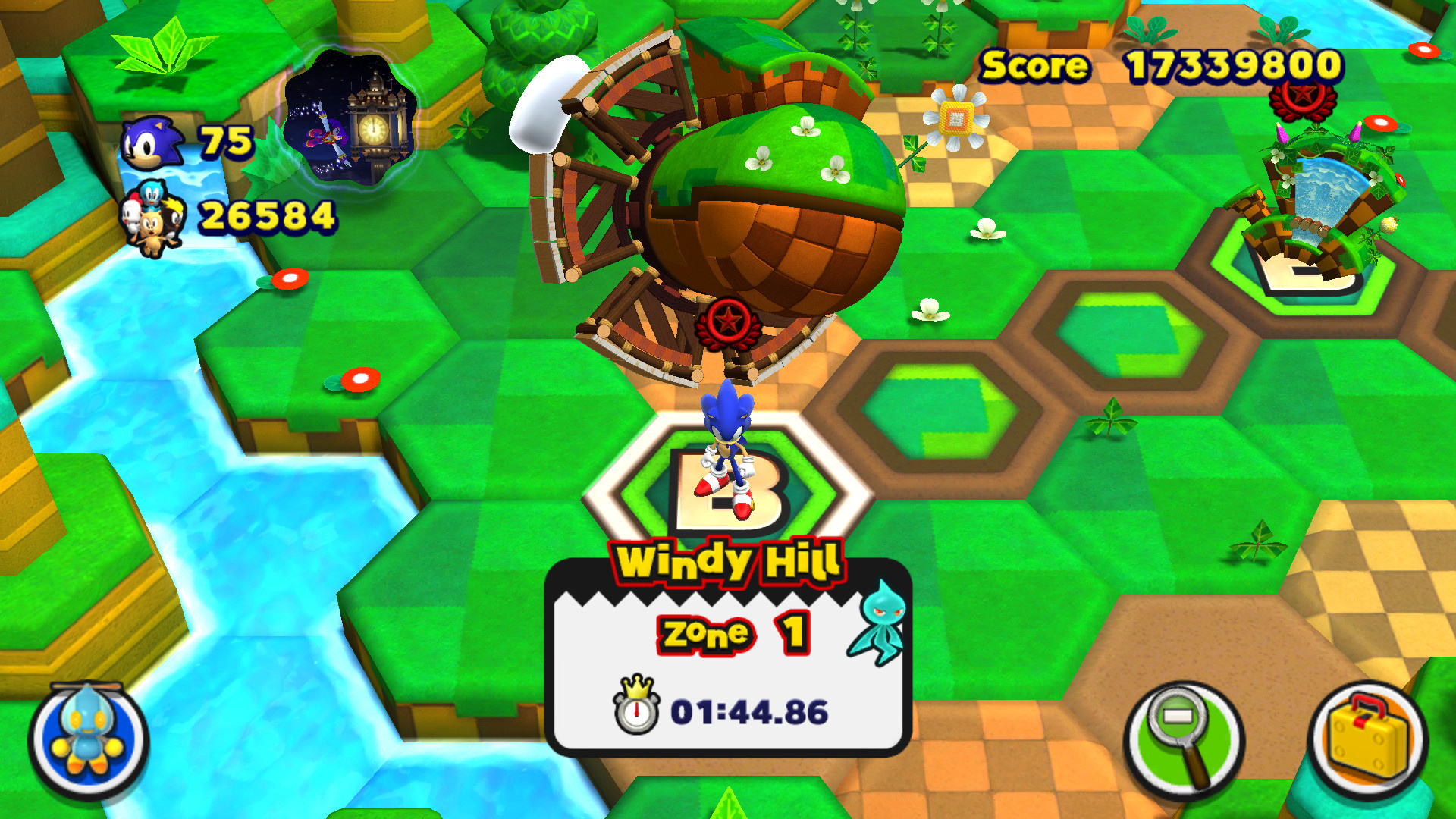
The level design has a strong appetite for variety. Windy Hill gives the adventure an inviting opening, and the later environments keep changing the appearance and the shape of the space around Sonic. I enjoy the bright colors and the willingness to play with unusual terrain. A stage can ask for careful platforming, then offer a faster section that makes the same movement feel more expansive. My problem is not a lack of invention. It is the uneven quality of the inventions. Some sections make a memorable use of the new approach, while others interrupt the rhythm with a demand that feels more awkward than interesting. A game with this many changes needs a dependable foundation to hold them together. Lost World has enough of that foundation to remain worthwhile, but not enough to stop its weaker sections from becoming prominent. I look forward to a new environment more consistently than I look forward to every new interaction it may introduce.
The Wisps add another source of possibilities, returning as temporary abilities that can change how a section is crossed. I like a power-up that gives the world another practical use rather than simply increasing damage or speed for a short time. At the same time, another transformation or special input is only valuable if the resulting activity is enjoyable. Lost World already has a movement system asking for more deliberate attention, so extra abilities sometimes make the adventure feel busier without making it smoother. I enjoy the variety in principle and find some uses appealing, but I do not think every interruption earns its place. The same applies to the enemies and the different ways Sonic can attack them. A kick and a homing attack can create another small decision, yet the decision needs to be readable enough that it adds interest rather than friction. The game repeatedly reaches for more interaction, with mixed success in making that interaction feel natural.
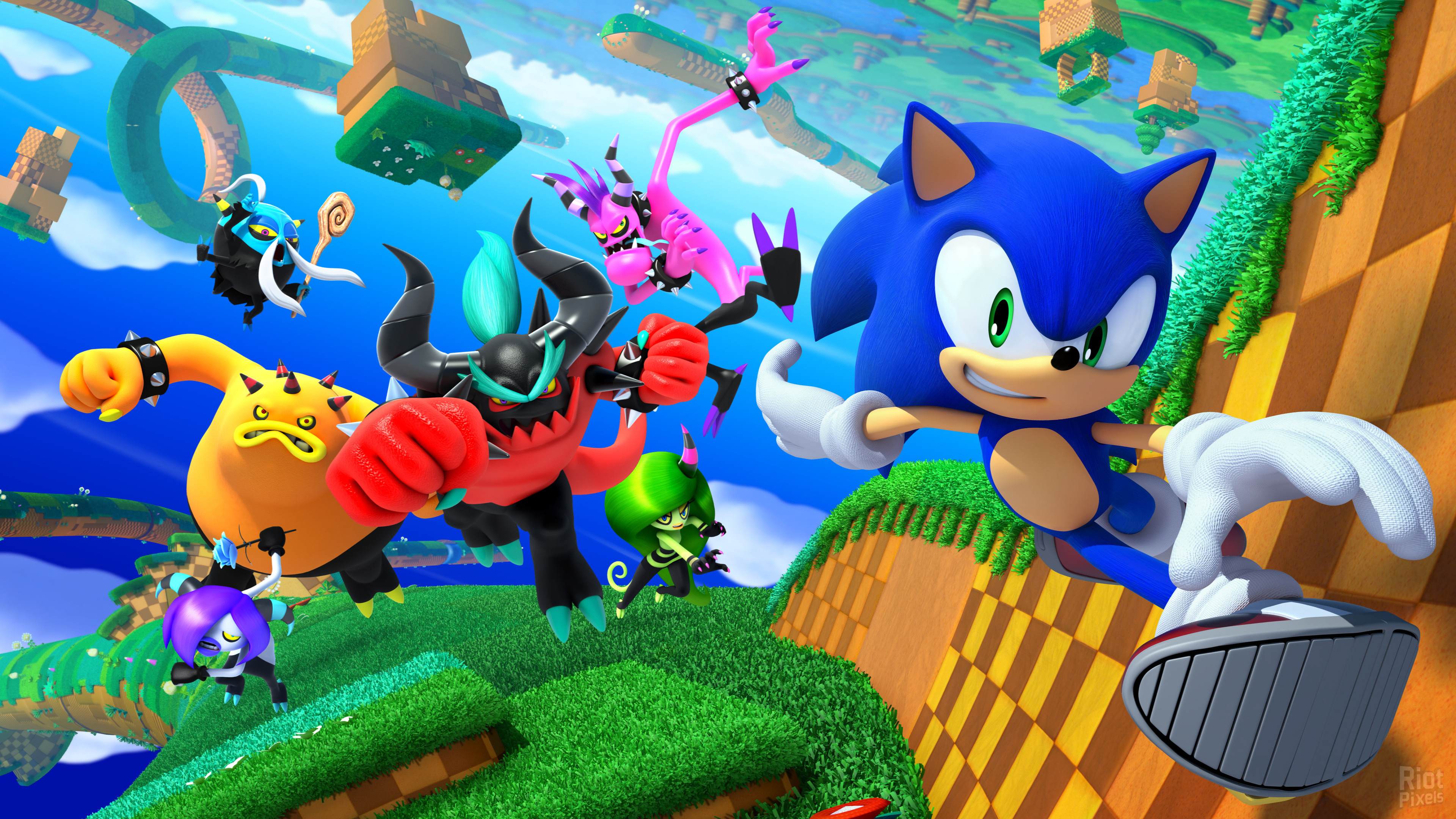
The presentation is a clear strength. I enjoy the clean shapes, vivid environments and music that gives the different stages a cheerful identity. The world is attractive without needing to hide every surface behind excessive detail, which suits a game built around reading unusual terrain. The Deadly Six provide a recognizable new group of antagonists, although I find the setting more appealing than the story trying to connect it. I do not need the plot to carry a platformer, but it also does little to make the awkward sections easier to accept. What keeps the game worthwhile is the pleasure of a good route and the charm of seeing where the next one is set. The PC version offers that basic adventure without changing my central reaction to it. I can appreciate its appearance and its ambition while still wishing the ordinary control of Sonic were less uneven. The style supports the enjoyable stages more successfully than it rescues the weaker ones.
I finish Lost World feeling that there is a better game close to the one that exists. Choosing a pace, using walls and crossing rounded terrain can make Sonic feel fresh, and several stages use those ideas well. The attractive presentation gives the experiment enough personality that I never see it as a completely empty detour. The awkward transitions, uneven stage demands and inconsistent value of the extra abilities keep the recommendation qualified. Six and a half out of ten reflects a game I find mixed but worthwhile, with highlights that do not quite become a consistently satisfying whole. I do not want Sonic to be forbidden from changing. I want a change to make movement enjoyable often enough that the adventure does not keep stopping to prove the new idea exists. Lost World manages that balance in some places and misses it in others, leaving me interested in its direction and less convinced by its execution.
Final thoughts
Lost World has attractive settings and worthwhile ideas in its pace control, parkour and rounded stages. The movement and level demands are too uneven to make every experiment enjoyable, while the extra abilities sometimes add friction. An interesting, mixed PC adventure at 6.5/10.
Final score: 6.5/10.
Reviewed on PC. No review copy was provided.
 Sonic Lost World (Nintendo 3DS) Review
 Sonic Dash 2 Sonic Boom Review
 SONIC PICO PARK Review