
A worthwhile handheld celebration with less variety than its two Sonics first suggest
Sonic Generations on Nintendo 3DS is a separate handheld game, and I enjoy it more when I judge what it actually offers instead of expecting the larger console adventure in a smaller case. Its two Sonics revisit familiar environments through different movement styles, with a clear focus on side-scrolling platforming. I like the immediate appeal of those recognizable places and the way a favorite stage can become a reason to attempt a cleaner run. The limitations are the modest scope and how unevenly the game makes the two approaches feel distinct. Seven out of ten is my score. There is enjoyable portable Sonic here, supported by worthwhile missions and a pleasant celebration of the series, but the main journey is not substantial or inventive enough to make my recommendation unqualified. I enjoy the trip more as a compact selection of routes to replay than as an especially rich adventure whose different versions of Sonic keep producing surprises.
Classic Sonic provides the more familiar running, jumping and spin-dashing foundation. I like how quickly that style communicates what a stage is asking for, especially when a route gives the movement room to build naturally. The side view makes the important relationship between the character and the next platform easy to understand. Familiar scenery helps the celebration feel welcoming, but the enjoyment still depends on how the stage has been arranged. Recognizing a location is not the same thing as enjoying its jumps. This version has enough solid platforming to make the classic side worthwhile, though I do not find every revisited area equally exciting. Some sections are more appealing as a reminder of another game than as a route I immediately want to master here. I appreciate the compact handheld approach without needing to pretend that nostalgia alone makes every act a particularly strong example of two-dimensional Sonic design.
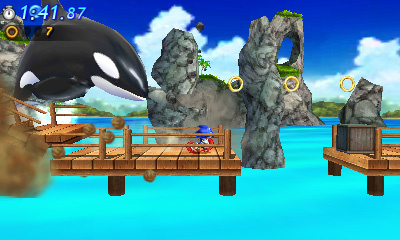
Modern Sonic stays largely in side-scrolling play too, so his difference comes from the boost, homing attacks and the way the routes accommodate faster movement. I like the extra energy when the level makes a burst of speed feel earned and readable. It can give a familiar setting another rhythm without changing the basic viewpoint. The reservation is that two versions of the character do not always produce two equally distinctive experiences. I want the second act to feel like another interpretation of the space, not merely a faster reason to pass through a related collection of obstacles. The game reaches that distinction in places, and I enjoy the contrast when it does. Elsewhere the handheld focus makes the whole package feel narrower than the two-character premise initially promises. That is not a complaint about the absence of a particular console feature. It is a question of how much variety the actual movement and stage design create inside the 3DS game's chosen form.
The stage selection gives the adventure a useful handheld identity. Revisiting places associated with different parts of the series makes the journey more interesting than a direct sequence of familiar Genesis scenery would be. I like having the celebration extend beyond one era, and the shift in music and visual style gives another reason to look forward to the next location. The boss encounters also break up the ordinary acts, turning movement into a more focused challenge. My disappointment is how quickly the main trip can begin to feel limited. A celebration benefits from a strong selection, but it also needs enough space to explore that selection convincingly. I enjoy the recognizable places without finding the overall structure especially generous. It is a pleasant set of stops, with some stages doing more for my interest than others. The appeal comes from the quality of particular routes rather than the sense of a large world or a steadily deepening campaign.
The missions help compensate for that narrow main structure. A familiar act can become a different challenge when the goal involves rings, avoiding damage or finishing under a particular restriction. I like replay objectives that change what deserves attention rather than merely asking for another normal finish. They make a compact selection more useful, especially when the new demand exposes something interesting about a route. The collection rewards also give those challenges a visible result outside the stage itself. I do not enjoy every objective equally, and I would not count a large mission list as automatically equivalent to the same number of new stages. The distinction matters because the missions still depend on the strength of the spaces they reuse. When the underlying act is enjoyable, another reason to understand it is welcome. When it is less interesting, a new condition can make its limits more noticeable instead of making the experience feel genuinely fresh.
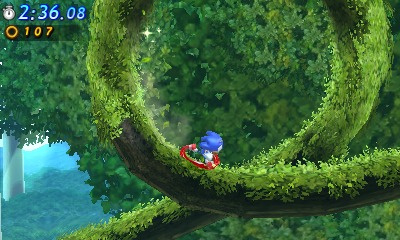
The presentation is an important part of why the package remains appealing. The familiar music and recognizable environments give the adventure warmth, while the stereoscopic display suits a game built from layers and side-on movement. I enjoy being able to recognize the setting without losing track of the character or the next hazard. The celebration works best when the visual and musical references support the actual platforming, rather than turning the route into a place to show off reminders. Generations on 3DS has enough personality to avoid feeling like an anonymous portable spin-off, even though its ambitions are smaller than the premise might suggest. My main reservation stays with variety rather than appearance. I can enjoy how a familiar area looks and sounds while still wanting a more surprising use of that area. The polished presentation makes the good routes more inviting, but it cannot make the entire selection equally memorable or give the main campaign more room than it contains.
My final reaction is that the handheld Generations is good enough to recommend with the right expectations. The two movement styles are enjoyable, the stage references give the journey a recognizable identity and the missions create worthwhile reasons to return after the main route. The compact scope and uneven distinction between the acts keep it from becoming a stronger favorite. I like having a 3DS interpretation that is willing to make its own selection instead of acting as a simple copy, and I also think that interpretation could have done more with the contrast between its two Sonics. Seven out of ten reflects a pleasant, replayable handheld game with several good stages rather than a complete triumph of its anniversary idea. It offers enjoyable reasons to revisit familiar places. It just does not keep turning those revisits into fresh surprises often enough to earn the kind of enthusiasm I reserve for Sonic's best portable adventures.
Final thoughts
The 3DS Generations has enjoyable side-scrolling styles, an appealing selection of familiar settings and missions that give the stages extra use. Its scope is modest, and the contrast between the two Sonics is not always as strong as I want. A good handheld celebration with limits, at 7/10.
Final score: 7/10.
Reviewed on Nintendo 3DS. No review copy was provided.
 Sonic Lost World (Nintendo 3DS) Review
 Sonic X Shadow Generations Review
 Sonic Dash 2 Sonic Boom Review