A scrappy handheld fighter with an enjoyable combat system and too much repeated story work
Sonic Battle is much more interesting than I would expect from a handheld game about putting Sonic characters into small arenas. The movement, knockbacks and special-move choices give the fights enough structure to be enjoyable, while Emerl gives the story a central idea that belongs to this particular game. I like how the cast's familiar abilities have been translated into combat rather than merely attached to identical attacks. The weakness is repetition. The story asks for a lot of fighting, and not every battle gives the system a fresh enough reason to justify another encounter. Seven and a half is my score. I find the game entertaining and distinctive, with a combat foundation worth learning, but the surrounding progression makes me more aware of its limits than I would like. It is a good Sonic spinoff that understands how to make its characters useful in another genre, even when the campaign struggles to keep that genre from becoming tiring.
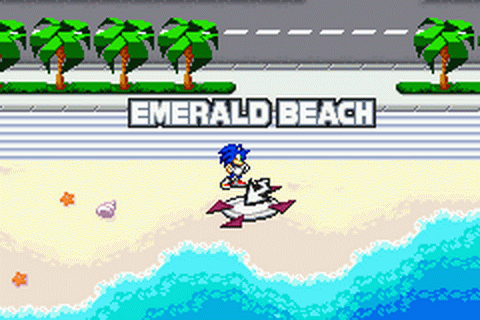
The arena structure gives the movement more importance than a simple exchange of attack animations would. Characters can dash, jump and reposition around opponents, while a successful attack can lead into a launch or a pursuit. I like having to consider where an opponent is being sent rather than only whether the first hit connected. A wall can change what happens after a knockback, and the possibility of a counter gives the exchange more to think about than simply chasing every launch automatically. The controls keep the basic actions manageable for the handheld, but there is enough connection between those actions to make learning the system worthwhile. I enjoy that balance. The game does not need a huge button layout to give a fight some decisions. My reservation is that the arenas and repeated encounters can make those decisions feel too familiar over a long stretch. The system is more appealing than the campaign's ability to continually refresh it.
The special-move setup is the clearest example of the game doing something useful with a limited control scheme. Shot, power and trap abilities can be assigned to ground, air and defense roles, so choosing a setup changes more than the attack available from one button. I like that defense is connected to the same categories. Preparing against a particular type gives the next encounter a small planning layer, and the choice can be reconsidered when a character returns after being knocked out. That prevents the system from feeling completely fixed before the fight has begun. The gauge that makes a special move capable of an instant knockout adds another reason to watch what is happening rather than repeat an attack without thought. It can create an important opening, while the defensive setup stops that opening from being a guaranteed result. These are good ideas because they create interaction between the choices, giving the combat more shape than its small-screen appearance first suggests.
Healing is another part of that balance I enjoy. Restoring health is possible, but standing still to do it creates a vulnerability. That makes choosing when to recover part of the fight instead of a completely separate pause in it. I like a system that gives me a way to change a bad situation while asking me to create the space for that change. The same is true of trying to build toward a powerful special attack. There is a reason to care about the rhythm of an exchange, not only the immediate damage of a single hit. The limitations become clearer when the campaign keeps asking for another battle using broadly similar situations. A useful combat decision can lose some of its appeal when it has been repeated too many times without a meaningful change around it. I enjoy the mechanics enough to keep the overall opinion positive, but I would have preferred the story to trust a smaller number of stronger encounters more often.
Emerl gives progression a worthwhile identity through learning and customization. Building a moveset from the abilities associated with other characters makes the robot more than a new face placed beside the established cast. I like having a reason to think about how different actions might work together, and the connection between the story and the combat makes the progression feel relevant. It is satisfying when a change to the available moves suggests another way to approach a fight. The effort needed to obtain and organize those options can also make the repetition more noticeable. A progression system should make another battle appealing, not merely make it necessary to finish building the setup I actually want. Battle moves between those two effects. I enjoy the customization itself, while sometimes wishing the route toward a more interesting Emerl were less repetitive. The idea is strong enough that it keeps the campaign from feeling empty, even when the number of encounters begins to exceed the variety of their demands.
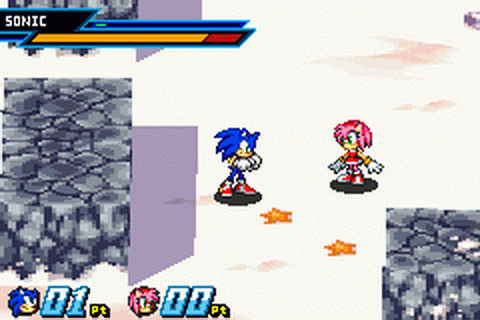
The cast and presentation help hold the game together. Sonic, Tails, Knuckles and the others have recognizable attitudes and actions, and the sprite work makes them easy to distinguish in the arenas. I like that the story gives the characters room to react to Emerl rather than treating each one as a portrait before another fight. The tone can be playful while still giving the central robot a reason to matter. It makes the campaign more memorable than the repeated battle structure alone would be. I am less convinced by the pacing of that structure than by the character work around it. Moving through another encounter is not always the most enjoyable way to reach the next worthwhile story moment. The game is at its best when the narrative and the combat support one another, with a new situation making the fight feel relevant. It is weaker when the story simply provides another excuse to carry out a familiar requirement again.
I still find Sonic Battle worth recommending. Its arenas, special-move choices and Emerl customization give it enough substance to stand as a game rather than rely entirely on the appeal of the characters. I enjoy the cast and the way the combat translates their abilities into something practical. The repeated story fights are the main reason I stop at seven and a half instead of going higher. They make a good system feel more limited by asking it to carry too much similar work. A tighter campaign with more consistently distinct encounters would make the same foundation much stronger. As it stands, this is an entertaining handheld fighter with real ideas and a memorable identity, held back by how long it keeps returning to the same basic demands. I like what it lets me learn and build, even when I want it to reach the next meaningful change sooner.
Final thoughts
Battle has an enjoyable arena system, smart special-move choices and a worthwhile customization idea in Emerl. Its characters give the story personality, but too many similar fights make the campaign drag. I recommend the combat and the central ideas with clear reservations about the repetition. 7.5/10.
Final score: 7.5/10.
Reviewed on Game Boy Advance. No review copy was provided.
 Sonic Forces Speed Battle Review
 Sonic Dash 2 Sonic Boom Review
 Sonic Adventure 2 Battle [GameCube] Review