A likable Sega crossover attached to a progression routine stronger than its puzzles
SEGA Heroes had an appealing premise: put characters from very different Sega worlds into a team and give them a shared puzzle battle to fight. I enjoy the personality of that idea, and the match-three system has enough useful decisions to make an ordinary encounter entertaining in short stretches. The weakness is how quickly the progression around those battles becomes more prominent than the pleasure of the board itself. Six out of ten is my score. I can appreciate the cast, the readable combat and the way abilities give color matches a practical purpose, while remaining less enthusiastic about the repeated work needed to keep the wider team developing. This is an assessment of the original mobile game, whose official service has closed. Its best quality was the characterful crossover at the center of a clear small puzzle, not the amount of routine it could attach to that puzzle over time.
The basic battle gives a color match an obvious result. Matching the tiles associated with a hero makes that character act, so choosing a move is connected to the team rather than only to a score total. I like that relationship. It makes the board and the characters part of the same system instead of placing familiar portraits above an unrelated puzzle. The need to consider which hero benefits from the next match gives the immediate decision more shape, especially when the board offers several plausible options. The limitation is that the structure remains familiar. Once the basic priorities become clear, another encounter can feel like another version of the same small process rather than a new problem. I enjoy the simplicity when a short battle is the goal. I am less convinced when the game expects that same level of decision-making to sustain a much larger amount of repeated progression. The idea is useful, but its range is not unlimited.
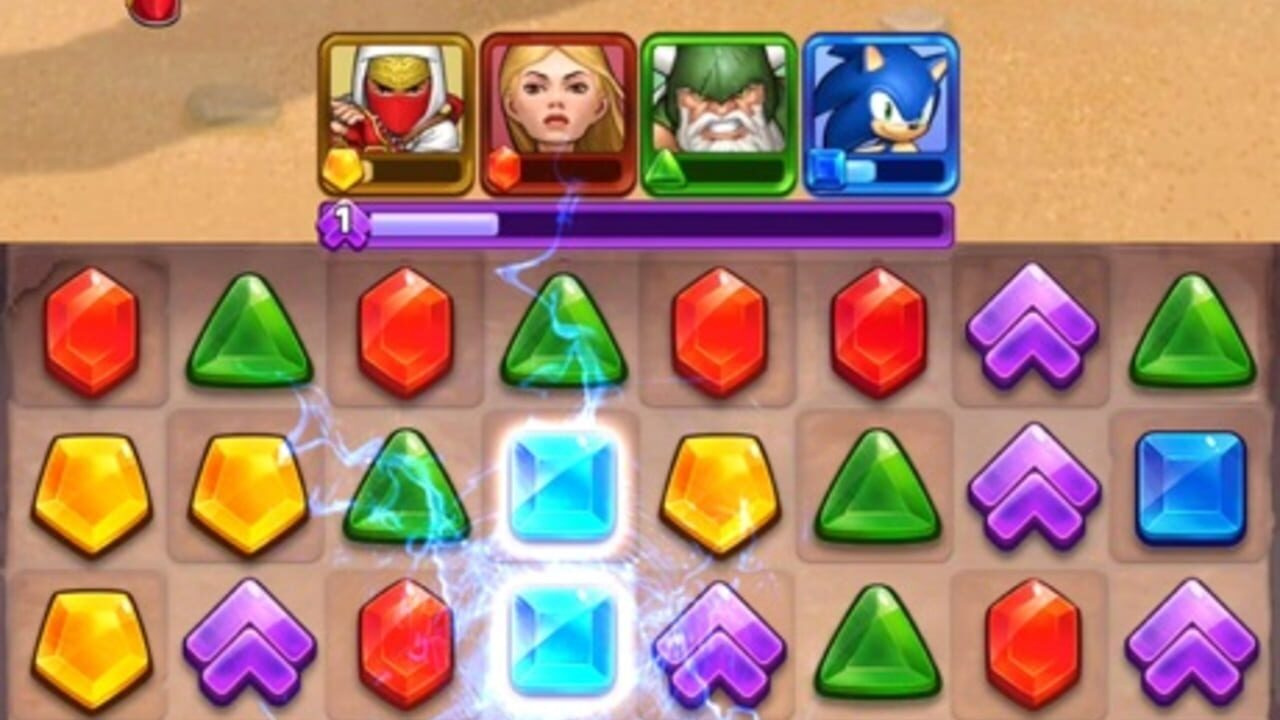
The team selection is the most interesting part of the crossover. A group drawn from Sonic, Streets of Rage, Golden Axe and other Sega series gives the game an immediate identity, and I like seeing familiar abilities translated into a shared set of rules. A hero can matter because of what an ability does, not only because the name is recognizable. The color requirements also stop the team from being an entirely arbitrary collection of favorites. There is a practical structure to consider. That is a worthwhile foundation for a puzzle RPG, though the characters' individual strengths do not automatically make every repeated battle exciting. I enjoy thinking about how a group works together more than I enjoy pursuing every step needed to improve that group. The distinction matters because the cast is the main invitation, while the game still has to make the ordinary process of using and developing that cast rewarding enough to carry the invitation beyond its first appeal.
The special abilities give a battle another rhythm beyond making the next ordinary match. Building toward a stronger action can create a useful short-term goal, and a well-timed ability can change the immediate situation. I like how that makes the characters feel involved rather than waiting above the board as passive decorations. The boost tiles and stronger matches provide additional ways to influence what comes next, giving the puzzle a little more depth than selecting the first visible group of three. My reservation is that the underlying encounters do not consistently ask enough new questions to make those options feel fresh. A larger set of abilities is only valuable for as long as the fights make choosing between them enjoyable. SEGA Heroes has entertaining moments where the board and the team support each other well. It also has stretches where the process feels too familiar, leaving the reward after the battle more prominent than the decisions made inside it.
The progression is where my enthusiasm becomes most qualified. Developing a team can make a later encounter feel like a useful test of earlier choices, and I appreciate that an unsuccessful or routine battle can still contribute to a broader target. The problem is how easily the broader target becomes the main reason to repeat the battle. Collecting the materials or character progress needed for another improvement is less appealing when the actual encounters have already become familiar. I do not need to describe a particular purchase or unlock to find that structure tiring. It is a question of what the game emphasizes. I want the puzzle and the character interaction to make another fight inviting, with progression rewarding the time spent enjoying them. Too often the relationship feels reversed: the next improvement supplies the invitation, while the battle becomes the work required to reach it. That makes a likable small game feel less satisfying as an ongoing routine.
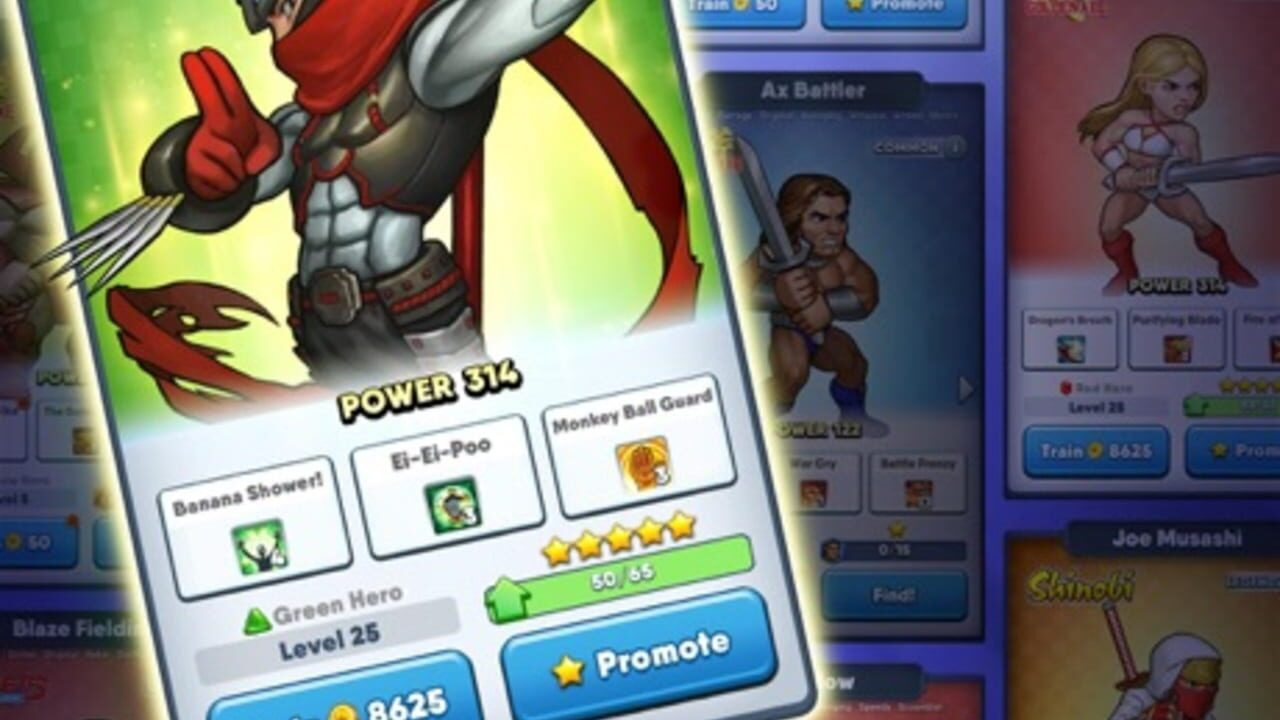
The presentation does a good job of giving the crossover a common language. Characters from very different visual styles can share the board without looking entirely unrelated, and their recognizable attacks and attitudes help the battles feel playful. I enjoy the confidence of bringing these worlds together without needing a long explanation for every combination. The story provides a broad threat that can involve the group, but the cast's immediate personality is more important to my enjoyment than the narrative around the fights. The attractive style can make another encounter pleasant to watch, though it cannot make the repeated puzzle demands more substantial on its own. I like the character collection more consistently than the amount of battle repetition used to support it. That is why the score remains mixed rather than strongly positive. The crossover has genuine appeal, while the game underneath it is enjoyable in pieces without being equally compelling across the full progression structure.
I finish with a measured appreciation for what SEGA Heroes offered. The color-based team battles were readable, the special abilities gave the characters a practical role and the crossover had enough personality to make the familiar match-three foundation more inviting. The repeated progression did not stay as enjoyable as the idea of assembling the team. Six out of ten reflects a game with worthwhile short-term appeal and clear limits on the longer routine. I liked the way the cast could make a small puzzle feel characterful. I was less convinced by how much repeated effort the wider structure expected that puzzle to carry. With the original official service no longer operating, my reaction remains to the game as it existed rather than a recommendation to begin a new live-service collection. It had enough good ideas to be memorable, but not enough variety in the ordinary battles to make all of its ongoing demands feel equally rewarding.
Final thoughts
SEGA Heroes gave its crossover cast a useful role through color-based puzzle battles and special abilities. The immediate play was likable, while repeated progression became more prominent than the enjoyment of the encounters. A mixed 6/10 for the original game, whose official service has closed.
Final score: 6/10.
Reviewed on iOS using an older iPhone. No review copy was provided.
 SEGA AGES Sonic the Hedgehog 2 [Switch] Review
 SEGA AGES Sonic the Hedgehog [Switch] Review
 Sonic & SEGA All-Stars Racing Review