A lively Tokyo sports collection whose retro events give the crossover a welcome new personality
Mario & Sonic at the Olympic Games Tokyo 2020 is an enjoyable sports party with enough personality to make another trip through the series feel worthwhile. I like the familiar cast, the varied event selection and the way the retro Tokyo 1964 material gives the package a different rhythm instead of only a new set of venues. The modern events are not all equally compelling, and the story can place too much connecting material between the activities I most want to play. Those limitations do not overwhelm the fun. Seven and a half out of ten is my score. The game is strongest as a lively collection of competitions to revisit rather than a deep simulation or a substantial adventure whose every section deserves equal attention. It gives Mario and Sonic several entertaining things to do together, with the old-style events providing one of the clearest reasons for this particular crossover edition to have an identity of its own.
The modern sports are easy to appreciate when the goal and the controls fit together cleanly. Timing an action, placing a shot or finding a better rhythm gives a short event a result that can be understood and improved. I like that immediacy in a party collection. The different control approaches also let the game accommodate more than one preference, so a conventional button option can make an event easier to enjoy without requiring every activity to depend on motion. The reservation is the depth of the individual sports. Some offer an enjoyable little problem to learn, while others feel as though they have shown most of their appeal after the first few attempts. The quantity gives useful choice, but it does not make the entire selection equally strong. I enjoy having several favorites available and moving away from the less appealing ones, rather than expecting every discipline to become a lasting reason to keep the game in rotation.
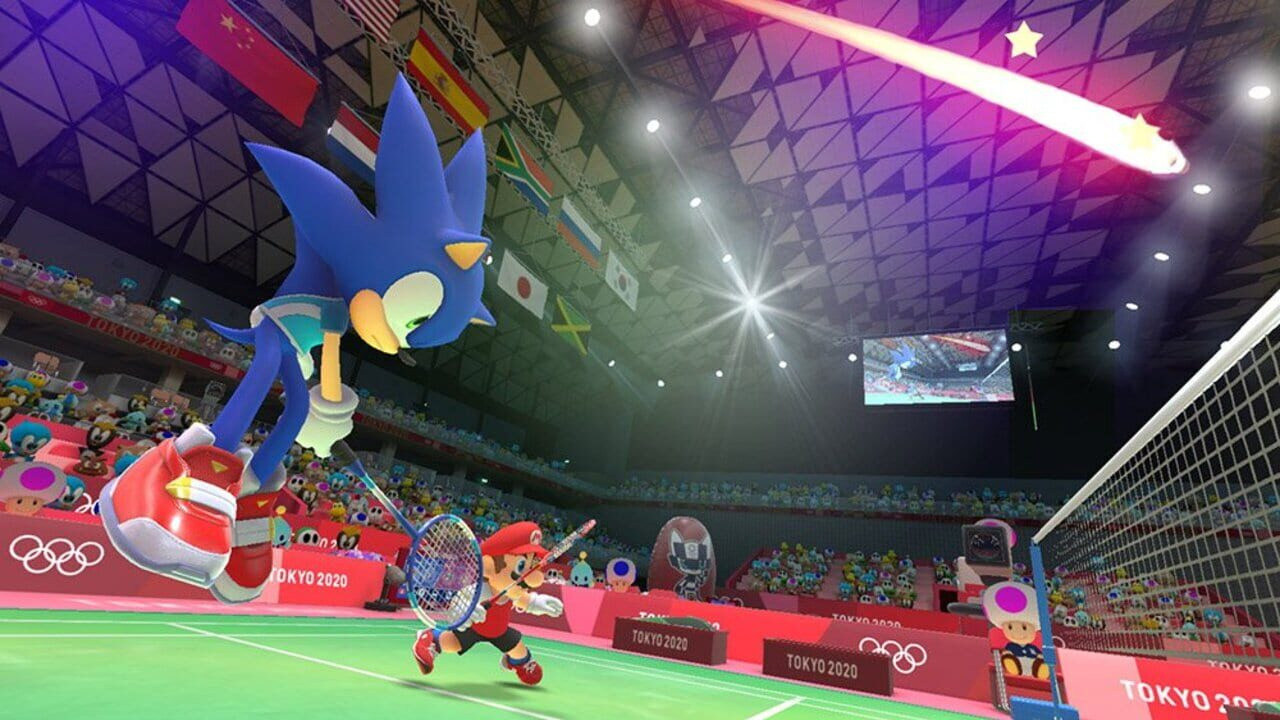
The newer events help the selection feel more varied. Skateboarding, surfing, karate and sport climbing give the cast different kinds of action instead of another small variation on a track race. I enjoy seeing an event use a distinct rhythm or a different kind of timing because that makes the collection more than a succession of changing backgrounds. The characters also suit the playful exaggeration, giving the action an identity beyond a neutral sporting demonstration. My praise remains selective. A new discipline can be entertaining without offering a great deal of room for improvement, and some are more appealing as a brief change than as something I want to study for a long time. That is acceptable for this format, provided enough events remain enjoyable. Tokyo 2020 reaches that point for me. The newer sports broaden the practical activity, while the game keeps the immediate goal simple enough that trying another event feels like a welcome choice rather than another large lesson.
The Tokyo 1964 events are the strongest new identity in the package. The pixel presentation and simpler controls make the older sporting format feel like a playful alternative, not merely a visual filter over the modern events. I love seeing Mario and Sonic's different old styles share a setting, and the reduced action can make the competition especially clear. A smaller set of inputs gives timing and rhythm a direct place in the event instead of burying the goal beneath another explanation. The retro side is not automatically deeper or better in every case, but it gives the selection a useful contrast. I find it easy to move from a busier modern sport to one of these more concentrated challenges and enjoy the change. The nostalgia works because it changes the way the event feels to play as well as the way it looks, which is a much stronger reason for the idea to exist than another familiar costume or background reference alone.
Story Mode makes use of the split between the two periods, giving the characters a lighthearted reason to move through Tokyo and its sporting activities. I enjoy the idea more consistently than the pace. The cast can make a small scene amusing, and exploring the different venues and landmarks gives the package a stronger sense of place than a menu alone would. The extra minigames also create another kind of interruption. Some are pleasant diversions, while others make me more interested in reaching the next proper event. A sports party does not need an elaborate story to work, and this one is best treated as a framework for seeing more of the collection rather than the main attraction. I like that there is a connected route for solo play, but the quality of the sports remains more important than the amount of dialogue or movement used to connect them. The story adds personality without making every transition equally worthwhile.
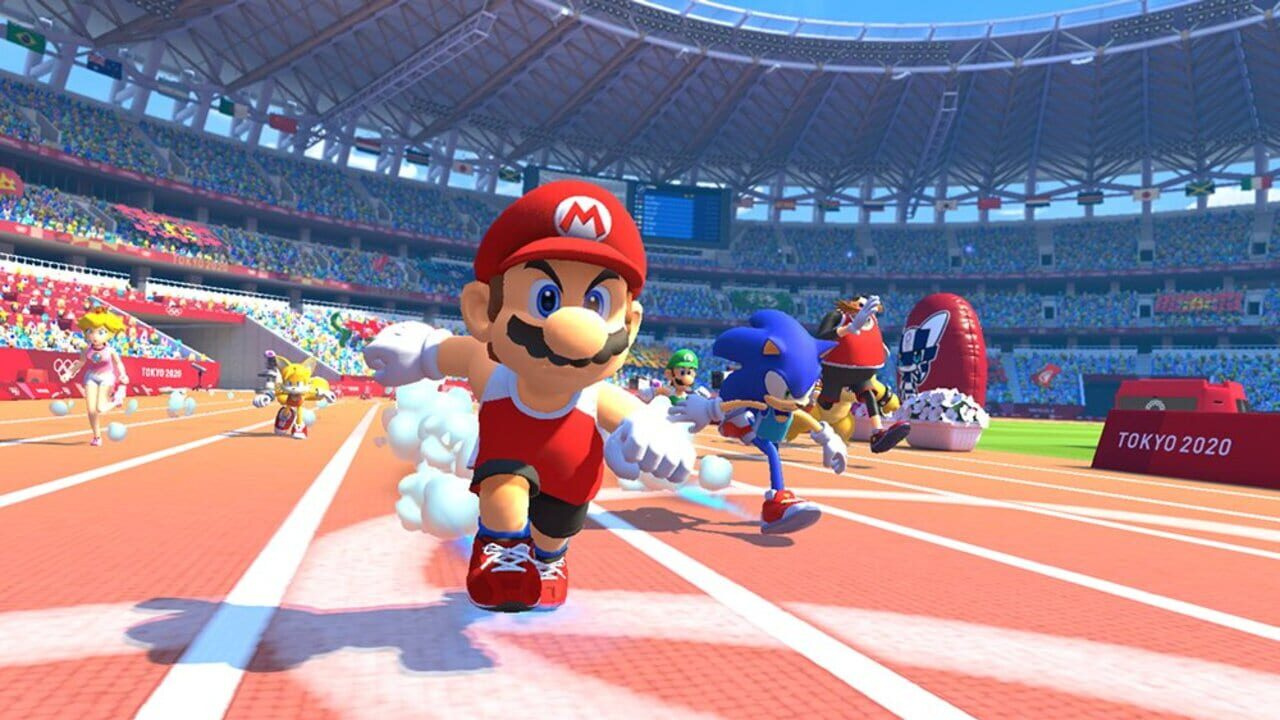
The presentation is inviting throughout. The characters are expressive, the modern venues look lively and the retro side has a clear charm of its own. I enjoy how the two visual approaches can belong to the same cheerful occasion without making one feel like an apology for the other. The guest selection creates more curiosity, although restrictions on where some characters can participate keep the roster from being complete freedom in every event. I appreciate the extra faces without treating the size of the selection as the main measure of value. A good event matters more than another competitor to animate through a weak one. The game generally understands its lighthearted purpose, with music and reactions that make another short contest appealing. The limits remain in the uneven sporting depth and how much the solo structure can sustain attention once the novelty of the next venue or character appearance has faded.
I finish Tokyo 2020 with a positive recommendation. The modern events offer enough enjoyable favorites, the newer disciplines provide useful variety and the 1964 competitions give the package a distinctive reason to be revisited. The story and some of the weaker sports are less convincing, so I would not treat it as a consistently deep solo adventure. Seven and a half out of ten reflects a collection that works well as a cheerful sports party with clear highlights. I like that the crossover can be playful through the actual rules instead of depending entirely on familiar faces. The retro material is especially successful at that, creating a different form of competition that is fun to understand and easy to return to. The whole package remains uneven, but the good parts have enough identity and immediate enjoyment to make the qualifications feel like limits on an enjoyable game rather than reasons to avoid it altogether.
Final thoughts
Tokyo 2020 has enjoyable modern events and a particularly appealing contrast in its retro 1964 competitions. The presentation is lively, while the story and some sports are less substantial than the best activities. I recommend it as a cheerful, varied sports party with clear highlights. 7.5/10.
Final score: 7.5/10.
Reviewed on Nintendo Switch. No review copy was provided.
 Mario & Sonic at the Rio 2016 Olympic Games Review
 Mario & Sonic at the Sochi 2014 Olympic Winter Games Review
 Mario & Sonic at the London 2012 Olympic Games Review