A creative egg-rolling idea that never becomes comfortable enough to carry the adventure
Billy Hatcher and the Giant Egg has an idea I want to enjoy much more than I do. Building a platformer around rolling, growing and hatching giant eggs gives it an identity immediately, and the cheerful world makes that identity easy to be curious about. The problem is the ordinary work of moving around with the egg. I find it awkward too often, and the frustration matters because the whole adventure keeps returning to that same interaction. A good idea needs to make the repeated action enjoyable, not only make the first explanation sound unusual. Four out of ten is where I land. I can see the creativity and appreciate the character of the presentation, but I do not find the resulting game pleasant enough to recommend. Its strongest qualities make me wish the controls and stage demands worked together more comfortably, rather than convincing me to overlook how frequently they get in the way.
The egg is more than something Billy carries for a special puzzle. Rolling it is central to attacking enemies, navigating parts of the environment and unlocking the creatures or items inside. Feeding it fruit makes it grow until it can be hatched, so moving around the level also develops a resource that may change what can be done next. I like that the concept links several activities rather than treating the egg as a decorative object. The trouble is how much attention the ordinary handling demands. I want to think about where to go and what the egg can help accomplish. Too often I am more concerned with keeping the basic movement comfortable. The distinction is important. A large object can make a platformer interesting if its weight and position create enjoyable decisions. Here I find the inconvenience of managing it more noticeable than the satisfaction of mastering the next section, which weakens the central idea instead of making it feel rewarding.
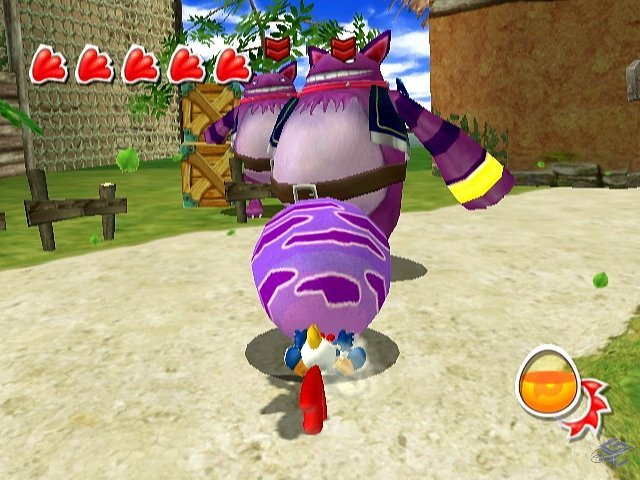
The extra movement actions give the concept some range. Bouncing with an egg and using it for more than straightforward rolling can turn a platforming section into something recognizably different from a conventional jump through a level. I appreciate that attempt to build the controls around the premise. There is a real game idea here, not simply a familiar platformer with a strange object placed in front of the character. My reservation is that the different actions do not consistently produce a comfortable flow. A section can ask for another adjustment of Billy, the egg and the view before the next step becomes clear. That makes the movement feel fussy rather than playful. I do not want the game reduced to a simple walk forward, and I am willing to learn an unusual system. I just need the act of learning it to lead toward an interaction I enjoy more. The awkwardness remains too prominent for that payoff to arrive consistently.
Hatching the eggs is one of the more appealing parts of the structure. Different designs contain different rewards, giving the object an identity beyond its size and making the fruit collection serve a clear purpose. I like the moment when a developed egg becomes something useful rather than remaining another number in a menu. The creature abilities and items give the adventure room for variety, which is a sensible way to keep the central premise from becoming completely repetitive. They cannot solve the handling issue underneath it. If reaching the next useful reward means more movement that I find awkward, the reward has to work against the process that leads to it. That is where the game loses me most often. I am interested in what an egg might provide, but much less enthusiastic about the repeated work of growing and positioning it. The progression is creative in concept without becoming consistently satisfying in practice.
The mission structure gives the environments more than one reason to be visited, and I can understand the appeal of using the same spaces for different objectives. A location becomes more substantial when the next visit changes what is being looked for or how the route should be approached. I like that possibility more than the actual repetition here. Returning to familiar ground also means returning to the same friction in the movement and camera. A new requirement does not automatically make that friction more enjoyable. It can simply expose it again under another set of conditions. The game has enough ideas that I do not think it suffers from a complete lack of imagination. It suffers from not making those ideas comfortable enough to repeat. I would rather have fewer objectives supported by a stronger basic interaction than a longer list that keeps asking me to tolerate the part I find least appealing about the adventure.
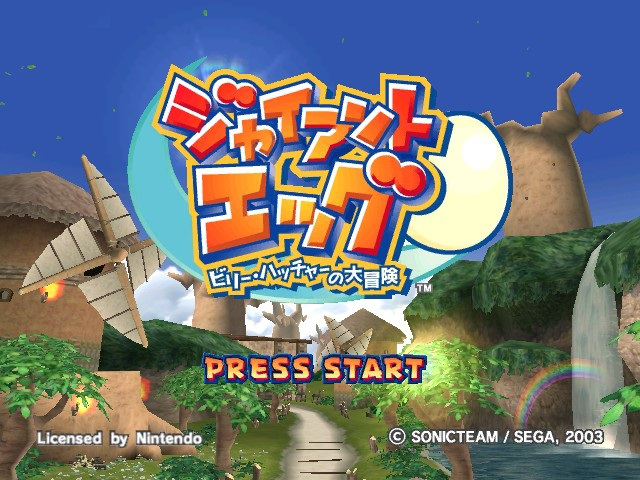
The bright presentation is the clearest positive. Billy and the surrounding world have a cheerful identity, and the egg theme gives the settings and creatures a personality that is easy to recognize. I like a game willing to be this strange without apologizing for its premise. The music and colorful environments make the journey look inviting, which is why the actual frustrations are so disappointing. I want to enjoy spending time in these spaces more than I do. The difference between that visual invitation and the practical experience of crossing a section remains noticeable. A charming style can make an imperfect game more appealing, but it cannot repeatedly perform the work that the controls and stage design should be doing. Here it gives me reasons to admire the intention without changing my reaction to the main activity. I find the world more enjoyable to look at than the adventure is to carry out, and that is a serious limitation for a movement-focused game.
My final score stays at four because the central premise is not a small supporting feature that can be ignored when it becomes irritating. The egg handling is the game, and I do not enjoy it consistently enough. Growing and hatching different eggs is a good idea, the movement has some imaginative possibilities and the presentation gives the whole thing a distinct character. Those positives make the disappointment more specific rather than making it disappear. I would love the same creativity attached to a more comfortable and dependable platformer. As it stands, too much of the journey feels like managing an awkward interaction instead of enjoying the possibilities it was meant to create. Billy Hatcher is memorable for its concept, but that is not the same as being a good recommendation. I can appreciate the attempt while still finding the finished adventure more frustrating than fun, and the four out of ten reflects that difference.
Final thoughts
Billy Hatcher has a creative premise and a cheerful identity, but the awkward egg handling undermines the action the entire game depends on. Hatching rewards and varied objectives cannot make the repeated movement consistently enjoyable. I appreciate the idea far more than the resulting GameCube adventure. 4/10.
Final score: 4/10.
Reviewed on Nintendo GameCube. No review copy was provided.
 The Murder of Sonic the Hedgehog Review
 Sonic and the Black Knight Review
 Sonic and the Secret Rings Review