
An odd premise cannot carry an ordinary progression loop
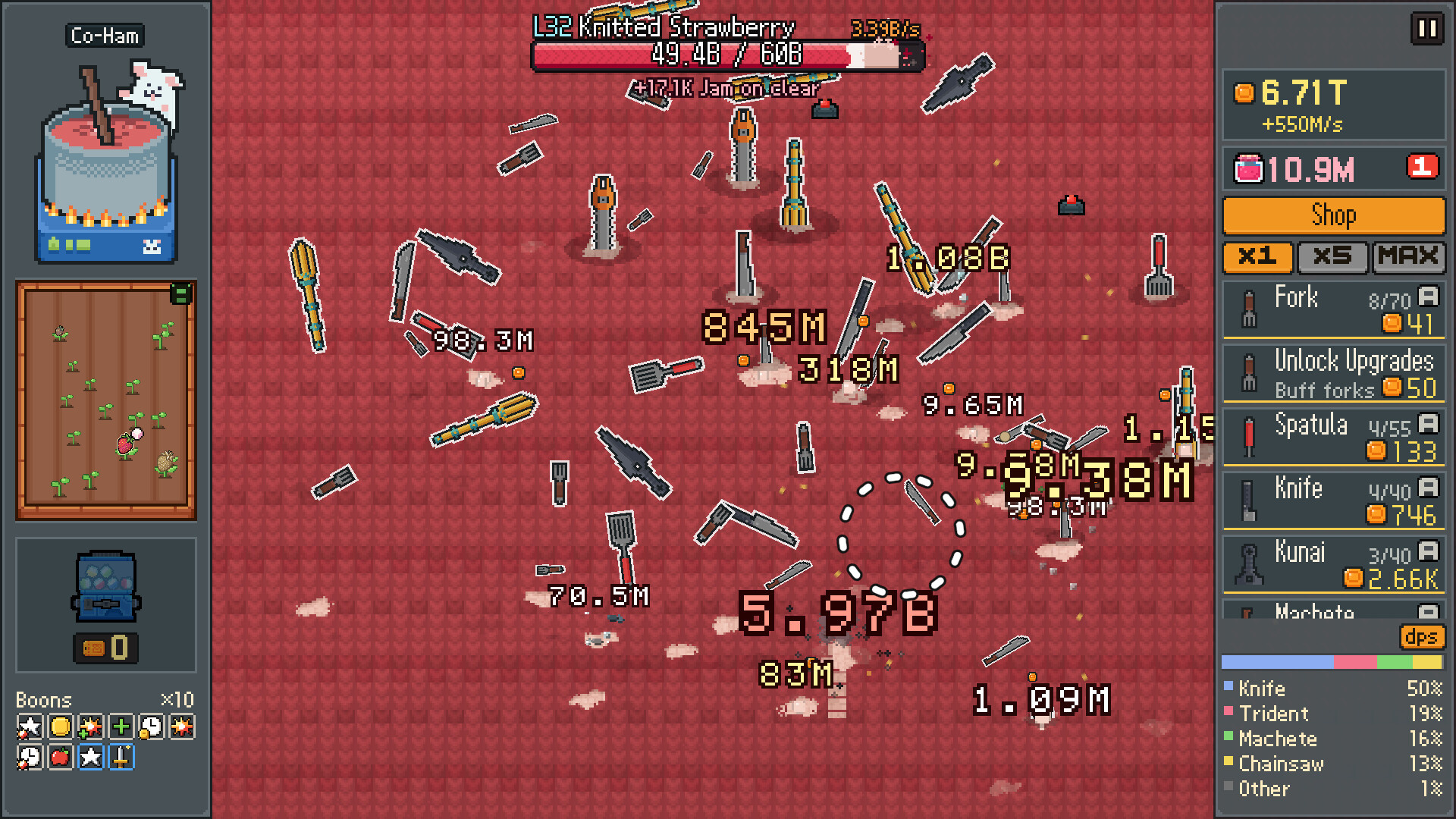
Stick A Fork has a strange enough idea to catch my attention, but that idea does very little to rescue the experience around it. Forks leap into giant fruit, money funds more forks, and the screen fills with activity. I find the result generic and deeply unsatisfying. The unusual subject gives the game an identity at a glance, while the progression underneath offers very little that makes me care about continuing.
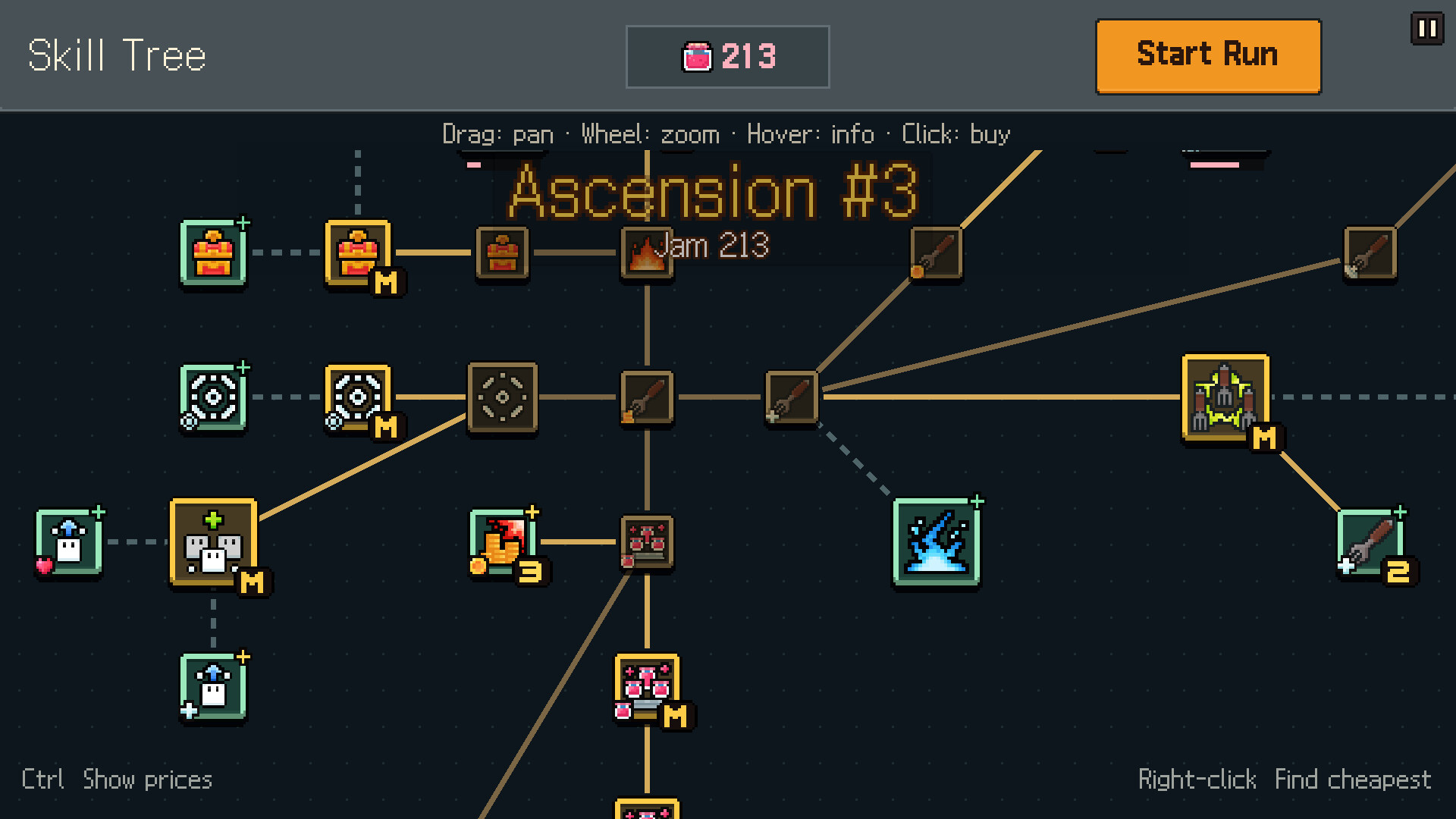
Flowdot builds its incremental game around moving the cursor over the action rather than repeatedly clicking through every attack. Forks strike the fruit, gold buys more forks, and Boons can be combined into stronger builds. Breaking fruit into jam introduces another resource to spend on skills. It is an easily understood structure, with several ways to increase what the system produces.
My problem is what that growth amounts to. An incremental game needs repetition, but the repetition still has to earn its place. An upgrade can be satisfying because it changes a decision, opens an interesting interaction or gives a familiar process a new rhythm. Here, the emphasis on generating more activity feels much more substantial than the reasons to stay interested in that activity. The premise keeps returning to the same basic attraction: make the fruit suffer more efficiently, then purchase the next improvement.
More activity, little substance
The hover-based interaction makes that loop approachable. It removes some of the physical busywork associated with clicking, and that is a reasonable design choice. It does not, however, address why the underlying process should be engaging. Making an action easier to repeat is useful only when repeating it remains appealing. For me, the simplicity leaves too little between the next purchase and the next round of accumulation.
The Boons are the most promising part of the design. Combining bonuses gives the progression a framework for experimenting with builds, rather than relying exclusively on a straight line of purchases. That distinction matters, but having combinations available is only the beginning. I want the interaction between upgrades to give the action a stronger personality. The surrounding loop still feels too familiar for the build system to make the complete game interesting to me.
Jam and skills add another spending layer, but I find their combined appeal much weaker than their quantity suggests. Another resource extends the progression without making the reason for progressing any more convincing. The extra purchases keep the machinery moving while doing little to shake the generic feeling at its center.
The spectacle wears thin
The visual premise is the clearest expression of personality here. Oversized fruit and bouncing utensils are easy to recognize, and the contrast between cute imagery and constant destruction gives the game a useful hook. I can see why that is an appealing idea for a short clip. As the central attraction of a complete game, it does not provide enough substance to sustain my interest.
That is where the generic feeling becomes difficult to shake. The objects are unusual, but the relationship between earning, buying and producing more is much less distinctive. I do not need an incremental game to tell a complicated story or demand elaborate controls. I do need its repetition to build into something more compelling than a busy screen and another upgrade waiting to be bought.
Final verdict
Stick A Fork is a bad incremental game in my view. Its odd premise, straightforward controls and build combinations cannot overcome how generic and unrewarding I find the overall design. The game offers reasons to increase production, but far fewer reasons for me to care about the result. I cannot recommend it. My score is 2/10.
Final score: 2/10.
Reviewed on PC with Windows. A Steam review key for the full game was provided by FlowDot.
 Stick Fight: The Game Review
 Onimusha: Way of the Sword - Review
 FIRESTARTERS Early Access Review