Escape Academy 2: Back 2 School is at its best when an ordinary-looking detail suddenly becomes useful. A decoration stops being background scenery, a clue establishes a connection, and a room that initially looks complicated begins to make sense. That process remains the heart of this sequel. The expanded campus gives it a larger setting, but the quality of the individual puzzles is what makes returning worthwhile.
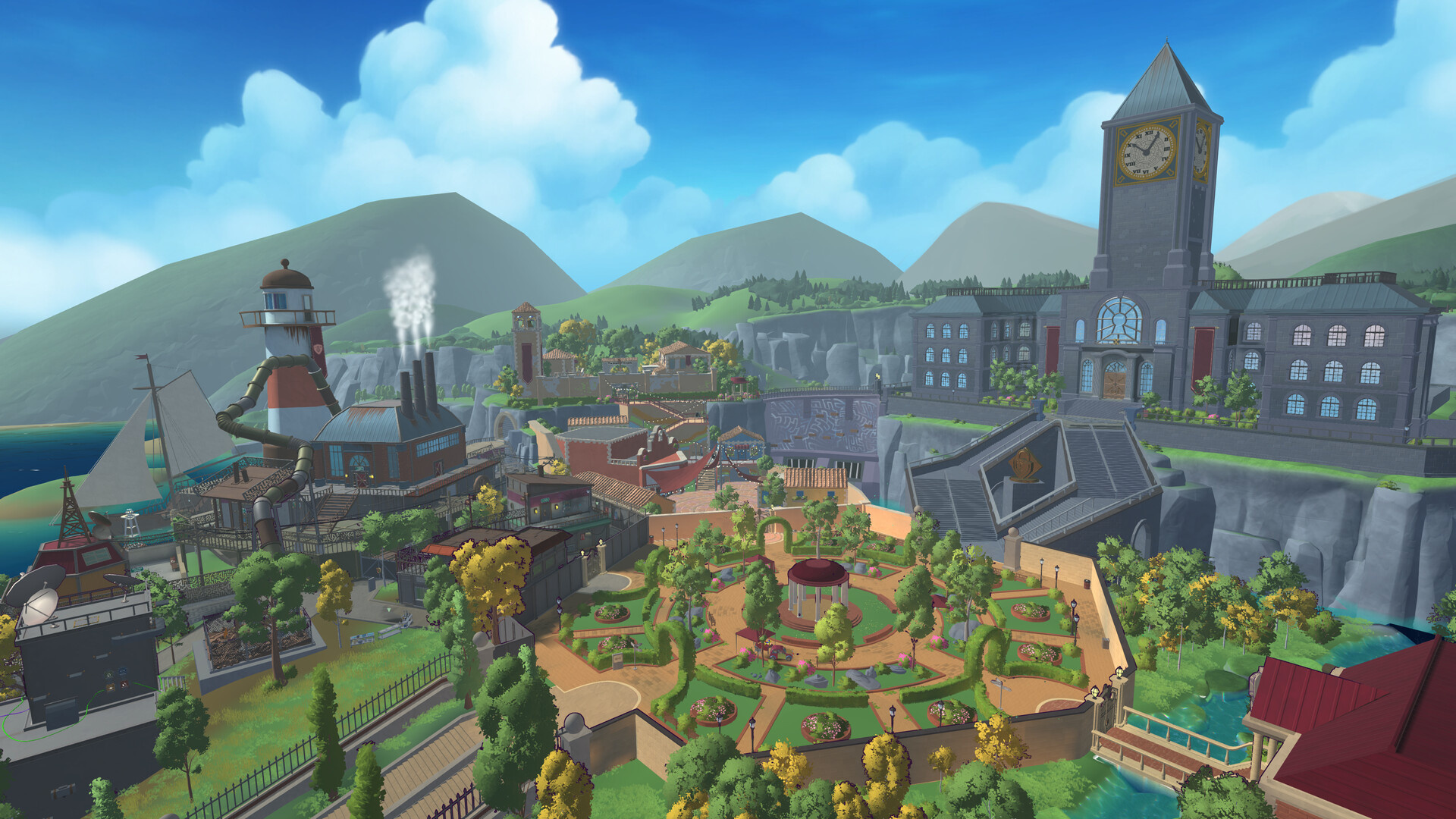
The academy is now somewhere to explore between the main escape rooms. Moving through its grounds, meeting characters, and finding smaller problems gives the campaign a more continuous structure. There is a welcome sense that the activities belong to a school rather than a menu of unrelated challenges. Side puzzles also let the game vary its scale, providing shorter tasks between the more concentrated sequences.
I think this is a worthwhile expansion, although its benefits are not constant. Moving around a campus creates a different rhythm from immediately entering the next room. That rhythm works when exploration produces an interesting discovery or a compact puzzle. It is less effective when travel becomes the main thing separating one good challenge from another. The larger setting gives the sequel character, but bigger does not always mean better paced.
Within the escape rooms, the design is much more focused. The strongest puzzles establish a visual language and ask you to understand how its pieces fit together. Observation matters because the environment contains information, rather than simply a collection of objects waiting to be clicked. The pleasure comes from forming a connection that feels understandable once it is made.
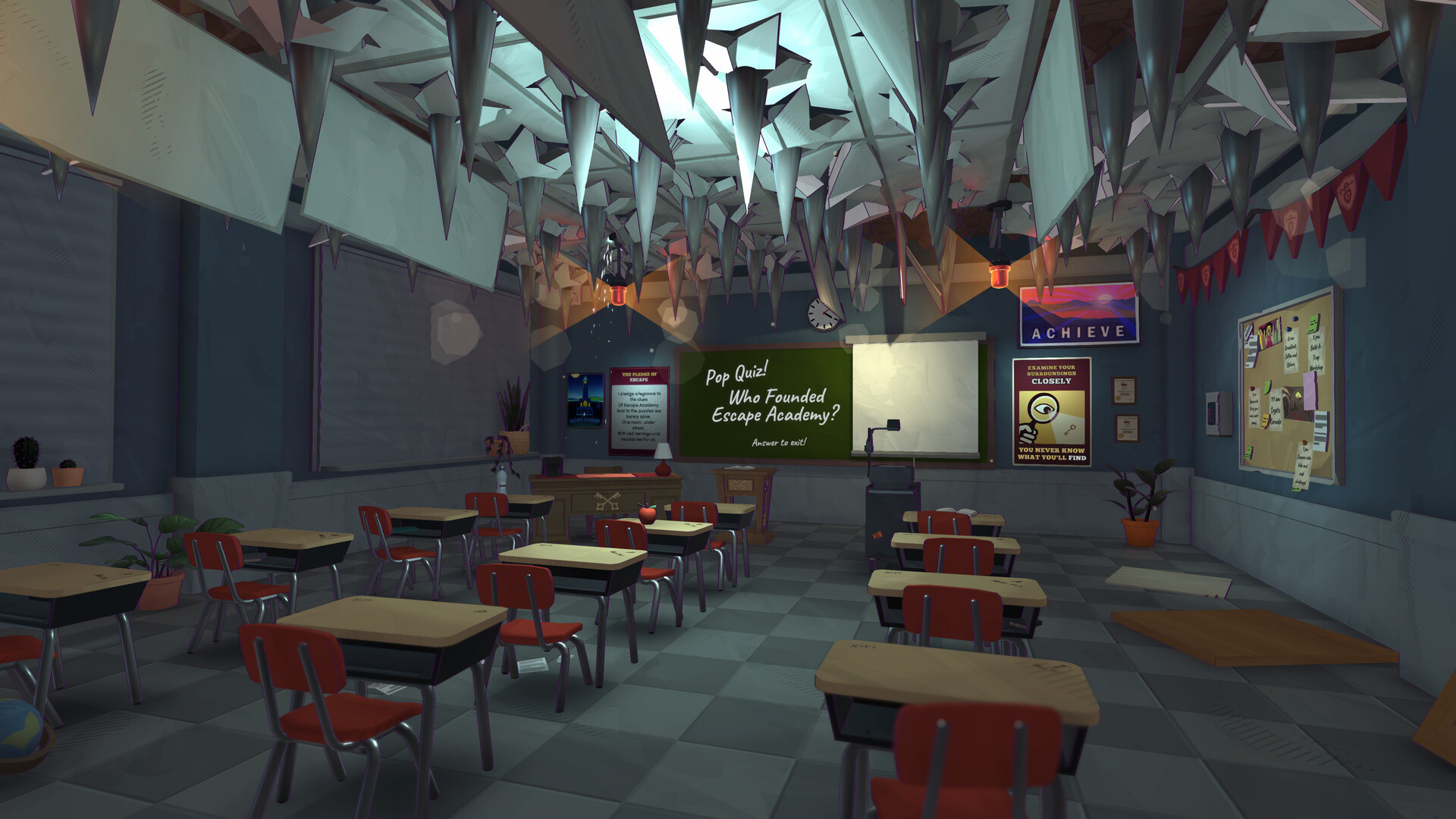
The difficulty generally favors momentum. This is an approachable puzzle adventure, and that accessibility helps preserve the playful tone. It does not need to make every solution painfully obscure to be satisfying. However, a code can become guessable before every part of its clue has been understood. That can shorten the satisfying process of working through an idea, particularly for experienced escape-room players. I would have liked more sustained combinations of the game's best concepts.
The optional no-timer mode is a useful addition because it changes the pressure without removing the puzzles themselves. A countdown can sharpen attention, but it can also discourage the patient examination that this type of game rewards. Giving players that choice makes the campaign easier to recommend across different levels of familiarity. The challenge can remain about understanding the room rather than worrying about the clock.
Co-op is a natural fit for the format. Describing a clue, comparing possible answers, and dividing attention between different parts of a space can turn a solution into a shared process. The game supports both online and split-screen play, while retaining a solo option. That flexibility is valuable, even though it should not be confused with a requirement to have another player available.
The presentation and story are more functional than exceptional. The unusual school setting supports a light, eccentric adventure, but the characters and dialogue are not the strongest reasons to continue. The puzzles give the campaign its momentum. The narrative works best as a way to connect those activities, rather than something that can carry long stretches without them.
Escape Academy 2 is a good sequel with a sensible understanding of its main attraction. The campus adds worthwhile possibilities and some unnecessary movement, while the puzzle design remains creative enough to overcome its relatively gentle difficulty. I would recommend it most strongly to players who want an accessible escape-room adventure, especially those interested in sharing the process with someone else.
Final score: 8/10.
Reviewed on PC (Windows/Steam) using a supplied review key.
Game information: https://store.steampowered.com/app/3296060/
 Escape the Backrooms Review
 Escape from Playtime Early Access Review
 Onimusha: Way of the Sword - Review